Guantanamo Bay and the Enduring Struggle for Human Rights
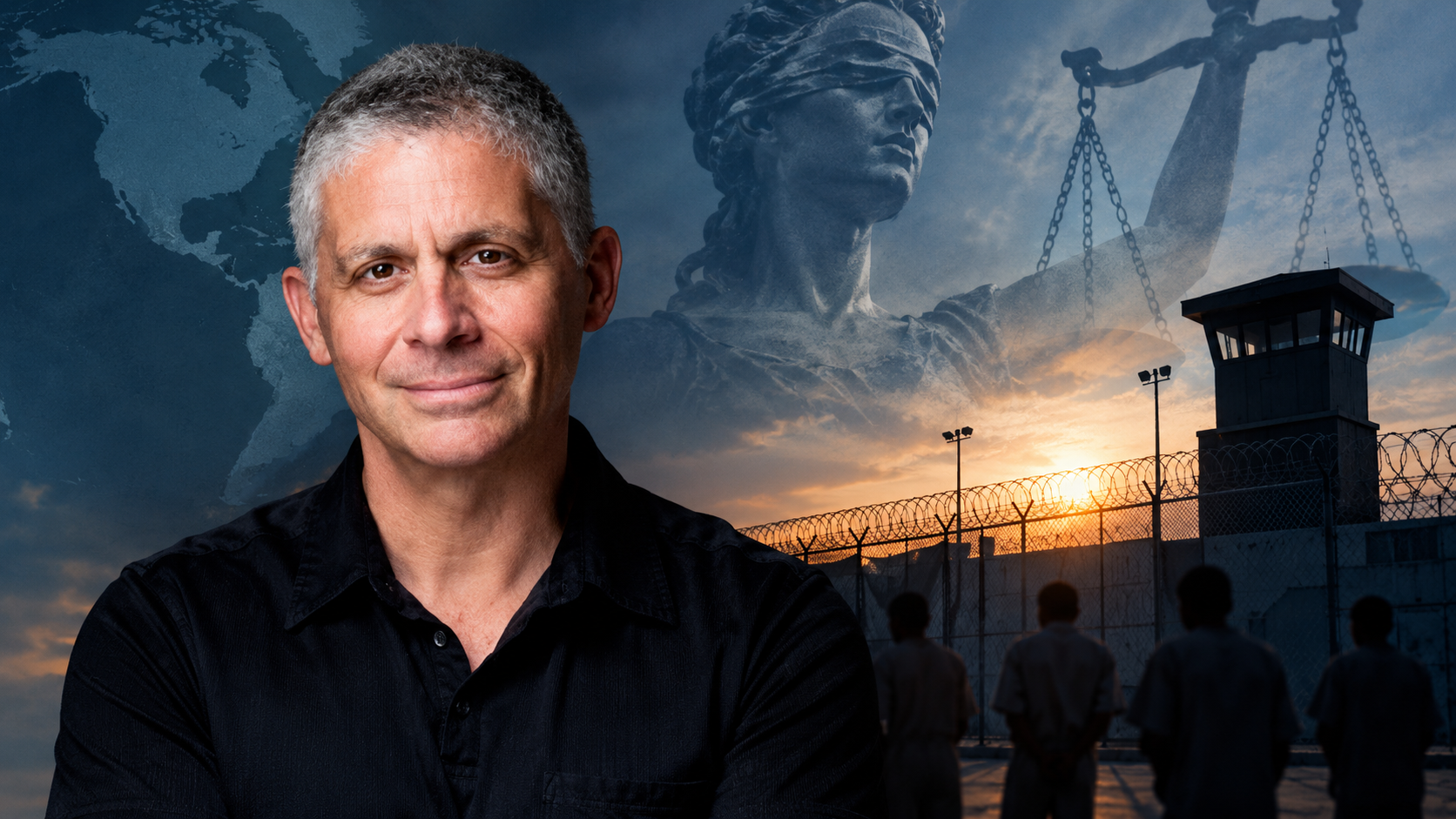
In this episode of International Horizons, John Torpey speaks with Joshua Colangelo-Bryan, special counsel at Human Rights First and author of Through the Gates of Hell: American Injustice at Guantanamo Bay. Drawing on his work representing detainees at Guantanamo Bay, Colangelo-Bryan recounts the legal battles, harsh detention conditions, and personal relationships that shaped his experience. He also reflects on the legacy of Guantanamo, the erosion of due process, and the troubling parallels between the post-9/11 response to terrorism and the Trump administration’s treatment of migrants today. Their conversation explores what Guantanamo reveals about the fragility of human rights and the enduring importance of legal protections against government abuse.
Transcript
John Torpey (0:05)
Newsflash: Human rights have not been at the top of the Trump administration’s agenda since it returned to office in early 2025. The DOGE attack on USAID and the unceremonious closure of my former employer, the U.S. Institute of Peace, soon thereafter, sent clear signals that the Trump administration did not regard human rights as fitting its America First agenda. Despite its advocacy of human rights in previous times, the United States was not going to be doing that in the case of this new administration. In short, when it comes to human rights, it’s clear that the topic would not be a major concern in this government. What is it like to work for a human rights organization in these turbulent times? My name is John Torpey, and I’m professor at the City University of New York Graduate Center and director of its Ralph Bunche Institute for International Studies. For today’s podcast recording, we’re fortunate to have with us Joshua Colangelo-Bryan, who is special counsel at the organization Human Rights First, where he spearheads impact litigation and advocacy efforts to uphold democratic principles and support human rights defenders globally. You recently published Through the Gates of Hell: American Injustice at Guantanamo Bay, which recounts the story of his representation of a number of Gitmo detainees. He has provided commentary for The Washington Post, The Wall Street Journal, and The Guardian, and spoken before Congress and at colleges, law schools, churches, and synagogues regarding the prison at Guantanamo Bay and international law. Thanks for being with us today, Joshua Colangelo-Bryan. We could start the conversation with having you tell the story of the prison at Naval Station Guantanamo Bay in Cuba, otherwise known as Gitmo, and its role in this story. Why did the events recounted in your book take place at a naval base in Cuba, of all places.
Joshua Colangelo-Bryan (2:22)
It is an interesting question. How did the U.S. end up with a military base in the middle of a communist country that we’ve been, you know, at best adversarial with for decades? It goes back to 1903 at the end of the Spanish-American War, essentially as a condition for our leaving Cuba, we said we wanted these 45 square miles of Cuban territory to use as a naval coaling station. A lease was signed. In the U.S.’s view, it is of indeterminate length, and we are legally entitled to be at that base as long as we make the lease payments. I have heard that once the Castro government came in, they stopped cashing the checks, and certainly the Cuban government does not believe we have a right to be there. But the Cuban government also has no practical way to kick us out. So, into the foreseeable future, I certainly would expect that we will continue to have that basin along the southern coast of Cuba.
John Torpey (3:37)
And the question, I was just going to say, who, if anybody, else is there besides 9/11 detainees?
Joshua Colangelo-Bryan (3:48)
So, it had become a bit of a ghost town in the in the lead up to 9/11. Obviously, the Cold War was over, so it wasn’t as if the U.S. was, you know, parking lots of assets there for potential conflict with the Soviet Union and its Cuban client state. There were times in the ’90s when it had been used to house migrants fleeing places like Haiti that the U.S. picked up in the Caribbean waters, but really not much was going on until the Bush administration made the decision to open the detention facility there, which brought you know a big influx of military staff and related infrastructure.
John Torpey (4:47)
So, one of the things about Gitmo is that it was a location in the post-9/11 period in which torture was undertaken. by the U.S. government. I mean, maybe you could talk a little bit about how that happened and what kind of conditions it created for the prisoners who were detained there.
Joshua Colangelo-Bryan (5:13)
I think it’s interesting to look at the reason why Guantanamo was selected. There was an expectation after 9/11, as we were going in militarily to Afghanistan, that the military would be capturing lots of high value terrorist leaders. A determination was made around the same time that this was an unprecedented war on terror and such. All the normal laws of war, the Geneva Conventions wouldn’t apply, as Dick Cheney said. We were going to go over to the dark side, and that meant we would be doing things to detainees that, if they were done to U.S. service members, we would absolutely call torture or otherwise illegal. So, the administration was looking for a secure place to hold the people it anticipated it was going to be detaining, and just to be safe, it wanted to hold them in an area that would be outside the jurisdiction of U.S. courts, so that no pesky lawyers could start litigating the question of you know how detainees were going to be treated or interrogated. A Department of Justice memo lays this out really clearly, saying if we hold these foreigners outside U.S. territory in Cuba, meaning Guantanamo, then no U.S. court is likely to exercise jurisdiction over people, and that’s why the base was picked as a secure place for a prison outside the law. While some of the you know the worst abuses happened in CIA black sites. A lot of you know quite aggressive and illegal behavior occurred at Guantanamo as well. Beyond that, there were conditions of confinement that, on their own, were inhumane. We started, you know, detaining people in cages, detaining people in otherwise what amounted to solitary confinement, and you know, using a whole range of interrogation techniques. That, of course, the average American would say would be completely unacceptable and illegal if they were applied to one of our people.
John Torpey (7:51)
So then, let’s get into this pesky lawyer issue. You know, you mentioned that, and a lot of the book is well, a lot of the book is really about your relationship with one specific detainee, although you represent a number over the course of the story. So maybe you could tell us about how you got involved in this. If you know, if this was, if doing these things in Gitmo was meant to keep pesky lawyers out of the picture, how did you get into the picture?
Joshua Colangelo-Bryan (8:21)
Well, it is America, so there’s always going to be a pesky lawyer to test theory of a litigation adversary. In this case, in 2004, the U.S. Supreme Court ruled that because the U.S. has total control over the base sovereignty aside, detainees there were entitled to file habeas corpus petitions with U.S. federal courts in Washington, D.C. Habeas corpus, of course, is this you know ancient remedy that we incorporated into our law from England. The basic idea being, if the king or the government locks you up, you’re entitled to go to court and demand that the king or the government explain why you’re being detained, and you’re entitled to have an independent judge decide if there’s any legitimate basis for your detention. After that decision came down in 2004, there was a relatively small group of firms and other lawyers who brought habeas petitions for various detainees at Guantanamo. We were part of that 2004 effort to file petitions. We had six clients, all of whom had Bahraini citizenship, one of whom had joint Saudi and Bahraini citizenship, and so it was after convincing my private commercial law firm that this was a worthy pro bono project, given how extreme the government’s position was, that we that we first went down to the base and really started engaging in the case.
John Torpey (10:25)
And so, you go down to Gitmo and you meet this person for the first time. And you know one of the things that was always interesting to me about reading the book was that it raises the question for you yourself, I mean, you don’t know. Like, is this person wrongfully detained? Is this person really a terrorist? I mean, tell us a little bit about what that was like, getting to know this person, and you know, figuring out how you thought about him.
Joshua Colangelo-Bryan (10:58)
Yeah, we knew very little about our clients before we went down. The government had given us really brief summaries of vague allegations, some of which were kind of laughable on their face, others of which seemed like they would require a little investigation. The government only put those summaries together because the court basically forced it to do that. Nobody at Guantanamo in the several years of people’s detention before that had ever put together a document outlining the reasons why anybody was detained, so we had that. We had chatted a little bit with family members of our clients to try to get a sense of what they were like. But otherwise, we were operating in a vacuum. Of course, we had heard government officials like the chairman of the Joint Chiefs of Staff say things along the lines of, you know, these are guys who would chew through the hydraulic cables on an airplane to bring it down, and so even though I didn’t really buy that kind of thing wholesale, I did find myself feeling a little anxious here and there, you know, particularly as I was about to go into that first meeting with a with a client, you know, would I end up sitting there with some huge veteran terrorist who would you know hate me just because of who I am, you know, or because of my freedom, you know, would the guy try to take a swing at me? I mean, in the absence of information, I had a thought or two that you know maybe was a slightly histrionic thought. Pushing through that, I walked into the room and saw Jobber Muhammad, the first client I was going to meet with. My initial impression was just how frail he looked. Yeah, like someone who probably was never very big and had not been eating enough. So, the thought of a terrorist who was going to wrestle me to the ground that sort of immediately faded. Our eyes met when I walked in, and his face broke into a really big smile. And so, I understand, you know, you can be a bad guy and be able to offer a big smile. It’s not as if that expression answered any questions, but it certainly put me at ease compared to how I was feeling. I sat down. We started talking, and sometimes you meet a person, you know, a colleague, friend of a friend, and you just find the conversation is easy, and you click with the person. That’s really what it was like, which was absolutely not what I expected. You know, we talked about the case and things like that, but we also talked about the fact that his favorite movie was Jumanji. He was stunned that I hadn’t seen this gem of American cinema. We ended up talking about food and our families and you know all kinds of things that I wouldn’t have expected to talk about with a guy, if he was really ready to chew through the hydraulic cables of an airplane to bring it down, an hour or two in, he sort of paused for a moment and he said, “Joshua, that’s a Jewish name, right?” And all of a sudden, I started feeling tense. Because I just couldn’t figure where this was going or how it would be going to a good place, so I told him honestly, yeah, you know, it can be a Jewish name, but it was just popular in the neighborhood where I grew up. I happened not to be Jewish, and noticed him looking a touch disappointed before saying, “Oh, I had heard the best lawyers were Jewish,” and then I think in response to my probably looking a little worried, he said, “But I’m sure you’re really good too,” you know, which was which was very generous of him, trying to try to make sure that I didn’t think he was writing me off. You know, as a Gentile who wouldn’t be able to handle this case. So really, nothing about that first meeting is what I would have anticipated, and as it turns out, it was our first discussion during what really became a very deep personal friendship that developed in those tiny meeting rooms at Guantanamo,
John Torpey (16:15)
and you were pretty convinced he wasn’t a terrorist.
Joshua Colangelo-Bryan (16:18)
So that it’s obviously impossible to know what anyone has done other than yourself with absolute certainty. However, we dug through those allegations against him. We eventually went to what’s called a secure facility where the government kept all the classified evidence against our clients and found nothing that would have stood up in court or even stood up as a matter of common sense, and really, at the end of the day, there was one very vague allegation, sort of relating broadly to what you might call the war on terror. Everything else predated 9/11 and ultimately didn’t even allege much. As it turns out, this one allegation relating to the war on terror was that Jobber had been at a particular location. Didn’t say anything more. That location, Tora Bora, was the scene of a battle between the U.S. and Al Qaeda. Again, it didn’t say Jobber did anything there, but a year or two in, he told me about a conversation he had with a Yemeni detainee who happened to evidently think he was Jesus, this detainee, and the detainee said to him that he had implicated dozens and dozens of his fellow detainees as having been at Tora Bora, all in the hopes that interrogators would let him go home. The military had determined that this guy was not credible, understandably, and that our best understanding is that the one allegation that potentially could have mattered, you know, came from this totally unreliable source. At the end of the day, if there’s no evidence that you’re a bad guy, I think, for all intents and purposes, you know there’s no reasonable basis for anyone to conclude that you are in the absence of that evidence. Because really, what you would have been saying is, yeah, well, you know, this guy’s a Muslim and he sort of looks like the people who attacked us. Let’s blame them, and you know that doesn’t make sense legally or as a matter of policy or from any other perspective.
John Torpey (19:10)
But it was nonetheless the path that was chosen by our political leadership, right?
Joshua Colangelo-Bryan (19:16)
So, the interesting thing was contrary to those initial expectations of the Bush administration, the U.S. military ended up capturing very few people on the battlefield in Afghanistan. Most, the great majority of people who ended up at Guantanamo were people handed over to the U.S. in exchange for bounties by Afghan warlords, the Pakistani government, Pakistani civilians. In fact, it was Donald Rumsfeld, then the Secretary of Defense, who once described the leaflet. It’s being dropped from planes, promising bounties to people, as being like snowflakes falling in December in Chicago. So, there were, you know, very big financial incentives for a whole range of unreliable actors to hand over Al Qaeda figures to us. The administration also determined that the normal procedures the military uses to try to separate the wheat from the chaff, you know, to figure out who’s really a combatant and who isn’t, those procedures were not conducted. So, a whole bunch of people we paid money to get and made no objective assessment about ending up at Guantanamo. That’s why by the time the government had to produce these summaries of allegations against people several years in, in fact, the majority of detainees were not even accused. And forget evidence, forget criminal charges. They were not accused of taking any action against the U.S. That just underscores that due process is really the only good way human beings have come up with to try to figure out who’s a bad guy. If you pay people to bring you detainees and then you apply no process, you’re going to end up with a whole bunch of people in detention who have no business being there, and that’s underscored by the fact that even the Bush administration was releasing, ultimately, you know, released hundreds of people from Guantanamo, understanding they just had the wrong guys.
John Torpey (21:52)
Yeah. So, despite the lack of what we might call proper due process, he’s not treated particularly well in Gitmo, and that becomes a major issue in the course of the account in the book. So maybe you can talk about what kind of conditions he experienced and what kind of consequences that had for his case.
Joshua Colangelo-Bryan (22:18)
He, you know, with real sort of reticence would describe some of these episodes, and he whereas normally we would just sort of sit there and chat. When he was talking about this, he tended to pull away from the table as far as his ankle shackle would allow, and to put his head in his hands as he talked, he described an incident where he was beaten by what they called an immediate response force that came into his cell and hurt him badly enough that he had to go to the hospital. He talked about being in an interrogation where he was short shackled to the floor, and a female interrogator wiped menstrual blood on him. He talked about another interrogation where he was again shackled. Someone put an Israeli and an American flag around his shoulders and told him there was a holy war between Islam on the one hand Christianity and Judaism on the other. As a lawyer, you know, I think you don’t serve your client well, if you just accept at face value everything you’re being told. So certainly, my natural inclination is always to listen a little skeptically, and some of those things sounded a bit incredible to me. You know, were U.S. women soldiers really putting their menstrual blood on people. I had a hard time imagining it. The remarkable thing, especially considering how Guantanamo was supposed to operate as a closed universe, you know, again, a prison beyond the law was that as the representation went on, documents came into public view from a variety of store sources that literally corroborated all of those things that I just described. Just for example, it turns out that there was an interrogation technique where female soldiers were taking red dye, putting it on their hands, and then wiping it on detainees, telling them it was menstrual blood. The theory apparently. Was that doing that, not letting the detainees wash would keep them from praying, and thereby they wouldn’t be able to rely on their religion as a means to resist interrogation? You know, not sure that ever worked, but it was really remarkable to get this confirmation of things I’d been skeptical about when Jobber described them, and to get that confirmation from FBI agents or military personnel who had been at Guantanamo and had seen this stuff happen. The worst thing for Jobber, though, wasn’t any kind of direct physical mistreatment. He talked about being held in a solid wall cell 23 to 24 hours a day, couldn’t see out of it. He could sometimes shout to other detainees through his food tray slot, the bean hole. But often guards would put really big industrial fans on, and that would keep you even from hearing, you know, your next door neighbor, if you were screaming through the tray slot, and it was that isolation that was for him really the worst thing. I mean, he was a very he was a social person, and being held indefinitely, potentially forever, with so little human contact was just brutal for him. It bred a hopelessness that led him to attempt suicide on a number of occasions, and one of the big aspects of our relationship was sort of trying to help him deal with that, as the years went on, and certainly there were more, you know, than one occasion when I thought, God, you know, I wish I were a therapist instead of a lawyer right now, because understandably, the hopelessness and desperation he’s feeling are just so pronounced.
John Torpey (27:29)
Yes, these stories are a vindication of the idea that the human beings are a social are social creatures. It’s just hard to look at it really any other way. But solitary must be terrible. I can only imagine. I’m a claustrophobe, you know, in my daily life, leaving aside being incarcerated. But in any case, notwithstanding these sort of horror stories, you have a kind of a happy ending in this book, which is unexpected, at least when I was reading it. So maybe you could tell that side of it, bring a bit, bring a bit of a brighter picture into the into the picture.
Joshua Colangelo-Bryan (28:11)
Yeah, I’ve had people say, you know, they would not have found the end incredible if it were fiction, and you know they only believe it because it actually happened. Fairly early on in the representation, it became clear that we were not going to be getting quickly to habeas hearings where the government would present evidence and we could argue, and a judge would make a decision. the Department of Justice, the government, successfully bogged down the case in a bunch of procedural and threshold issues that had nothing to do with the question of whether a particular detainee was a combatant or not, and we could tell it was going to be a long-term process to get all that stuff litigated. We also, as I’ve been talking about, could see the hopelessness and desperation of clients like Jobber. So, the idea of just waiting for those legal issues to get resolved over what would probably be, you know, more than months, somewhere in the neighborhood of a year or more, that just didn’t seem tenable. We also saw how detainees from Western European countries, of which there were a decent number, had been going home, and they’d been going home not through a court process, and they’d been going home even when the allegations against them were more serious than against our clients. So, it became clear that, as a political or diplomatic matter, you know some countries were having success going to the U.S. government and saying, you know, we really need to get our people back. You know, it seemed Tony Blair, who was you know supporting the Iraq War, was able to have his government negotiate with the U.S. and the U.K. citizens were going home, so our clients were not from European countries, you know, Bahrain and Saudi, as I said. But as we dug in and learned about this, not only was Saudi a close U.S. ally, but so was Bahrain. I mean, Bahrain houses a U.S. naval fleet, thought of as a very you know strategic partner and the like. So, we said, why can’t we push for the same kind of resolution that these Western European countries are pushing for to try to make that happen, we did everything we could to tell our clients’ stories publicly. Whether it was through the media, through talks, you know, as you said, whether at synagogues or churches, you know, with international press wherever we could, just to raise their profile. We also spent a lot of time in Bahrain and working with the Bahraini press to make it clear that our clients were not going to come home anytime soon unless the Bahraini government made that happen, and that they our clients were in really desperate straits and needed to be brought home if they were going to get there in one piece, it was much harder to do that in terms of Saudi, which particularly then was a far more closed society. But you know, six of our clients, all of the clients had Bahraini citizenship, so that’s you know where we focused at least publicly. Little by little, by which I mean you know three here, one there, one there. Over the course of a couple of years, our clients went home. Jobber was the second to last to go home and preceded the last client just by about a month. And so, with those initial issues still unresolved in the litigation, he got back to his family through this diplomatic process, which you know to call it a relief would be to really understate it. And you know, since that time, he and I have remained friends. I went and visited him and his family in Saudi. He helped my teenage daughter with a school project she had on Guantanamo not long ago, giving her an interview. He always liked to give me a bit of a hard time when we were meeting in person. You know, making fun of how serious I can be, how uptight I can be.
To this day, he still enjoys busting my chops, which you know I always take in a good natured way and so, again, talk about unexpected the idea that 20 years later I would have this long-term friend as a result of all this that would have really been probably the last thing I would have predicted when we first went down to the base all those years ago.
John Torpey (34:08)
Right. Well, it’s a great story. Of course, the not so great part of it is the treatment that he gets in Guantanamo Bay, and so I want ask you to sort of widen the aperture a little bit and reflect. I know this more maybe speculation than facts and evidence, but what kind of consequences do you think the Gitmo experience had for the way that we’re treating, you know, immigrants now? I mean, I don’t know what kinds of cases you may be involved in now, but I suspect they may, you know, help answer that kind of question. But I’m just sort of curious, you know, what kind of lingering consequences maybe did that have, or were efforts made in the training and. And preparation of soldiers, you know how to handle these kinds of situations in a different way than had been the case, you know, while you were involved.
Joshua Colangelo-Bryan (35:12)
So, from more of a legal perspective, there was a real emphasis during the Bush administration the idea that at least when it came to national security, the president has executive authority to do whatever he wants, regardless of what any law might say. One of the legal architects of that philosophy at the time, at one point contended that if it were for a legitimate national security purpose, the president could order that the testicles of a boy be crushed if it would help in an interrogation of the boy’s father, and why could he do that? Well, he’s the president, and he has plenary power over security issues. That philosophy we certainly see with the second Trump administration’s trampling of all kinds of legal norms, laws, and the like, all in the supposed name of national security, and you know, justified in one place or another as being things that you know the president is entitled to do, that the executive is entitled to do. From a more political or perhaps human perspective: There is a through line in terms of an approach of vilifying a particular group and then depriving them of basic rights. So, in the Bush administration, even though to his credit, George W. Bush would, you know, occasionally say we’re not at war with Islam. There was an absolute targeting of Muslim men. That includes locking up 1000s of people domestically on minor immigration violations or material witness warrants. None of whom were later discovered to have any connection to terrorism. It’s how you can, without any process, lock up hundreds of Muslim men at Guantanamo, call them all the worst of the worst, and you know not really suffer a political consequence for that. Today we are seeing that in spades. In fact, the Trump administration has literally resurrected that phrase “worst of the worst” to describe any number of different groups. You know, particularly migrants, and in fact, they have started taking people from the U.S. and bringing them to Guantanamo. Talking about migrants, and it’s the first time we’ve ever brought people from the mainland U.S. to Guantanamo. It’s being done in a way that clearly has no relationship to any legitimate national security interest. I mean, they’ll they will fly down people from the U.S. They spend a few days at Guantanamo, and then they you know they bring them back. Other than generating a profit for any private contractors involved, what rational reason do you have to do that? And we have seen the administration literally call those, you know, migrants who it has brought to Guantanamo the worst of the worst. So, we’re beyond allegorical connections. It is exactly the same manner of demagoguery that allowed that first prison, the post-9/11 prison to be open, that you know we see today in the administration’s approach to anyone it disfavors, which obviously includes immigrants, migrants, even U.S. citizens who you know have connections to countries that Donald Trump would call, you know, shithole countries.
John Torpey (39:49)
Right. Well, I think that’s a great place to stop. I think it does kind of complete the arc for us, and I think that’s an unfortunate arc to have to describe, but thanks for being with us today, Joshua Colangelo-Bryan of Human Rights First, to discuss recent developments in human rights work. Look for International Horizons on the New Books Network, and remember to subscribe and rate International Horizons on Spotify and Apple Podcasts. I want to thank Sebastian Canseco for his technical assistance, as well as to acknowledge Duncan McKay for sharing his song “International Horizons” as theme music for the show. This John Torpey saying thanks for joining us, and we look forward to having you with us for the next episode of International Horizons.