Staff

John Torpey
Director, Ralph Bunche Institute for International Studies
jtorpey@gc.cuny.edu
@JohnCTorpey
John Torpey is Presidential Professor of Sociology and History and Director of the Ralph Bunche Institute for International Studies at the Graduate Center of the City University of New York. He is the author or editor of a number of books, including Intellectuals, Socialism, and Dissent: The East German Opposition and its Legacy (University of Minnesota Press, 1995); The Invention of the Passport: Surveillance, Citizenship, and the State (Cambridge University Press, 2000; 2nd ed. 2018); Documenting Individual Identity: The Development of State Practices in the Modern World (edited with Jane Caplan; Princeton University Press, 2001); Politics and the Past: On Repairing Historical Injustices (editor, Rowman & Littlefield, 2004); Old Europe, New Europe, Core Europe: Transatlantic Relations after the Iraq War (co-edited with Daniel Levy and Max Pensky; Verso, 2005), Making Whole What Has Been Smashed: On Reparations Politics (Harvard University Press, 2006; paperback ed. Rutgers University Press, 2017); The Post-Secular in Question (co-edited with Philip Gorski, David Kyuman Kim, and Jonathan van Antwerpen; NYU Press, 2012); Legal Integration of Islam: A Transatlantic Comparison (with Christian Joppke; Harvard University Press, 2013); Transformations of Warfare in the Contemporary World (edited with David Jacobson; Temple University Press, 2017); The Three Axial Ages: Moral, Material, Mental (Rutgers University Press, 2017); The Decline of Antiracism and the Future of Progressive Politics (Routledge, 2026); Revitalizing the United Nations: Making and Keeping the Peace (Routledge, 2026). During 2015-2016, he was President of the Eastern Sociological Society.
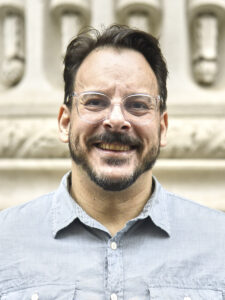
Eli Karetny
Deputy Director, Ralph Bunche Institute
Director, Project on UAP Studies and International Security
ekaretny@gc.cuny.edu
@ekaretny
______
Dr. Eli Karetny is the deputy director and the founding director of the Institute’s Project on UAP Studies and International Security, which supports the work of international relations scholars doing UAP research. Eli organized the UAP Working Group on UN Engagement to develop a framework for coordinating policy proposals with UN agencies. Dr. Karetny teaches a masters course on UAP Studies and National Security at the CUNY Graduate Center, serves on the advisory board of the Society for UAP Studies, and is a Senior Fellow at the Sol Foundation.
Eli is the Principal Investigator of the RBI’s core international research grants, he manages the Diplomat in Residence Program, and supervising the Visiting Scholars Program. Dr. Karetny also serves as the Institute’s program officer and legal advisor on human rights projects doing work at the United Nations, including the Global Centre for the Responsibility to Protect (GCR2P) on whose advisory board he sits. Dr. Karetny is also on the advisory board of the Center for the Study of the Holocaust, Genocide, and Crimes Against Humanity.
Dr. Karetny completed his PhD in International Relations and Political Theory at the CUNY Graduate Center, received a JD/MBA from Temple University, and an MS in international relations from New York University. He also served in the Peace Corps in Ukraine, and studies esoteric wisdom at the Hotam School in Israel. He has written on Leo Strauss’s concept of regime change, on the wartime history of the United Nations, and recently on the application of Peter Thiel’s interpretation of the katechon to US foreign policy. Eli is currently working on a paper applying Alexander Kojeve’s concept of a Universal State to Alexander Wendt’s work on the possible impact of UAP/NHI disclosure on global security.
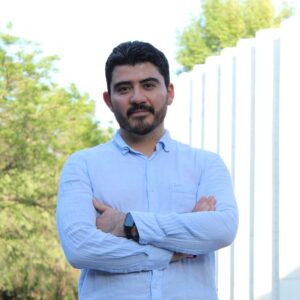
Oswaldo Mena Aguilar
PhD Candidate – Political Science
omenaaguilar@gc.cuny.edu
Oswaldo Mena is a PhD Candidate in Political Science at The Graduate Center, City University of New York. He specializes in comparative public policy and Latin American political economy, with a focus on inequality, poverty, and the redistributive and predistributive policies (labor-market regulation, taxation, and social transfers) used to address them.
His doctoral dissertation, Predistribution, Income Inequality and the Politics of Minimum Wage and the Left in Latin America, combines cross-national econometric analysis of minimum wages and inequality in Latin America with an intensive qualitative study of the recent trajectory of minimum-wage policy in Mexico. Methodologically, He combines econometric analysis, household survey microdata, Bayesian process tracing, semi-structured elite interviews, documentary analysis, and archival research.
His work has been published in The Journal of Political Ideologies, The Economic and Labour Relations Review and Policy Studies Journal. His research has been supported by the Stone Center on Socio-Economic Inequality, the Center for Latin American, Caribbean, and Latino Studies (CLACLS), the American Political Science Association (APSA), and Georgetown University. He is currently a Graduate Center Dissertation Fellow (2026), a Latino Data Scholar at CLACLS (2025), a CONAHCYT Scholar (2024–2027), a Junior Scholar at the Stone Center on Socio-Economic Inequality (2024), and a Fulbright-García Robles Scholar (2021–2024).
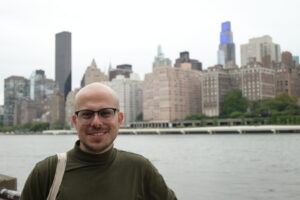
Juan P. Acevedo-Ossa
_____
Dr. Juan P. Acevedo-Ossa is a Moynihan Postdoctoral Fellow in International Affairs and researches international relations and international political economy, with a focus on hegemony and China in the Global South. He received his PhD in political science from the Graduate Center, City University of New York, where his dissertation analyzed how status concerns shape state behavior in multilateral institutions. He employs mixed methods, combining inferential network analysis with data from elite interviews. Before entering academia, Acevedo-Ossa spent several years working on international trade in China, Brazil, and Colombia, where he also taught international trade and Mandarin, and that experience continues to inform a research agenda attentive to how structural power and perception operate in the everyday practice of diplomacy.
Currently, Juan continues pursuing his agenda on status in IOs and China and India’s claim for leadership in the Global South. He is also beginning a project on the social determinants of Chinese foreign direct investment in Latin America, examining provincial government investment networks and small investors’ ties through social influence regression and temporal network models, supported by interviews with investors, chambers of commerce, and local politicians in both regions. His work has appeared in Review of International Political Economy, International Interactions, and the edited volume Diplomatic Strategies of Nations in the Global South, with a chapter forthcoming in the Routledge Handbook of Power in International Relations. He writes for broader audiences in Foreign Affairs Latin America, Africa is a Country, and El País, and is a co-founder of the China at CUNY Initiative, the Human Rights Hub, and the Center for the Study of the Holocaust, Genocide, and Crimes Against Humanity. At the City College of New York, he teaches “Contemporary International Politics” and, working with program director Dr. Nicolas Guilhot, is strengthening the China component of the Master’s in International Affairs through a competency-based curriculum redesign.
Laura Altinsoy
PhD Candidate – Political Science
_____
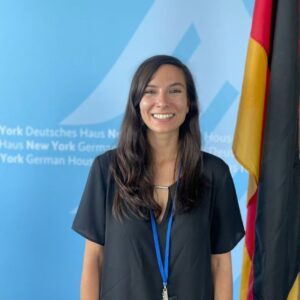
Laura Altinsoy (she/her) is a PhD candidate in Political Science at the CUNY Graduate Center, specializing in International Relations with a minor in Political Theory. Her research focuses on international organizations, global political economy, U.S. hegemony, Third World contestation, and financialization. Her dissertation examines how U.S. hegemony was contested and reconstituted through international institutions and global finance from 1955 to 1986, with particular attention to the IMF, UNCTAD, G77, NAM, NIEO, and the role of financial networks.
She also teaches undergraduate political science courses at CUNY, including American Government, U.S. in an Age of Globalization and Modern Political Theory. She previously served as a Political Affairs Intern with the Peacebuilding Commission Support Branch of the United Nations Department of Political and Peacebuilding Affairs at UN Headquarters in New York. Her academic background includes an MLitt in History from the University of Dundee, where she graduated with distinction and received the Charles McKean History Prize, and an MA Honours degree in Philosophy and Politics from the University of Edinburgh, where she graduated with First Class Honours and received prizes in Philosophy of Science and Logic. She has also lived, studied, and worked in several countries, including Germany, New Zealand, Australia, Scotland, and the United States, and has traveled extensively and participated in volunteer work in Central America, Africa, and Asia. She speaks German, English, French, and Spanish.