Visiting Scholars
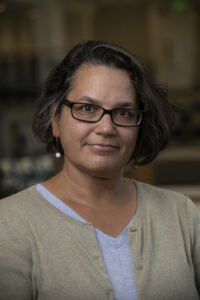
Julia Rodríguez
Julia E. Rodriguez is Professor of History at the University of New Hampshire. She is the author of the book Civilizing Argentina: Science, Medicine, and the Modern State (UNC Press, 2006); co-editor (with Adam Warren and Stephen T. Casper) of Empire, Colonialism, and the Human Sciences: Troubling Encounters in the Americas and Pacific (Cambridge UP, 2004); and a forthcoming book on the history of Americanist Anthropology in Latin America. She also created and edits the open-source teaching website HOSLAC: History of Science in Latin America and the Caribbean (www.hoslac.org). A National Science Foundation CAREER awardee (2006-2011), Rodriguez’s work has also been recognized by the American Council of Learned Societies; the National Endowment for the Humanities; the American Association for the History of Medicine; the New England Council for Latin American Studies; and Harvard University. At the Bunche Institute, Rodriguez will work on a new book project, Kids Are People Too, a study of children’s rights in Europe and the Americas in the twentieth century.
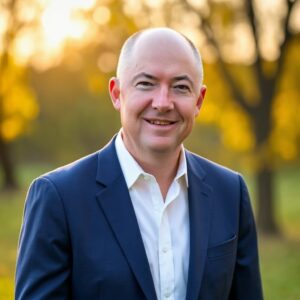
Lukas Haynes
Lukas Haynes joined the Institute as a Visiting Scholar to work on his book, Peace Through Power: FDR’s Military Leaders and the Pragmatism of the UN Charter, published by the Foreign Policy Association in fall 2025. Haynes has worked on philanthropy to shape U.S. foreign and domestic policy for almost 25 years, including as founder of Leveraged Philanthropy, a donor advising firm, and as CEO of the David Rockefeller Fund (2015-22), where he created and refined grants programs to promote climate solutions, criminal justice reform and democracy.
From 2022-24, Haynes was a visiting distinguished fellow at Stanford University’s Center on Philanthropy and Civil Society and he is a current board director of Rihanna’s Clara Lionel Foundation, Protect Our Winters Action Fund, Sepsis Alliance and Effective Institutions Project.
Haynes was a Harvard University Kennedy School Fellow in 2001 and he has published in The New York Times, The Economist, Comparative Strategy, and the Stanford Social Innovation Review. From 2000-01, Haynes had a White House appointment at the U.S. Department of State Policy Planning Staff and wrote for Secretary of State Madeleine Albright during visits to 30 countries abroad. He earned his Master’s in Politics and International Relations from Oxford University (2002) and a B.A. in International Relations from the College of William and Mary (1993).
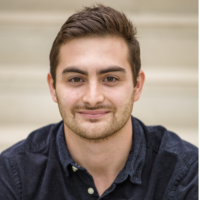
Michael Wakin
Michael Wakin is in the final year of his international relations D.Phil. at the University of Oxford, specializing in international political economy. His research investigates why some crisis-struck countries receive International Monetary Fund (IMF) bailouts right away while others wait much longer for financial assistance. It is a comparative case study analysis that foregrounds domestic distributional politics and interest group contestation in borrowing governments’ process to implement IMF conditionality and receive Executive Board approval. Michael is also the Senior Editor for Global Politics at the Oxford Political Review and an Editorial Assistant at Perspectives on Politics. Originally from New York City, he has prior work experiences at the U.S. Department of the Treasury and the Associated Press. As a journalist, Michael has reported from around the world, including Argentina, Lebanon, South Africa, Netherlands, Spain, the United Arab Emirates, and the United Kingdom. Michael was awarded the 2024 Overseas Press Club Foundation Scholar Award. For his full body of work including his publications see https://michaelwakin.com/.
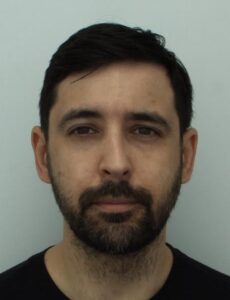
Radik Sadykov
Radik Sadykov, PhD is a Visiting Scholar at the Ralph Bunche Institute for International Studies. He is a sociologist specializing in qualitative research on work, professions, health, and social change in post-Soviet contexts.He holds a PhD in Sociology from the Higher School of Economics (Moscow), where his dissertation examined the professionalization of alternative medicine in Russian healthcare. He previously taught sociology at the Higher School of Economics and participated in a range of Russian and international research projects on work, professions, housing, and social cohesion in post-socialist contexts. He also served as Executive Secretary of the Journal of Social Policy Studies.
Since 2022, he has been based in Finland and has been involved in research at universities in Finland and the United States.At RBIIS, he is working on an ethnographic project on work and industrial change in Russian company towns, based on fieldwork in the automobile manufacturing center of Togliatti.
Stefan Tschauko
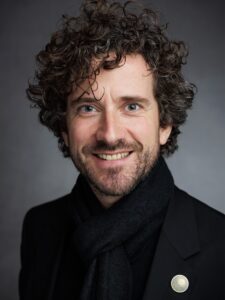
For more than a decade, Dr. Stefan Tschauko has been studying communications issues at the United Nations. In collaboration with the UN’s communications department, he also analyzed the UN’s approach to branding and social media. His analyses contributed to the restructuring of the UN’s social media workflow and to reviews of branding strategies across the UN system. Stefan has taught at Brown, Columbia, Harvard, Tufts, George Washington, and Fairleigh Dickinson Universities as well as Sciences Po in Paris. He has also held workshops on graphic design and on personal knowledge management at Columbia, Harvard, The Fletcher School, and the International Studies Association. Previously, he worked at a branding and graphic design company in Vienna and at the United Nations Alliance of Civilizations in NYC.
Stefan earned degrees in International Relations (PhD, MALD) from The Fletcher School of Law and Diplomacy, in International Management (MS, CEMS) from the University of Economics and Business in Vienna, and in Information Management (DI FH) from FH Joanneum in Graz, Austria. He spent exchange semesters at Sciences Po in Paris, Koç University in Istanbul, and the University of Portsmouth in the UK.