Project Team
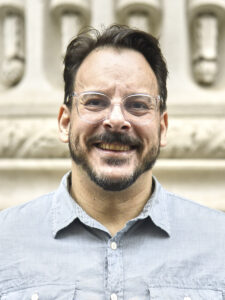
Eli Karetny
Deputy Director, Ralph Bunche Institute
Director, Project on UAP Studies and International Security
ekaretny@gc.cuny.edu
@ekaretny
______
Dr. Eli Karetny is the deputy director and the founding director of the Institute’s Project on UAP Studies and International Security, which supports the work of international relations scholars doing UAP research. Eli organized the UAP Working Group on UN Engagement to develop a framework for coordinating policy proposals with UN agencies. Dr. Karetny teaches a masters course on UAP Studies and National Security at the CUNY Graduate Center, serves on the advisory board of the Society for UAP Studies, and is a Senior Fellow at the Sol Foundation.
Eli is the Principal Investigator of the RBI’s core international research grants, he manages the Diplomat in Residence Program, and supervising the Visiting Scholars Program. Dr. Karetny also serves as the Institute’s program officer and legal advisor on human rights projects doing work at the United Nations, including the Global Centre for the Responsibility to Protect (GCR2P) on whose advisory board he sits. Dr. Karetny is also on the advisory board of the Center for the Study of the Holocaust, Genocide, and Crimes Against Humanity.
Dr. Karetny completed his PhD in International Relations and Political Theory at the CUNY Graduate Center, received a JD/MBA from Temple University, and an MS in international relations from New York University. He also served in the Peace Corps in Ukraine, and studies esoteric wisdom at the Hotam School in Israel. He has written on Leo Strauss’s concept of regime change, on the wartime history of the United Nations, and recently on the application of Peter Thiel’s interpretation of the katechon to US foreign policy. Eli is currently working on a paper applying Alexander Kojeve’s concept of a Universal State to Alexander Wendt’s work on the possible impact of UAP/NHI disclosure on global security.
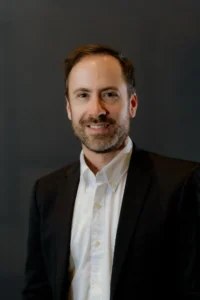
Joel Kady
Co-Founder, UAP Working Group on UN Engagement
Founder, Future Folklore
_____
Joel Kady is a NYC-based technology consultant who founded Future Folklore, an incubator for new companies and applied research engaging the UAP domain, and co-founded the UAP Working Group on UN Engagement at the Ralph Bunche Institute.
Joel completed his undergraduate studies in political economy at the University of Washington and earned his master’s degree at the New York City campus of Reformed Theological Seminary. His research interests include folklore and religious traditions as vehicles for encoding technical knowledge, alongside novel approaches to treating UAP data as engineering constraints for generating new technical hypotheses, architectures, and R&D pathways.
Joel works with law firms on major financial and accounting system implementations, reporting, and other technical projects. He previously served as a research faculty member at the Virginia Tech Transportation Institute, focusing on scientific computing, worked for several years as an ordained minister in NYC, and as a business consultant in Dubai.
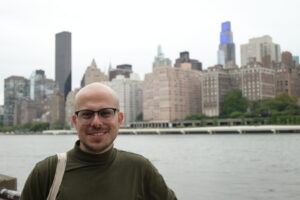
Juan P. Acevedo-Ossa
_____
Dr. Juan P. Acevedo-Ossa is a Moynihan Postdoctoral Fellow in International Affairs and researches international relations and international political economy, with a focus on hegemony and China in the Global South. He received his PhD in political science from the Graduate Center, City University of New York, where his dissertation analyzed how status concerns shape state behavior in multilateral institutions. He employs mixed methods, combining inferential network analysis with data from elite interviews. Before entering academia, Acevedo-Ossa spent several years working on international trade in China, Brazil, and Colombia, where he also taught international trade and Mandarin, and that experience continues to inform a research agenda attentive to how structural power and perception operate in the everyday practice of diplomacy.
Currently, Juan continues pursuing his agenda on status in IOs and China and India’s claim for leadership in the Global South. He is also beginning a project on the social determinants of Chinese foreign direct investment in Latin America, examining provincial government investment networks and small investors’ ties through social influence regression and temporal network models, supported by interviews with investors, chambers of commerce, and local politicians in both regions. His work has appeared in Review of International Political Economy, International Interactions, and the edited volume Diplomatic Strategies of Nations in the Global South, with a chapter forthcoming in the Routledge Handbook of Power in International Relations. He writes for broader audiences in Foreign Affairs Latin America, Africa is a Country, and El País, and is a co-founder of the China at CUNY Initiative, the Human Rights Hub, and the Center for the Study of the Holocaust, Genocide, and Crimes Against Humanity. At the City College of New York, he teaches “Contemporary International Politics” and, working with program director Dr. Nicolas Guilhot, is strengthening the China component of the Master’s in International Affairs through a competency-based curriculum redesign.
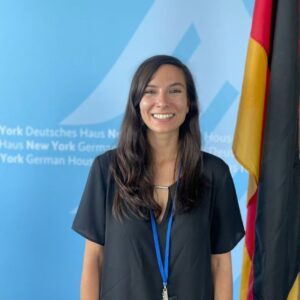
Laura Altinsoy
PhD Candidate – Political Science
_____
Laura Altinsoy (she/her) is a PhD candidate in Political Science at the CUNY Graduate Center, specializing in International Relations with a minor in Political Theory. Her research focuses on international organizations, global political economy, U.S. hegemony, Third World contestation, and financialization. Her dissertation examines how U.S. hegemony was contested and reconstituted through international institutions and global finance from 1955 to 1986, with particular attention to the IMF, UNCTAD, G77, NAM, NIEO, and the role of financial networks.
She also teaches undergraduate political science courses at CUNY, including American Government, U.S. in an Age of Globalization and Modern Political Theory. She previously served as a Political Affairs Intern with the Peacebuilding Commission Support Branch of the United Nations Department of Political and Peacebuilding Affairs at UN Headquarters in New York. Her academic background includes an MLitt in History from the University of Dundee, where she graduated with distinction and received the Charles McKean History Prize, and an MA Honours degree in Philosophy and Politics from the University of Edinburgh, where she graduated with First Class Honours and received prizes in Philosophy of Science and Logic. She has also lived, studied, and worked in several countries, including Germany, New Zealand, Australia, Scotland, and the United States, and has traveled extensively and participated in volunteer work in Central America, Africa, and Asia. She speaks German, English, French, and Spanish.
Organizational Partners

Advisors
Thomas Weiss
Director Emeritus, Ralph Bunche Institute
Presidential Professor, Political Science
tweiss@gc.cuny.edu / CV
______
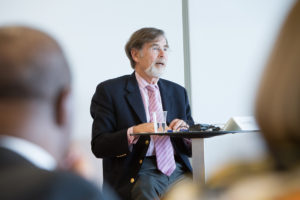
Thomas G. Weiss is Presidential Professor Emeritus of Political Science at The CUNY Graduate Center and Director Emeritus of its Ralph Bunche Institute for International Studies. He is Distinguished Fellow, Global Governance, The Chicago Council on Global Affairs; and Global Eminence Scholar, Kyung Hee University, Korea.
He has written extensively about multilateral approaches to international peace and security, humanitarian action, and sustainable development. Recent books include: The “Third” United Nations: How a Knowledge Ecology Helps the UN Think (2021); Rethinking Global Governance (2019); The United Nations and Changing World Politics (2019). Among his recent edited volumes are International Organization and Global Governance (2023), Cultural Heritage and Mass Atrocities (2022), and Global Governance Futures (2022)
Mike Cifone
Founder and CEO, Society for UAP Studies
Editor, Limina: The Journal of UAP Studies
_____
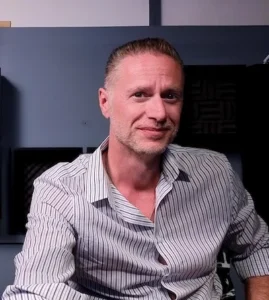
Dr. Mike Cifone received his Ph.D. in the history and philosophy of science from the University of Maryland in 2009. His early research focused on the conceptual foundations of theoretical physics and the metaphysical implications of relativity and quantum theories. Dr. Cifone has published in multiple journals in physics and philosophy and has taught philosophy, philosophy of science, ethics, and logic at institutions across the United States. Since 2016, he has served as a lecturer in philosophy at the City University of New York (CUNY–Bronx), and since 2017, at St. John’s University in Queens, New York.
Dr. Cifone is the founder and CEO of the Society for UAP Studies (SUAPS) and the founding editor of Limina: The Journal of UAP Studies. Established in early 2022, both the Society and the journal serve as core infrastructure for the growing academic field of UAP Studies. SUAPS provides opportunities for peer-reviewed publication, regular academic convenings, interdisciplinary debate, international cooperation, and the strategic development of UAP Studies as a legitimate scholarly discipline.
His current work focuses on the philosophical and conceptual challenges of constructing a science of UAP, with particular emphasis on scientific methodology, epistemology, and theory-building. In February 2025, Dr. Cifone was awarded a research fellowship at the Center for Alternative Rationalities in Erlangen, Germany, where he will begin work in October 2025 on a book project advancing foundational ideas in UAP Studies.