The UN and the Arab-Israeli Conflict: Lessons from the Past for a Fractured Middle East
How has the United Nations shaped the management of the Arab-Israeli conflict, and what can its history of peacekeeping teach us about the challenges facing the Middle East today? In this episode of International Horizons, Eli Karetny speaks with Diego Salama, Research Associate at Leiden University’s Institute of Security and Global Affairs, about his new book, The UN’s Multi-Dimensional Approach to the Israel-Arab Conflict, 1967–1982: An Architecture for Peace.
Drawing on previously classified UN archival material, Salama examines how four UN operations developed into an interconnected regional peacekeeping system, highlighting their operational achievements, institutional limitations, and capacity for innovation. The conversation explores the UN’s role in the negotiations following the 1973 Yom Kippur War, the challenges posed by the aftermath of October 7, and the growing crisis of confidence in multilateralism. Salama argues that the UN’s institutional memory, established relationships, and operational experience remain essential assets for addressing the region’s future, even as its structures require reform and renewed strategic direction.
Transcript
Eli Karetny — 0:00
The Middle East is once again at a precarious crossroads. Tuesday’s pivotal election in Israel took place against the backdrop of intense regional instability, including ongoing concerns regarding hostilities with Iran and the potential for a resumption and escalation of regional conflict. What can the history of the Arab-Israeli war teach us about the current landscape? What lessons can be learned about the past and future role of international institutions in bringing stability and peace?
These questions hit especially close to home here at the Ralph Bunche Institute, our namesake, received the Nobel Peace Prize as UN diplomat for mediating the armistice agreements between Israel and four Arab states following the 1948 Arab-Israeli War. If only the peace Ralph Bunche dreamed of would have prevailed. In 1967, war returned, and a broader UN peacekeeping framework was implemented in the wake of that conflict, a now precarious framework which, according to a new scholarly analysis, may contain historical lessons for our current moment. Welcome to International Horizons, a podcast of the Ralph Bunche Institute for International Studies that bring scholarly and diplomatic expertise to bear on our understanding of a wide range of international issues.
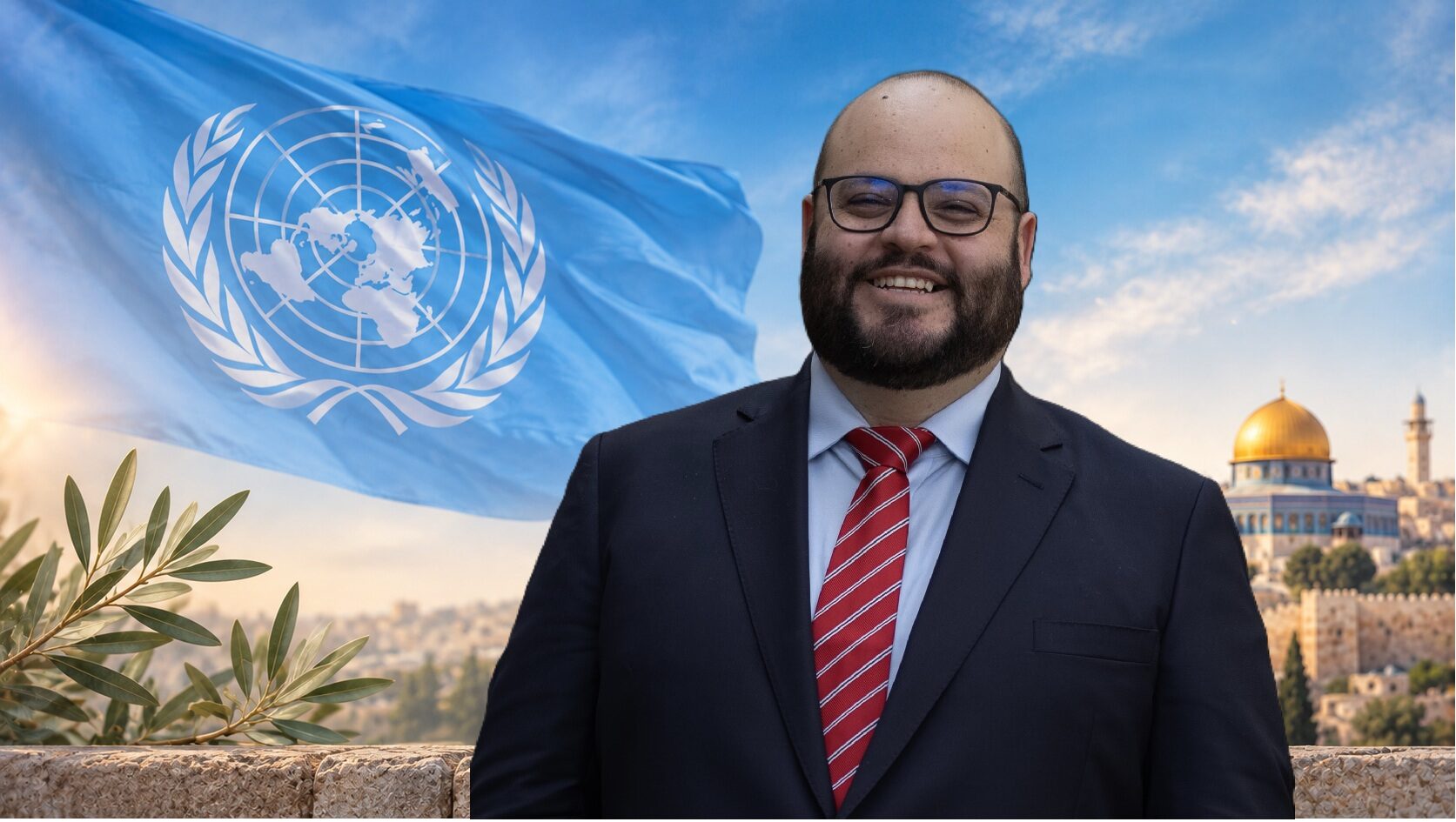
My name is Eli Karetny. I am the deputy director of the Ralph Bunche Institute at the Graduate Center of the City University of New York. Here with me today is Diego Salama. Dr. Salama is research associate at the Institute of Security and Global Affairs at Leiden University, and the managing editor of the journal Global Governance. His research focuses on the history and practice of UN peacekeeping, multilateral diplomacy, institutional adaptation, and the United Nations’ role in the Middle East. More broadly, his work examines how international organizations operate under political institutional constraints, with particular attention to the office of the Secretary-General, relations between UN organs, and the coordination of peace operations. Diego is here with us today to discuss his new book, The UN’s Multidimensional Approach to the Israel-Arab Conflict, 1967–1982: An Architecture for Peace, which draws extensively on previously classified archival material from United Nations archives to reconstruct how different parts of the UN system interacted across the Arab-Israeli conflict.
The book examines how the United Nations Secretariat built a coordinated regional peacekeeping architecture across the Israel-Arab conflict between 1967 and 1982, tracing its operational achievements and the structural limits that ultimately constrained them. Welcome, Diego. Thank you for joining us on International Horizon.
Diego Salama — 2:58
What a pleasure! Thank you very much for having me. Having been a long-time follower of the institute’s work and of the podcast, it’s really delightful.
Eli Karetny — 3:07
Thank you so much, Diego. Before we turn to the four operations, the four UN operations, which are the focus of the book, can you explain why you chose 1967 as your starting point? Set the stage for us in terms of how the Six-Day War transformed the regional landscape.
Diego Salama — 3:28
So, I wanted to understand the genesis of the question was between the peacekeeping operations that are still deployed today. That’s UNTSO in Jerusalem, UNDOF in the Golan Heights and UNIFIL in southern Lebanon. You can drive. It’s there in driving distance. They’re so close to each other. UNTSO operates everywhere, where UNIFIL and UNDOF are as well. So, my initial, the genesis of all of this was: I wanted to understand whether there is a grand plan, whether there is a big strategy, whether the UN really has a proper architecture, because there has to be a reason why there are so many peacekeeping operations, as opposed to having a holistic one peace operation for the Israel-Arab conflict.
Instead, there’s different ones. So, I wanted to understand why and if there is a plan, whether it works. Of course, I wanted to trace all of it. I wanted to write a book of the entire history of this.
But my PhD supervisor told me that I needed to graduate, so she said you need to focus. So, I picked 67 because it is the moment where the paradigm of peacekeeping changes in the Middle East, and because from 67 until 82 is a period where peacekeeping is the busiest, because there is of course the withdrawal of the UN Emergency Force in in the Sinai Peninsula, which is which takes place hours before the start of the Six-Day War. Then. There’s of course the war itself, which transforms the region in unprecedented manners.
But my interest was not to retell that story that’s been told many times by far better scholars. But I wanted to understand this: What did the UN do? How did the UN behave during and after the war? And then that led me to understand that there were essentially two tracks: one was the political track, and one was the peacekeeping track.
And of course, they were highly interdependent, and the success of one usually affected the other. But 67 really was a pivotal moment for peacekeeping and for the UN. Of course, this is true for the entire region and for the entire landscape. But for my question, 67 really was an important year for the UN.
Eli Karetny — 5:45
That’s great. Thank you for that. That really sets us up to understand the story you tell in the book, which offers the first integrated institutional history of the four operations you discuss: UNTSO, UNEF II, UNDOF, and UNIFIL, which you treat not as isolated deployments, but as components of a deliberately managed regional system. So, can you tell us about each of these operations? A little bit about the circumstances that gave rise to each, and then how the missions changed over time and became more integrated.
Diego Salama — 6:23
Of course, UNTSO was the first. It was deployed very early on after the armistice agreements. Which, of course, the namesake of your institute was the architect that I cover. I try to do justice to Dr. Bunche in the first two chapters of my book. I don’t think I did a good job, but that I think I try to gage the enormity of his work. So UNTSO is an operation that is unique. It has it has an area of operation that goes beyond one country.
It has satellite offices in Amman, in Tel Aviv, in Egypt, in Syria, and it is a lightly. It’s an unarmed, very small operation. It has around at its highest, it had around 600 people, all officers. P5 countries, so permanent members of the Security Council, did contribute officers to this operation, unlike many others, and it is the let’s say the heart of the work of the UN in the Middle East.
It was it assisted in the management of the military of the bilateral armistice commissions that Israel had with all of its neighbors, and it is based in Jerusalem at Government House, so it is, it really is at the at the epicenter of the work of the UN. The UN Emergency Forces I and II were essentially deployed in order to keep the Sinai Peninsula as quote unquote peaceful as possible. As a result, of course, of the 1956 Suez Canal Crisis, that was the deployment of the first UN Emergency Force. That force was withdrawn, and we can get into the into the politics of that a bit later if you want.
And then it was from 1967 until 1973. UNTSO is the only operation that is deployed. They have observation posts all around, but they are not allowed to do much than observe and report to the Security Council. Afterwards, after the 73 war, the very quickly the UN manages the initial negotiations between Israel and Egypt at kilometer 101, and they lower the temperature enough for the Geneva Peace Conference that takes place later in 73, early 74, as a result of that, the second emergency force is deployed in the Sinai Peninsula.
A few months later, and after a very, very much more difficult negotiation between Israel and Syria, the UN Disengagement and Observer Force is deployed in the Golan Heights with a very narrow area of operations and a very narrow mandate, which was to ensure a separation between the armed forces in Israel and Syria, so that is how the architecture was. Let’s say on August 1, 1974. Four years later, as a result of heightened security concerns and skirmishes between Israel and the PLO, and while the Camp David negotiations were taking place, the UN, as a result of Israel’s invasion of southern Lebanon in 1978, they deployed the interim force in Lebanon, UNIFIL, which was initially set up to monitor the withdrawal of Israel from southern Lebanon, so that was the architecture. Normally, if you think, if you look at all other peacekeeping operations, if you look at the Oxford Handbook on peacekeeping operations, you see every chapter has one operation.
So, they seem to be very bottled. You know, MONUSCO is one chapter. UNTSO is one chapter. UNDOF is one chapter.
To me, that didn’t tell the story. That didn’t tell the whole story because what I found in the archives is that the operations, from the onset, literally even before they were conceived formally, they were already starting to depend on each other. UNTSO started to provide this backbone support to the operations when UNDOF and UNEF, in particular, were authorized their deployment, especially in the Sinai Peninsula, the Security Council gave the UN 72 hours to have boots on the ground. We’re talking about 1973.
Logistics are not what they used to be, what they are now communications were not what they are now, so imagine how they were sending each other cables and they had
So, the only way the Security Council and the Secretariat was able to deliver these boots on the ground in hours was to actually start counting on the resources that they had on the ground, so they started to depend on each other, and then the interesting part is that the mandates never changed. So that’s why they are still each a chapter in the Oxford Handbook on Peacekeeping Operations. However, there became an explicit, no, I’m sorry, an implicit expectation of the Security Council that they were going to rely on each other without changing the mandate, and then thus became the architecture. That there were different operations that had different expertise, different troop contributing countries that started helping each other, and the system became quite codependent.
Eli Karetny 11:38
That’s great. Can you say more about the nature of the integration and how what was guiding it was this about logistical support was this kind of operational kind of mutual dependence on a kind of on the basis of resources and on the ground, or was there also kind of some guiding principles, a kind of guiding vision that was integrating their work?
Diego Salama 12:11
A bit of both. The idea was first, really, necessity really is a matter of innovation. So, these guys were struggling with for resources the same way peacekeeping today or the UN in general today is struggling for resources. These guys were struggling for resources too, but also, it was a question of how sensible this was for the troop contributing countries.
It made sense for them to collaborate. That’s on one level, now the higher level, which is the political side, yes, there was a guiding principle, which was these operations were parts of a holistic plan or a holistic implementation plan for the UN for conflict management. So, when they were discussing in Geneva the deployment of all of these operations, they were parts of a big board. So, the integration was at the beginning.
It started really because of necessity, like physical. We need troops on the ground in in the Sinai Peninsula, or we need logistics to move from the Sinai Peninsula to the Golan Heights or to the or to southern Lebanon, but afterwards it became a question of okay we need to integrate we need to coordinate and that’s where the figure which is the central figure in my book Lieutenant General Ensio Siilasvuo from Finland becomes the key player because he was chief of staff which is the force commander equivalent for UNTSO is the only operation that has that fancy title in the Middle East. Siilasvuo was the chief of staff, but he was also then moved in 73. He’s moved from Jerusalem to Ismailia quickly, and he becomes the force commander of UNEP.
And as he’s coordinating all of this, he basically, and I have this from the from his letters. He sent a letter to the Secretary-General where he says, “Okay, this has been fun, but we need to create a unified command because we have too many assets on the ground, and we need to coordinate them better.” So, I propose that we create a unified command for peacekeeping operations in the Middle East. And you have to make me, and also, it’s me who’s going to do it, and you are going to make me an underSecretary-General. This is all in one letter.
Like this guy had guts. The secretary was like, “We’re going to agree. We’re going to meet in a happy middle. We’re going to make you a coordinator. We’re not going to create a unified command that’s going to create all kinds of political problems that you that we don’t want to deal with, and we’ll make you an assistant Secretary-General for now”, he got promoted afterwards. But he created the job himself. He wrote the terms of reference, and he sent them to New York. And New York was like, okay, yes, yes, yes, maybe not.
And they haggled. And then Siilasvuo became the chief coordinator. Now, the idea was for the office of the chief coordinator too. Create a backstop for the operations.
So, when there was need for higher political discussions, for example, when there was a need to discuss with the Israeli Ministry of Defense or the Lebanese Ministry of Defense, Siilasvuo supported the force commanders and played that. Let’s say, you know, it led, it allowed the force commanders to work on the operation on the actual day-to-day of the of peacekeeping, and he dealt with the politics. So, the evolution of all of this was really accidental, if you will. It’s not that they started with this idea we’re going to create a command and have this grand plan.
This came from the field, and that’s also interesting because a lot of the innovation of peacekeeping in that time, started in you know in Ismailia and Jerusalem, not in New York.
Eli Karetny 15:46
Can say a little more about the what the political pushback would have been had his request been granted and he had been you know made undersecretary rather than being what was the legal coordinator? So, what was the compromise arrangement there, and what were they guarding against?
Diego Salama 16:07
Well, essentially, the rank was not really a big concern because the member states didn’t really seem to care whether he was assistant or undersecretary. The reason they made him assistant at the beginning was because he reported to Brian Urquhart and Roberto Guyer, who were of course bunches successors and mentees, and essentially what they what this came from the Office of Legal Affairs. What they wanted to was ensure that there was a little bit of a hierarchy in reality, and this is what I found in the archives, both Gaier and Urquhart said that we don’t mind. Like we like Silas, we can work with them.
What was the problem was the idea of a unified command, for two reasons. One, the different host countries of the operations wanted to keep that UNIFIL deals with southern Lebanon, UNDOF deals with the with the Golan Heights UNEF deals with Ismailia, and they didn’t want to give this notion of this sensation of creating this unified big command, even if it wouldn’t have been, because they didn’t have the resources to create a regional Ministry of Defense, if you will. There were no resources, nor political will, nor nothing. But the member states were very cautious.
Also, these countries did not want to give the impression that these operations were there permanently. The idea of UNIFIL really, and that’s why, hence the name interim force in Lebanon. So, this idea of creating a unified command would have given notion that the UN foresees that the operations will stay there forever. Of course, they stayed for half a century, but it was also a question on perception.
The same with UNDOF. So, the name of UNDOF is very clunky name. United Nations Disengagement Observer Force. This was also a compromise because essentially what they what there was a discussion between Israel, the UN, and Syria as to how big and how much the how wide the mandate of UNDOF would be, and one side wanted the war disengagement, one side wanted the word force.
Observer was the compromise, hence the name UNDOF. So, the member states, even though accepted de facto this collaboration and this coordination, the Eure wanted to maintain this idea that one operation for one area of operations. Now, of course, underneath all of this is UNTSO, which doesn’t fit the mold because it doesn’t have this regional. It’s not bound by regionalism or by let’s say an area of operations like the others, and again we let that happen, and there was this notion of okay, UNTSO can continue work in this way, but the other ones really have to fit to the mall.
Eli Karetny 18:56
I want to come back to this question about the role of permanence, kind of institutions that are set up on a on a more permanent basis, and how that ties in with the kind of the principle of UN multilateralism. But let’s hold off on that for a moment, and maybe talk a little bit about the successes, because the UN’s record in the Arab-Israeli conflict has been mixed, which means also not all bad. You highlight genuine operational achievements alongside serious shortcomings. Can you talk about some of the achievements, the operations in the Sinai, in the Golan Heights, southern Lebanon, which, among other things, they did separated forces, held lines, created physical and political space within which agreements became even conceivable.
Diego Salama 19:52
Yeah, so I think this was Alexandra Novoselov in a paper that she wrote on all their operations. And she discusses UNTSO. I’m pretty sure it was her that said, you know, UNTSO and all of the others should not measure him against them fixing the problem or solving the conflict is really unfair because this is really above their pay grade. And this is very true.
I mean, you really have to adjust your expectations of peacekeeping in the Middle East, especially because they’re not there to solve anything. They don’t have the resources, the backing. They’re not set up for that. So, you really have to fit.
You have to, as you say, adjust for inflation, if you will, because otherwise it doesn’t make sense to analyze them. However, in terms of successes, I would say first the fact that the UN was the entity that negotiated in Kilometer 101. This was a negotiation that was set up by the UN. Siilasvuo, so the Lieutenant General that I discussed earlier, he was the chair. He was assisted by two people from the Office of Special Political Affairs, and they set up a literal military tent. And I, to me, this was very interesting. And I put photos of this negotiation in the book. And in this military tent, they had for this was days after the Yom Kippur War finished.
So, Israelis and Egyptians that were at war days before had to sit down in a military tent. No press, no diplomacy, no fanfare. Literal military guys from side A, side B, and the guys with the blue helmets. They sat down and they negotiated.
It was really difficult because the first two days it was shouting because they needed to let out the grievances. They needed to release the pressure of the pressure cooker, and afterwards they needed to start discussing the initial moments for lowering the temperature that was that was so required, in order for what then became the shuttle diplomacy, the Kissinger initiatives, the Geneva Peace Conference. But all of that before all that happened, you needed to you needed to lower the temperatures immediately. The UN did that.
The Americans were not there. The Soviets were not there. Nobody was there except the Israelis, the Egyptians, and the and the UN. Even and Kissinger at some point complains that, and he writes this in one of his in one of his memoirs.
He said like you know this process was really testing my patience because I was two days behind, and that was interesting for you know a Finnish general that nobody knows existed to be two days ahead of Henry Kissinger. And everybody talks about his successes with the Channel diplomacy, but in reality, all of this started because the UN was there to provide that space. And there was even a mechanism through which Siilasvuo, whenever they needed to come up with an idea, but neither side could be seen as either the party who agreed or the party who proposed. So Siilasvuo came up with this idea that we’re going to have statements of the chairman, and at the end of the day, when he when they needed to communicate that they had agreed on something, it came as statement of the chairman.
The you know General Siilasvuo believes that so and so needs to happen. As a result of this process, the first six-point agreement between Israel and Egypt is signed, and this solves a number of immediate concerns, including the return of bodies, the entrenchment of the Egyptians’ army. All of these were immediate concerns. That’s one.
The second is a few years later when UNIFIL is deployed. This is a very hot situation. So there is a terrorist attack in Tel Aviv that gives way to the Israeli invasion of southern Lebanon. This is a hot situation, and when they deployed UNIFIL, they needed to do it quickly and robustly.
Whether UNIFIL as a whole is successful or is not successful is not my point. My point was the deployment. The fact that this is the initial force commander says quite directly in his memoirs, UNTSO and the rest of the UN became the rear headquarters of UNIFIL, and we were able to have boots on the ground within 24 hours.
That level of flexibility was impressive and very necessary to establish the beachhead, if you will, for the UN. So, these this process really was important and successful. And UNTSO, the third example is now still there. They’re still working, but they’re also on top of doing their normal work. They have become this quasi-think tank for peacekeeping inside the UN, where whenever there is an operation deployed or whenever there is an urgent need for thinking inside, UNTSO delivers and helps other operations in their startup pace. So, I think these operations were very helpful. And Siilasvuo, in particular, when he was there, he was very helpful at quiet diplomacy. He was able to talk to, for example, in southern Lebanon, the fourth commander was. Able to deal with the PLO, while Siilasvuo was able to deal with the Israelis, and then they were cross-checking information. So, they were very helpful at getting the parties to send each other messages because this was after the Armistice Commission disappeared as a result of the Six-Day War. So, the UN played an important role. Now, did it help in the in the grand scheme of things? Yes, because in reality there hasn’t been a conventional war in the Golan Heights. You can argue that a lot of the situations where there is success is because the member states and the countries involved really want it. And of course, like it happened in 2006, no matter how good UNIFIL was, there was no stopping the 2006 war because neither side was really willing to listen to the UN. So, the UN, the best that UNIFIL could do in 2006 was get out of the way and try to stay alive. But when the operations are supported, they were delivering a lot of value.
Eli Karetny 25:59
Wow! Wow! This is a history that I should be more familiar with, and I’m embarrassed to say that some of these details I’m hearing for the first time. And it’s fascinating what you say about in the case of Kissinger being two days behind. Maybe you say a little bit more about the extent to which that the framework the points that came out of that those the UN moderated you know in the tent you know the Egyptians and the Israelis and only the only diplomats the only kind of mediators there are the UN people to what extent was the framework for an ultimate peace agreement. The beginnings of that kind of worked out, you know, there in the tent under UN mediation.
Diego Salama 26:52
So, the idea of the six points was to implement a ceasefire to have a humanitarian convoy that supplied the city of Suez, the free flow of water and food for the Third Army, the Egyptian Third Army that was encircled after the war. So, all of these were more than more than the basic building blocks.
Without any of this, there was no Geneva. The Geneva Peace Conference was interesting, and the Kissinger thing is very interesting because I found one of the things that I found in the book is folder of the of letters and meeting minutes between Kissinger and Waldheim, Secretary-General Waldheim. They had a very interesting relationship, and it was quite active. But you can see if you cross check, of course, with the with the archives, with the American archives and Kissinger’s own books, he was dealing with Waldheim.
He wasn’t really making him a partner, but he needed to keep him sufficiently informed. But there is a discussion, and this is to me one of the most interesting parts of the book. Where, and I have this in I quote this verbatim where Waldheim tells Kissinger I do not wish to interfere, but I really think the UN should be at the table, and the table in question was the Geneva Peace Conference that took place in Geneva at the UN, and Walheim had to negotiate with Kissinger whether he could be invited to his own house, because as a result of the of the Jarring mission that is the diplomatic mission of Gunnar Jarring that is sent after 1967, which is a fiasco, the UN loses a lot of political capital. So, after this 73 war, this there is no desire to have another UN envoy as Gunnar Jarring.
So basically, Kissinger says, “You know what? I’m going to take it from here.” But still, the framework was important. The UN still needed to be there. So, Waldheim agrees tentatively.
He says, “You know what? I’m going to check. I’m going to send. I’m going to communicate with the other members of the Geneva Peace Conference. And if everybody agrees, you can come, but also, you’re not going to chair”. So, it’s this is not a UN conference, even though it was at the UN with a bunch of UN people. Anyway, Siilasvuo is in country, so he’s, you know, he’s doing his job. He meets with the Egyptian president, and the president says to him, “Ah, General, I’ll see you in three days in Geneva”.
Siilasvuo is like, “No, no, no, no, no. This is not me. This is you guys. This is above my pay grade. Have a good time”. And then he says, “No, no, General, I will see you in three days”. Three days later, Siilasvuo gets the call. “You have to come to Geneva”.
And then he does come to Geneva. So, the conference politically doesn’t have any big result because there were too many grievances, it was not the time. However, and this is where the UN comes again, the conference creates a military working group, chaired by who? Siilasvuo.
So, all of the negotiations, the design of the operations, the negotiations for the troop contributing countries, who was going to be the force commander, what’s going. The mandate, all of that is done under the chairmanship of Siilasvuo and the UN. So, when we say the UN is useless, the UN is not helping. The UN is all of these things.
In reality, what we have to analyze and we have to be honest is there were moments, and if the UN was given the chance, it really played a big role.
And what Kissinger sometimes in the tent, what happened with Kissinger and Siilasvuo was that yeah Kissinger didn’t get the information as quickly because again there was no WhatsApp, so there were a lot of decisions that took place on Monday, and Kissinger, who was in Washington, found out on Tuesday, and between the time difference, the fact that they were literally in the middle of nowhere at a tent, also made communications interesting. But that also helped because these negotiations were done by seasoned generals on the three sides: the UN, Israel, and Egypt. They were very professional. They were very well chosen, actually, by the three sides, and that this helped a lot. So, in the end, the UN plays this important role of at the operational, if you will, level. Politically, it was much more difficult. They tried in between ’67 when Secretary-General U Thant was in office. They tried to be the leader at the political level, but Jarring couldn’t get anywhere because well, the tensions between like post 67, nobody really wanted peace because the grievances were too much. The Six-Day War left such a change of map of map of reality of politics that it was impossible for them to do it.
Eli Karetny 31:33
Well, which so much rich historical detail and nuance in your analysis. Really, I really recommend our audience read the book because there’s so much to learn from the examples and from your insights. But I want to bring us to the present. This last point you made about how in a in a you know post ’67 the climate in the post 67 Middle East was such that, as you say, nobody wanted peace, and regrettably, that seems to have echoes that apply, you know, that carry over to our current moment. So maybe we can we can come to the present. Let’s come to the present and apply some of these historical insights to our current situation. In your assessment, how did the horrific events of October 7 and the ensuing violence in Gaza transform the dynamics that you explore in the book? What can be said about the frameworks, the four UN operations, in light of the changes that resulted from the October 7 attacks and the violence that followed.
Diego Salama 32:55
So, I think it’s fair to say that October seven broke everything. The attacks, the war, none of the architecture that is designed ever conceived something like this. So, the paradigm broke. One could argue that was already broken, but for the UN, this was I think, this was horrific for everybody involved, including UN, all the UN agencies, all the staff, all the staff that that passed away, the agencies that have now erosions of credibility, erosions of funding, erosion of effectiveness, the just the level, the degree, the catastrophic degree of pain and damages and suffering that is being suffered, is enormous. Now, when I think about, there’s been a lot written about how the UN should behave, and now we have well, in hopefully in the next coming in the coming weeks, we’re going to have a new Secretary-General, and she will have to really make clear cut decisions.
Eli Karetny 34:08
Interesting, you said she. Sorry to interrupt you. You have somebody in mind?
Diego Salama 34:13
Of course I do. Of course I do. Of course I do. But my point is, whoever is in the chair, they will need to have two things.
One is a Middle East policy, but they also need to have country strategies. And while they can be somewhat interdependent as they should, the Secretary-General needs a quick and decisive Lebanon policy, an Israel-Palestine policy, a Gaza policy, and these need to be conscious, strategic decisions about where should the UN lead, where should the UN partner, where should the UN follow, where should the UN not play a big role. But this needs enormous expenditure of political capital.
Now, when we think about all of these frameworks, the ad hoc ideas, chief among them, the Board of Peace. One of the biggest shortcomings of the Board of Peace is that it is the Board of Peace is ignoring all the existing framework that is there. Chief among all of this is UNTSO. Now, don’t get me wrong.
UNTSO is very old, and its mandate was written by guys who barely had a typewriter. So UNTSO is old, and it’s ripe for reform. And yes, but of course that leads to a whole other set of problems, which is a new Security Council resolution, which would be required. My belief is that UNTSO could play a very important role in coordinate in coordinating all the security apparatus that is going to be necessary.
So rather than creating this what’s it called a stabilization force, the ISF I think is the right acronym, I believe that UNTSO should be given that role to lead, and UNTSO can coordinate because they already have the offices. They already have the institutional memory that the board of peace is going to try to recreate. On the humanitarian front, I think that there’s a hugely important need for the UN to have a good coordinator, special envoys, to also bolster the country team in Gaza, and it needs to find good partners because, of course, the UN cannot afford to do all of these things. And the reconstruction of Gaza alone is, I mean, the numbers that I’ve seen are staggering.
So, there is a need to discuss where should we lead. Now, in Lebanon, in southern Lebanon, with UNIFIL being withdrawn, there is a huge question mark as to who’s going to fill up the void. There’s discussions of a European mission. There’s discussions of different architectures that are being presented, and I think that UNIFIL had a very checkered history, mainly because it was never set up for success.
UNIFIL was never given the right tools, the right backing for success, and they did the best they could in an impossible situation. So, however, they’re still I don’t know things around 10,000 plus strong right now in southern Lebanon. That is going to leave a void, even if the critics on both sides, because UNIFIL gets criticized not from two sides but from five sides, that they say, “Oh well, you know, UNIFIL didn’t stop one side or the other from attacking each other,” which is somewhat true, but still they created a buffer whenever the conditions were ripe. So, to me, it’s going to be important for the UN to decide if they want to take the lead in the future of southern Lebanon.
But more broadly, the Secretary-General needs a Lebanon policy. So, for me, now what we can learn from these from the architecture is again adjust for inflation in the sense that know where can the UN be the most successful? Stay there. Partner where we can support, where the UN can support others.
And when it is backed properly, it can. It has an enormous architecture that can be successful. But to send any international organization or any framework in a half-baked manner, of course, they’re going to fail. So, what we can learn is let the field innovate.
This is what happened in my period. A lot of these innovations were field-driven. Give them the backing when the innovation is good, and support them as they implement, and when it doesn’t work, then readjust. But to me, that is fundamental.
Eli Karetny 38:49
Given the substantial role in your assessment that the UN should play, needs to play in getting us to stabilizing, you know, the situation in the region. How do we overcome what’s often called and you describe as a crisis of confidence in multilateralism? You say that in the aftermath of October 7, October 7 didn’t create the crisis of confidence, but it did accelerate it. So can you say something about why that’s the case and how we get past this crisis of confidence, which is very real. This is not abstract. This past week, we hosted along with Columbia at the Ralph Bunche Institute, we hosted a conference on the future of the UN and with an emphasis on UN communications. But several UN diplomats were there, UN scholars, and there really was kind of hanging over the conference this sense of almost despair. Not only the kind of the geopolitical landscape globally and in the region, but at the state of the UN. So, how do we overcome this perceived crisis of confidence so that the UN can play the role that it that it has to play, in your assessment?
Diego Salama 40:19
So, to me, the crisis is very real. The Secretary-General and everywhere below, but really starting from the Secretary-General, there needs to be a really strategic, conscious approach towards what we do, and that may mean that there are things that maybe we shouldn’t be doing, or we should be doing as much, or we should partner with somebody, or maybe we should. So, I think the first thing we need to do is look inwards. What is the UN doing that could be better?
Second, we need to tell the story better. I think that it’s one of the biggest thing, and I know about the conference because actually one of my colleagues was there, and what he tells me is the same that there is this there is this despair of you know multilateralism is in crisis. There are so many colleagues who have lost their jobs. The agencies are losing operational capacity, and this is all true, of course, and this is terrible.
But in order to get out of this, I think there needs to be a realignment into doing what we do well, keep doing what we do well, but also be self-aware enough to say there are things that we should not be necessarily doing, and tell better stories. And for example, I think that one of the things that the Secretary-General needs to do in January is go to the region and sit down with journalists. Sit down, and I don’t mean just necessarily the big newspapers in you know in these countries. I mean civil society, and you need to listen.
You need to tell the story of what you’re doing, and you need to do it better. So, we need to move. the UN needs to move away from, let’s say, defense towards. I mean, this is a bad word, but like offense in the sense of actually telling the stories better, telling the successes better, highlighting what they do well, and sometimes, of course, it’s easier for journalists and for researchers and for everybody to pick the failures. Those are sexier.
You get a better published paper in Foreign Affairs if you write on the failures of peacekeeping rather than on the successes. There’s more papers on Rwanda that there are on Namibia, a very quiet operation that nobody talks about. So, of course, but that’s why if we want to defend multilateralism, we have to tell its story better. We have to highlight its successes more, and we have to be self-aware enough to say we cannot just shout to the echo chamber everything that the multilateral system doing right now is optimal and amazing because it’s not.
There are things that are ripe for change. This is my argument with UNTSO. I think UNTSO is a should be and could be a very important asset. Rather, and I think it’s much better placed than the Board of Peace in actually implementing things.
But this doesn’t mean that UNTSO is not ripe for reform, and that UNTSO needs a creative revamp. So, two things can be true at once. The multilateral architecture we’re trying to defend is fundamental, is important. However, it’s also complicated, bureaucratic, and needs change.
Two things can be true at once. We have to tell that complexity without sacrificing it. That’s how you defend multilateralism. So, my hope is that the next Secretary-General sees the region as critical, but not necessarily of just because of the crisis.
The future of the Middle East and the future of Gaza, the future of all of these all of these countries, has to pass through multilateralism, and in order to for us to gain their trust, because it’s important that both sides of the conflict have lost entire trust in the UN. One thinks it does too much. One thinks one side one side it says it does too little. We have to talk to both, and we have to engage with both.
That’s how you defend multilateralism.
So, for me, it’s very important that we that we are aware that of the successes and the possibilities of multilateralism, but we’re also aware that we have to constantly, and this has to be more of a living strategy, if you will, make ask each other really difficult questions. Are what is what we are doing the best way of doing it? Are we not just entrenched by politics, by custom, by budget? What can we do better today? So that’s the idea.
Eli Karetny 44:49
I want to kind of stay in the space. One more question to kind of push a little deeper on the role of the UN in the region and. Contrasting kind of ad hoc solutions that are being proposed now versus institutional memory, established relationships, operational experience, and then and then maybe we can finish off with a question about possible which of the candidates is most likely to be able to succeed in the way you describe. But let’s for a little bit more on this question of these kind of ad hoc arrangements versus these long standing institutional operations. Can you draw that contrast and why it’s important to not scrap the memory of the past and to build on that knowledge.
Diego Salama 45:46
UNTSO has played an enormous role in the region, even if quiet. And again, it’s of course if you Google it, if you do a Google Scholar of UNTSO, you probably see you know me and a couple of others who still cheer for it, and everybody who talks about the UN talks about in the Middle East says, well, you know, UNIFIL is not working, UNDOF has not worked, or the UN or whatever that means is not doing everything they can. However, that is, as they say, throwing the baby with the baby water, having these established frameworks, these established institutions, these established budget lines, makes the work easier rather than starting from zero, where you have to build everything, where you need to, from trivial things of getting office space all the way to building relationships with key civil servants. UNTSO has had relationships with ministries of defense and ministries of foreign affairs for the last 70 years, 70 plus years.
This is not something that you can necessarily replicate. Moreover, even if there is a crisis of confidence, there is still a degree of respect and awareness that if somebody from UNTSO is coming, is somebody coming from the UN? If somebody comes on the board of peace, they’re going to ask, well, who is this person really representing? Whose interests are you representing?
The pillar of principles that the UN provides are important. This let’s say you know ethos, logos, and pathos of the organization is helpful. The institutional memory is also helpful. The institutional setup, physical and political, is also important.
So, the board of peace is not going to be able to replicate all of this. Now, of course, what the board of peace has, which UNTSO does not, is political backing. And of course, if the U.S. and all of these countries say, “Well, you know what? We’re going to give you know all these billions and all this all this back into UNTSO.
Of course, they’re going to be able to make way, but to me is a waste because we already have all of these resources. We already have all these people. And when I say UNTSO, I mean of course UNTSO is a peacekeeping operation, but there are so many more assets that are already there, and the board of peace is bypassing all of this, and they’re going to have to charter their own way, which is it’s creating the inefficiencies that the people who back it say the UN has, because the board of peace is going to have to build all of this architecture, even if it’s a bit less bureaucratic. But they’re going to do exactly what their backers, if you see that some of the members that are in the board of peace are those who are some of the most critical to the UN, and it’s going to become this self-fulfilling prophecy of like we should have a more efficient organization.
We’re going to create one from zero, and then we’re going to be bogged down by the details. So, to me, it is a bit of a waste. With a caveat that what we should be having is a discussion as to all these this entire architecture that we had that we have had for so many years. How can we make it better?
Because to me, it doesn’t make sense to have UNTSO in the UN regular budget, and on the other hand, the Board of Peace, and then UNSCO also, which is the political side of the of the UN work in the region. So, we’re going to have all these, let’s say, UNTSO, UNSCO, and the Board of Peace separate, where they should be talking to each other. They should be part of one holistic approach. We complain that multilateralism is fragmented, is duplication, but this is exactly we’re going to duplicate the work, whereas we should be more efficient.
So, what exactly are you criticizing from multilateralism when you’re doing the same thing. So, for me, that’s an interesting. It’s an interesting question because I feel that a lot of the debt of the critics of the work of multilateral institutions are they’re trying to bypass the existing one. But is that going to be better and more efficient?
I’m not sure.
Eli Karetny 49:38
So, as a final question, leadership: the future of UN leadership. Is there a Secretary-General candidate that you see among all the current candidates that could bring legitimacy, the kind of coordination, diplomatic experience, regional, knowledge, expertise, connections that can that can it’s this is not a difficult this is not an easy task. But is there someone out there among all the candidates best positioned to coordinate things in in the way that you know you’re discussing?
Diego Salama 50:22
So, you know, I am going to give you a boring answer, and I know you wanted a sexy answer, but I’m going to give you a boring answer because I am I am very I’m a very I’m a bit prone to process. Yes, I think the Secretary-General needs to be sufficiently ambitious to put their job on the line, and they need to be they need to have a strategy. But what worries me more, or worries is the wrong word, but what concerns me more is who they will appoint to the region, and I think that one of the things that the Secretary-General can, with let’s say again adjusted for inflation, so that they have freedom, is to appoint good people to the region. So, whoever they appoint for the new you know the new leadership of the UN in the region needs to be really good, and I’m hoping that they appoint somebody good.
In terms of the candidates themselves, I think the top three are really good. They’re all interesting in their own ways. Now there’s a dark horse that came into the race a couple of days ago, or a couple of yeah, by now a week ago. The race is to me a protracted race.
It’s not good. I think that they’re because for one of the biggest concerns that I have is that they’re taking so long that the person is going to have little time to transition, and I think that process is important. It’s as important as if as a head of state is in the transition period as they do it in you know in the U.S. or in other countries. So again, I don’t. For now, what I would want in the in the Secretary-General is a person who is aware, who’s self-aware enough to ask difficult questions. But on the other hand, somebody who’s not willing to compromise their views just because they want a second term. So that’s for me my biggest thing, and hopefully that means good appointments on, on the on the on the cabinet, good appointments on the undersecretaries general who are visionaries, who are you know the right amount of idealists and the right amount of realists to really make a change. Because I think working in the multilateral system, you have to be both a realist because you need to know what how to keep things moving, but an idealist to think, okay, maybe we can make it better.
Eli Karetny 52:46
Maybe as a final question, following up on that, in terms of the role of the UN in general, as the international system changes, new roles for China, a kind of revanchist Russia, America in a state of change, regional hostilities certainly in the region we’ve been discussing, but elsewhere as well. How do you imagine the UN’s role changing over time?
Diego Salama 53:19
Well, I think that one is so for the UN. It’s going to be very important to have very good relations with regional organizations. I don’t know how long the UN will be, or the big UN, so not the organization itself, but the intergovernmental organization will be able to buttress this need for a renegotiation. There are so many people who want a revision of the charter. There is a provision for the charter to be rediscussed. Of course, this leads this all roads lead to the reform of the Security Council and the role of the Security Council in the veto and all of that, but I also think that broadly, perhaps what is important is to have a renegotiation where we, and this is not necessarily to say, country X or country B should get on the Security Council, or, but perhaps if we are to preserve the international system, we have to rethink it. So, but of course, what that’s more on the New York side, on the on the ground, like all of these discussions on Article 109 of the UN Charter and all of that. That’s if you are a child in Gaza, if you are a child in Sudan, all of this doesn’t mean anything to you. So, my hope is that on the ground the UN needs to continue to improve its flexibility, need to improve how it tells its stories, how it partners and listens to civil society on the ground, how it supports humanitarian processes and lobbies hard for them. So, this is something, for example, that humanitarian research is doing. I think reasonably well. So, on the one hand, we need to think about the big picture, but on the other hand, again, for people who are on the ground, these conversations need to matter. And in order for them to matter, we need to improve how we do things on the ground.
Eli Karetny 55:13
That’s great, Diego Salama. Thank you so much for your time, your insights, your analysis. The best of luck to you with your book and with everything going forward. Thank you so much for coming.
Diego Salama 55:25
Oh, thank you so much. My pleasure.