Reimagining Foreign Aid in a Changing Global Order
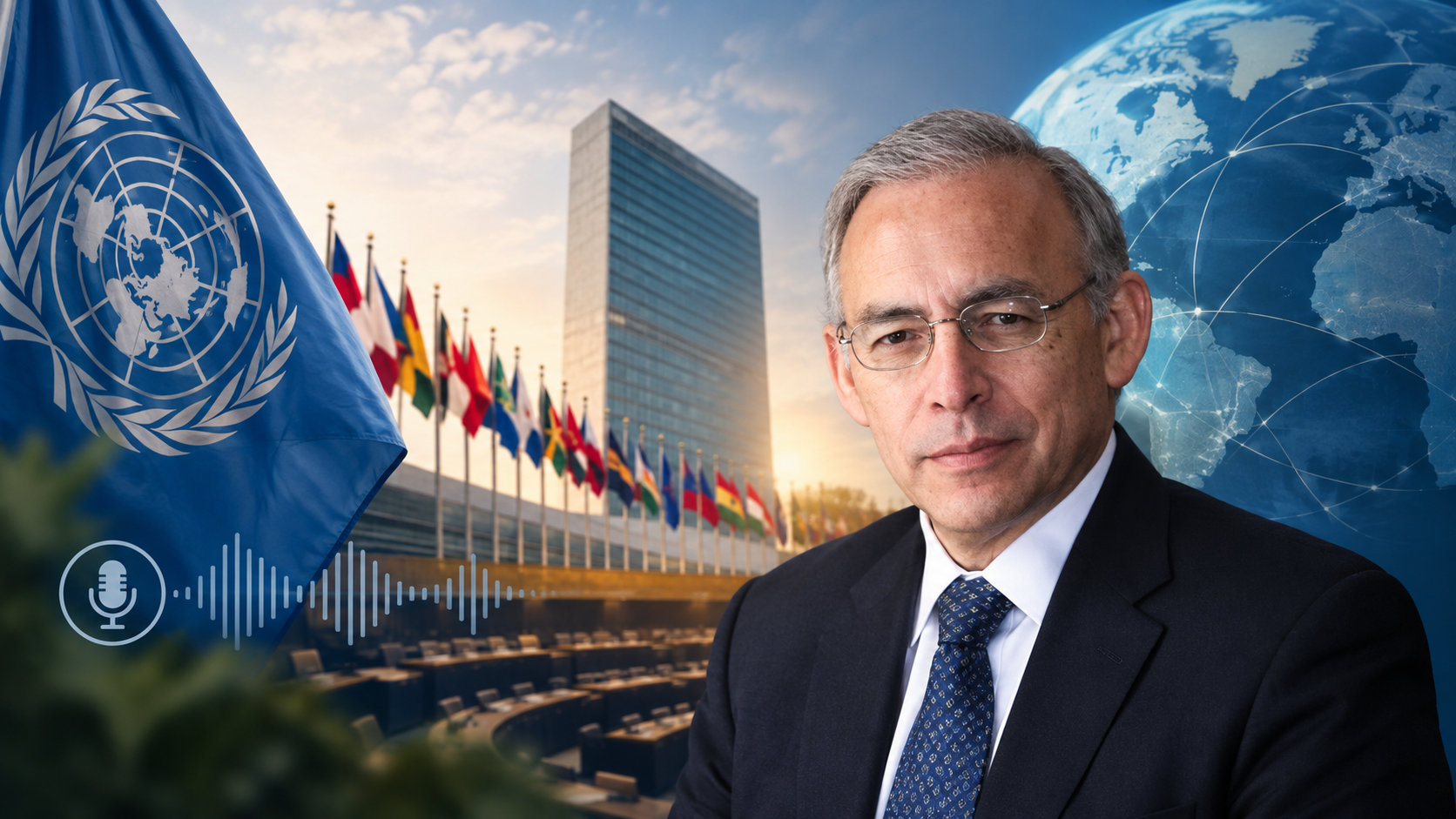
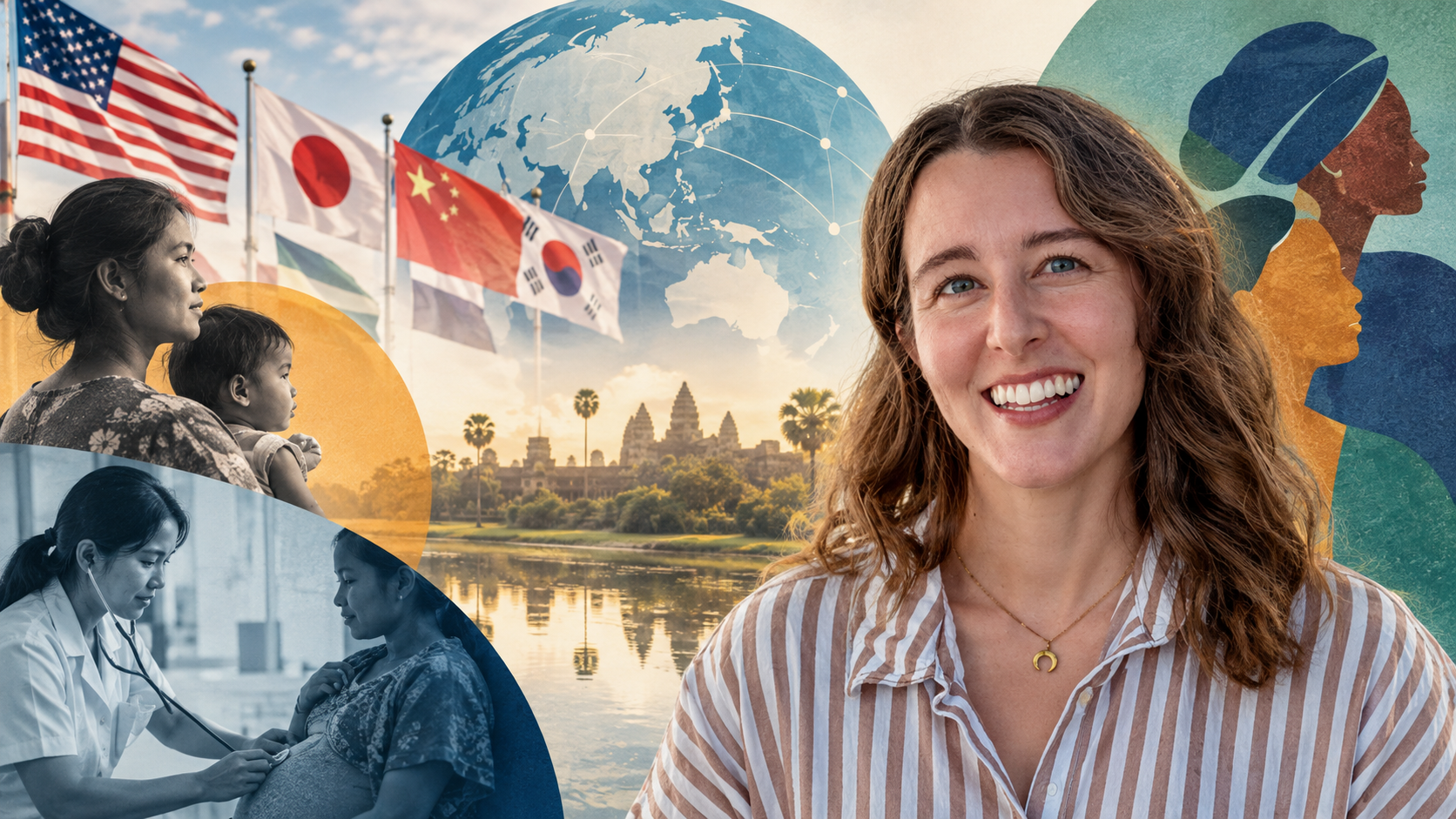
What happens to foreign aid—and to women’s status—when the global development landscape shifts away from U.S. dominance? In this episode of International Horizons, John Torpey speaks with sociologist Mary Collier Wilks about her book Reimagining Aid: Foreign Donors, Women’s Health, and New Paths for Development in Cambodia. They discuss the contrasting approaches of U.S., Japanese, South Korean, and Chinese donors, the rise of competing regional models of development, and what the changing aid landscape means for gender equality and local actors in Cambodia.
Transcript
John Torpey 00:04
Many observers have suggested that we’re seeing a shift to a new global order, one in which the United States plays a less central role, and that is more multipolar in character. The shift in the global order also has consequences for foreign aid, with the dismantling of the USAID, the U.S. Agency for International Development, soon after Donald Trump returned to the White House in 2025, the United States is already taking a less central place in international development assistance and ceding its dominance to a number of Asian countries. Will the shifting international development landscape lead to an improvement in women’s status in their societies? My name is John Torpey, and I’m director of the Ralph Bunche Institute for International Studies at the Graduate Center of the City University of New York, we’re fortunate to have with us today Mary Collier Wilks, who is assistant professor of sociology at the University of North Carolina at Wilmington. She’s also author of the recently published Reimagining Aid: Foreign Donors, Women’s Health, and New paths for development in Cambodia, which just came out with Stanford University Press. Thanks so much for joining us today, Mary Collier Wilks.
Mary Collier Wilks 01:30
Thank you so much, John, for having me. It’s quite exciting to be on this end of a podcast.
John Torpey 01:35
Great to have you. Maybe we could just start with having you briefly lay out the argument of the book. So, how would you characterize this new global order that seems to be succeeding the post-post-Cold War world, and how is it affecting foreign aid and women’s status?
Mary Collier Wilks 01:53
Yeah. So, when this book started as my dissertation, it was originally only a study of donor variation, I wanted to look at the differences between programming in from development organizations funded by the U.S. versus Japan, and to do that, I conducted an observation of women’s health projects in two international development organizations—one with funding from the U.S. and the other from Japan—that work to upgrade women’s health in Cambodia, and I also spent time in Tokyo and Washington D.C. at the donors and headquarter offices that design and fund the programs, because I really wanted to look at what happened to aid programs from their conception all the way down to implementation. And the first finding of the book is really about the differences that I did see between the priorities of aid donors from Japan versus the U.S. Right, so Japan only funds maternal health services through the public health sector through the state, who they work very closely with, to create modern Asian mothers. That’s what they call it, and the U.S. focuses on upgrading reproductive and maternal health services through private and nonprofit health clinics, creating what they call women as empowered consumers. But the second and surprising finding of the book is that in response to the donor variations and all of the other geopolitical transitions that they’re living through, development actors in Cambodia have come to debate their own nation’s advancement in regional terms that juxtapose Asia to the West as if they’re living in this world of competing development models. And of course, if you really dig into it with them, Cambodians know there are differences between, say, German and UK donors, but they use these regional development models, or I call them imaginaries, strategically. For instance, in the U.S. organization, they actually reject some of the U.S. program activities that want them to help the state regulate the private health sector because they say they don’t want a private health system that’s too expensive, like America has. They want to follow in the footsteps of a strong public health system, like South Korea or Japan. And this is important because, to your question, the post-Cold War world was one of singular ideas about what are global development norms that the U.S. played this key role in crafting, right? I mean, the UN put out the Sustainable Development Goals for all development actors to strive for, right? And this is now being challenged. And I argue that Cambodians and citizens in many aid recipient nations are starting to discuss really competing regional paths to understand development, fragmenting this idea that the post-Cold War unified sort of global development norms for a world of competing development models in what you’re calling the post-post-Cold War order, which I like. And to your last question, what do these foreign aid changes? Mean for women, this answer has changed even since the book was finished. Gender equality was an accepted global liberal norm, and part of most donors’ development agendas, at least in lip service in the post-Cold War era, and when I was collecting data originally. But now we’re seeing a real backlash against gender and development, right? Not just Trump ending gender equality and DEI policies in foreign aid and domestically, but a growing transnational anti-gender movement that’s tied in with conservative religious organizations as well as populist and right-wing leaders. And this has come out on your other podcasts as well, like the one with Dr. Tara Zahra, but it’s really impacting what foreign aid will come to mean for women. So, in terms of my data, Cambodian development practitioners who have been embedded in gender equality work since the 1990s are now coping with this closing space, and their new regional development models are sort of resources that they draw on to make sense of it, right? Asian donors are often critiqued as disinterested in gender equality, and I do see this in my Japanese organization. They don’t discuss gender equality at all. And the U.S. organization before the U.S. aid shutdown, they wanted to solve gender equality issues in a way that focused on individual women’s economic empowerment, things like giving access to birth control so that women can earn money outside of the house, right?
This sort of American understanding of women’s empowerment, but my participants would actually hybridize what they see as Asia and the West to demand things that they think women need. For instance, in the U.S. organization, Cambodian practitioners argue that women should work just like the West model says, but the demands of Asian family mean they should also have access to accommodations as mothers, like free public daycare or extended leave. So I do see this possibility of local actors really using the competing development imaginaries in strategic ways to make demands for what they think will best serve women in their own context.
John Torpey 07:04
Interesting. So, one of the things that I was intrigued about in reading the book is the this question of norms and whose norms. You argue in the book that the sort of generous sounding notion of global norms, quote unquote, actually smuggles in a stress on Western norms, and more specifically on American norms. So, how would you characterize the impact of Western norms on non-Western aid receiving countries?
Mary Collier Wilks 07:36
Yeah. So, I mean, the post-Cold War liberal global development norms that we’re talking about, right, and the idea that foreign aid should address soft issues like global poverty, education, healthcare, gender equality. I mean, that’s actually relatively new, and there’s important historical reasons why aid norms come to be so American centric, right? After World War II, we see the U.S. create foreign aid with the Marshall Plan. Originally, use aid to help rebuild Europe and combat communism later in its competition with the Soviet Union, and European nations like Britain and France follow suit and set up aid agencies, often in former colonies by the 1960s. But this early aid is largely very economic oriented or hard aid. Although, of course, you do see the emphasis on democracy promotion during Cold War politics. But it’s in the 1970s, which is not that long ago, that we see the hard aid model challenged and sort of mass mobilization to restructure the global economy from groups like the G77, and then we see a global debt crisis in the late 1970s and the decline of the Soviet Union by the 1980s. So the U.S. and the U.K. come together in what we know as the Washington Consensus Moment and engage our international institutions like the World Bank and the IMF to promote neoliberal economic policies in the 1980s. Basically, will bail out nations in debt with the agreement they’ll shift to neoliberal economic policies. But those policies defunded public social services, and that becomes a big part of the impetus for the argument that aid should now address these social issues that nations are no longer addressing, as well as the appeal of non-governmental organizations to implement social programming, and so by the 1990s we come to see clear global development norms that contend economic development should be pursued alongside aid that increases social good. We see the Millennium Development Goals come out. You can see all of this is happening in the post-Cold War era, where the U.S. is really dominant in global politics, and that means our so-called global development norms include a strong emphasis on liberal values that we associate with the West and the U.S. like individual freedoms, rationalization, democratic governance, and that’s okay. Of course, not to say I don’t want to say that non-Western nations don’t play a role in the developing the system. Right, the G77’s demand for a more fair global economy plays a key role in the need to reorganize, but these movements are often co-opted by powerful Western nations into agendas that fit their interests, like we see with the Washington Consensus. So, in this post-war period, and then the 1980s, Western donors and yes, the U.S. play this really dominant role in deciding what global development is, and that’s kind of why we see it come to be this way. And I would say to your second question about the consequences of these Western centric global values in non-Western nations, I mean, I think the data says the actual outcomes of soft aid programming are very mixed. But what aid values did do all over the world is make development actors all speak a certain language to get aid funding. I mean, first they have to speak English in general, and then they engage in a donor language of gender equality, entrepreneurship, civil society, and democracy monitoring and evaluation, right? So these values that we associate with the liberal West absolutely permeated the aid sector for a long time, For instance, when I come into a U.S.-funded organization and say, “Oh, I’m interested in gender, workers immediately all speak to me in similar language of empowerment buzzwords and reproductive choice. So we know that the dispersal of particular cultural values as the dominant way for thinking about how one’s own nation should advance is really a key aspect of this global aid system, and that’s really part of what I argue East Asian donors are maybe challenging now.
John Torpey 11:43
Interesting. I mean, one of the things that struck me in the reading the book again was the way in which international development assistance is part of the kind of larger competition among world powers. Right? You sort of especially stress in the book the ways in which the regionalization of global order is enhancing the position of Asian players and Asian views of development, particularly those of China, Japan, and South Korea. So, how are those countries benefiting from the shift in aid? If that’s the case,
Mary Collier Wilks 12:20
yeah, it’s a really good question. So, I mean, I am really showing in the book that this era of solo U.S. hegemony is coming to a close, and this means that the dominant liberal so-called development norms are no longer the only game in town, right? And this is true for multiple reasons, not just our East Asian donors, right? I was just talking about with rising nationalism and far right leaders. There’s a backlash against aid and these values coming from within the U.S. and Europe as well. And in 2025, we see the U.S. aid shutdown and many European donors also decreasing foreign aid funding. But at that time in 2025, China, Japan, South Korea, and even India actually increased their development aid spending. So that means U.S. aid closure in some ways just handed a lot of soft power in this global competition directly over to these East Asian donors. And in my 2025 follow-up interviews, participants are saying things like, “The West is dead. The U.S. has abandoned us. We have to sort of turn to East Asia now”. And but it’s important that in my findings, these competing regional imaginaries for discussing development were actually on the rise before the U.S. aid closure. It kind of just made them stronger. We’ve been seeing emerging donors challenge the dominant development model for a while. In 2011, at the OECD Forum on Aid Effectiveness, emerging donors like China, India, Brazil actually pushed for a development agenda that focused on economic and infrastructure development as well as South-South partnerships, which was a really different way of engaging development assistance than our traditional Western donors. So this idea of an East Asian development model that Cambodians in my book are using isn’t really coming from nowhere, right? And these types of alternative Asian modernity frameworks have resonated for a long time. But in terms of development, Japan was actually the first East Asian nation to articulate an East Asian development model, and they did so to challenge the Washington consensus in the 1980s. And in Tokyo today, they will actively tell you we want to export the model of a strong Asian state, or that they want Cambodia to grow its public maternal health infrastructure, just like Japan did after World War II, right? And Japan and South Korea do engage in sectors like health and education, right? Those soft sectors and fun NGOs, although to a lesser extent than most donors from Europe and the U.S. did, right? China gives approximately 40% of aid in grants if you count what it gives to multilaterals, and only 3% of that aid is to NGOs. Right, this is in comparison to U.S. aid, where it was giving they think 25% of its aid to NGOs and an estimated 75% of its aid in grants in 2024. So we also see China mobilizing an Asia development model, and China is always the rogue player, right? Xi Jinping promotes the Beijing Consensus, which is an economic and political development model based on China’s state-led development, and the alternative of adopting Asian Confucian values in contrast to Western liberal ones, right? Very directly, alongside China’s assistance framework of the Belt and Road Initiative, right? And China is just a special case or sort of a wild card when it comes to aid because they do very little social aid. China is mostly focused on infrastructure, economic development, technology transfer, and a lot more loans than traditional development assistance, and the way China does aid is not transparent, and it’s hard to track. But the Lowy Institute and aid data are now saying it’s the largest bilateral donor in the world, and in Cambodia specifically, when U.S. aid shut down, both Japan and China directly responded by expanding aid, and China specifically replaced U.S. aid had a 4.4 million-dollar demining project. China replaced it exactly to the dollar amount. So these donors and the alternative Asian development model they’re dispersing are benefiting by gaining a lot of soft power from this aid shift, and we know that soft power can translate to material benefits, right? Asian nations are also now Cambodia’s top business partners and investors, and so this global competition, we’ve just made this space for these East Asian donors to rise.
John Torpey 16:53
right? I mean, I don’t want to put you on the spot because you haven’t put yourself forward as a China specialist, particularly. But, you know, one of the things as a sort of amateur China watcher, I suppose, that strikes me is the extent to which China has, left the Middle Kingdom and become engaged with much of the rest of the world. I mean, I think you haven’t mentioned it, but I think there’s a lot of expenditure of Chinese funds, or at least loans and things that they’re putting into Africa and Latin America, and even parts of Europe. And I wonder, what you can tell us about, China’s understanding of itself and of its role in the world. I mean, again, I know you didn’t really specialize in this, but since I’m intrigued, if you have anything to say about it, that’d be great.
Mary Collier Wilks 17:52
Yeah, I mean, I have to say, I’m probably also an amateur China watcher, but it’s just playing such a big role in Cambodia that there’s no way not to watch it, but I do think China, in many ways, sees what the U.S. is doing as kind of an opportunity ride. And with the One Belt One Road initiative, it is like One Belt One Road that leads back to China. They’re trying very hard to change supply chains so that they’re no longer really in sort of dependent on Europe or the U.S. at all, China becomes the center of the world. So I would agree that they have definitely left the Middle Kingdom.
John Torpey 18:29
Right. So I mean, another thing that struck me about you know your account of things in the book was the way in which the American approach to foreign aid, sort of jives with this, what is sometimes referred to as American exceptionalism. This kind of entrepreneurial, competitive grants kind of way of funding international development assistance. Whereas, as I think you’ve said before, these Asian countries are more interested in working with state actors, state agencies, state entities that, are more cognate, I suppose, to the kind of institution that’s giving the money. So I wonder if you could talk a little bit about that apparent difference and whether it’s really the difference, I think it
Mary Collier Wilks 19:23
is. Yeah, I mean I do think there’s real donor variation. This was my original interest, but actually I see donors, and particularly in Cambodia, since that’s where I studied it, as is on a spectrum in their preferences for closeness to civil society, the state, and the market, and this actually comes out of my earlier research, where I compare development organizations with funding from the UK, the US, Sweden, Denmark, Germany, South Korea, and Japan, and the Scandinavian nations were actually really the most closely aligned with civil society and social movement building. And the most likely to get kicked out of Cambodia or repressed because of Cambodia’s sort of authoritarian political context, and the UK and then even more so the US were interested in supporting civil society to some degree, but then very close to the market and wanting to promote this sort of entrepreneurship private sector partnership that you’re talking about, right? For instance, in the case of healthcare, private clinic quality regulation, or drug manufacturing, right? So you do really see that in the U.S. case, and then finally you see Germany as closer to the East Asian donors in a strong preference for a state partnership, but then it also works with civil society organizations on topics that East Asian donors would not, like human rights or reproductive health access, and then Japan and South Korea almost position themselves somewhere between China’s alternative assistance model and then the more traditional OECD donor model, and they’re both much more embedded in the state than Western donors, particularly Japan. Japanese development organizations created very close partnerships with state organizations. They were friends. we spent time in government officials’ homes at the behest of JICA, Japan’s bilateral agency. So, I’m not sure I have a completely satisfying answer to why these differences came to be, because for each donor, it relates to national histories. And Simone Diedrich actually shows in her book States, Markets, and Foreign Aid that a nation’s own political history really shapes the mechanisms through which they decide to deliver aid. Right, so she’s seeing this as well. And in Tokyo, in my interviews, there just there seems to be a real belief that promoting Japan’s strong developmental state will help promote Japan’s soft power, and it doesn’t have military power, so this is very important to them. And they believe citizens all over the world deserve strong states like public healthcare to improve their quality of life, and Japanese development workers also talk about Japan as the first country to develop in Asia, and promoting its development model, particularly in Southeast Asia, is almost a regional Big Brother duty. Although a lot of its aid in the region, of course, started as reparations, and we also know that non-interference norms are much stronger in East Asian nations, and this is nested for China and South Korea in a critique of their own colonization. But across all three countries, intervening in another culture is frowned upon in aid. And in Tokyo, when I ask, I mean they’ll tell me directly we do not want to intervene in another nation’s culture, and that’s the reason why we don’t engage on gender equality or women’s empowerment in the way that the Western donors do. And finally, in Tokyo, they’re much more comfortable being outright, and I thought this was quite interesting about their own political and economic interests, right? And showing the face of Japan that should simply be part of aid, and that’s something that’s much more hushed, hush, or covered over by we’re just following global development norms and global development best practice in Washington D.C.
John Torpey 23:10
So I want to get back to the USAID story. I mean, I know you probably don’t want to talk about that because you’ve talked about it a lot, I’m sure, but you know it’s been widely seen as a kind of well, what sometimes called a self or an own goal. You know, we’ve sort of undermined our own ability to deliver on, as you’ve mentioned, soft power. Could you talk a little bit about you know what have been the consequences of the dismantling of USAID, and is it anything that can be reconstructed? I mean, is it sort of if somebody changes their mind or power changes in Washington, is it something that can be you know revived in the future,
Mary Collier Wilks 24:01
yeah, that’s a good question. I mean, the consequences of this are-I mean, the of course the soft power we were just discussing, right? When you talk about the USAID departure, it’s been used rhetorically by political leaders in Cambodia to say the time of the West is over, right? Or even in China, I’ve worked a bit with Yan Long out at Berkeley, and she studies China. and She says that in China, they’re using it to say the West’s democratic experiment is failing, so that loss of legitimacy for the U.S. is really there. And in addition to the loss of soft power, I mean, pragmatically, there have been really dire consequences. I mean, we know this particularly for global health, right? Dr. Brooke Nichols at Boston University is counting deaths from the U.S. aid closure, right? She has a whole website doing it, and it now stands at over 500,000 child deaths from discontinued child health programs, right? In terms of how. This is unfolding in Cambodia. First, while almost all Japanese and South Korean NGOs I worked with are just fine, the USAID shutdown has had dire consequences for a lot of NGOs in Cambodia. USAID was the largest donor to NGOs in the country, and in my follow-up visits in 2025 and 2026, most of the larger international NGOs are struggling along with greatly reduced staff, including the health organizations I worked with, as well as small local NGOs. Right, they’re saying maybe over 100 at least have closed and just are no longer providing services. And in addition to sort of services being hard hit, the closure of U.S. aid and defunding Western aid in general has really hit civil society organizations, right? Organizations focused on democracy building or transparency or those things that we valued since the Cold War have often had to close or maybe even continue in smaller numbers of programming. And what I think is really interesting is that Trump recently signed an MOU with the Cambodian government to directly support health through the Cambodian government this year. And interviewees are saying no one has seen that money. They think it was sort of a deal to push back on China’s power in the region. But in some ways, that’s Trump taking up the East Asian bilateral model himself, right? And I mean, in terms of your question, Can this be reconstructed? Can trust be rebuilt? I think it’s hard, because there are a lot of NGOs that are saying the West left us. The you know the time of the West is over, and they really are scrappy. They’re turning to Southeast Asian companies, East Asian donors, the remaining European donors, or they’re actually working on an increasingly popular social enterprise model to continue their work. But I do think that there maybe if there’s a change of administration. There is a way to reconstruct aid and start rebuilding this trust with some of our community partners that we have worked with for years.
John Torpey 27:10
Let’s see. So, one question that you know arises from a lot of the focus of the book that I haven’t really addressed, and that is really about what this does for women in Cambodia and elsewhere, and I was intrigued in reading the book that towards the end you sort of argue that there is nothing really inherently liberatory for women in the quote unquote Western values brought to Cambodia by the United States by USAID, etc. or the Asian values that are reinforced there, and I wonder, how you think we should think about this contest of values that’s part of the larger aid picture.
Mary Collier Wilks 27:51
Yeah. So this is a question I’ve been thinking about a lot. You know, what is what does all of this mean for gender and development? And I did start in on this answer in your first question about women and foreign aid, because I do think we’re in a really different place, even than when I finished writing the book in March of 2025, because of this increasing backlash anti-gender movement that’s intertwined with rising illiberalism globally. Gender equality was a dominant part of global norms since the 1990s. Right, USAID had a gender equality and women’s empowerment policy, and so did most bilateral agencies in Europe. UN Sustainable Development Goal five is simply to achieve gender equality and empower women and girls. These are taken for granted norms that are now under attack in this anti-gender movement, so I think we’re seeing and we’re going to see a remaking of gender and development as we knew it. And historically, when it comes to the West, there were positive aspects of gender equality aid programs. A big one is that domestic violence becomes less acceptable, but we also see a decrease in maternal deaths in many nations and women’s policy machineries and ministries set up all over the world. But even within the West’s focus on gender equality and women’s empowerment as a global norm, gender scholars critiqued particularly U.S. programming for a focus on individual economic empowerment that fits with our commitment to global economic integration through neoliberalism, which sort of saddles women with the responsibility to uplift their families and nations out of poverty and undermines groups that wanted to address structural issues like state support for services or challenging transnational corporations, and us imposing this American view of empowerment onto recipient nations, right? It does have aspects of imperialism, but then the problem is that this anti-gender movement took part of that, which is true, and then said all gender programming is imperialism, right? Ebola, it’s gender is Ebola from Europe. Is they’ve literally called it that. When in fact transnational feminist organizing throughout the 70s and 80 s for those UN women conferences really came to be led by organizers from non Western nations, so it’s inaccurate to say that gender equality programming is simply or just a Western import. But all of this has really muddied the waters in terms of what development practitioners think the West is or should be for doing gender equality, and as for East Asian donors, they’ve also been critiqued for a disinterest in discussing gender equality as a larger part of their non-intervention strategy that we were talking about. And of course, they may not be discussing gender directly, but by conducting maternal health programs, they’re intervening in it, right? And the Japanese organization in my study, while it assumes the state should provide affordable services to all mothers, it also assumes mothers are the primary caretakers of children, and it never questions why fathers are not at trainings or only ask mothers to come to health trainings. So the original demands of the transnational feminists of the 1980s that address that aid address structural barriers and family relations preventing gender equality—it’s—it’s not looking good. But I, as I was talking about before, and really in answer to your question about are any of these models inherently liberatory, it’s really important how local actors interpret it. Recipient actors can mobilize regional imaginaries or values in strategic ways. I explain the U.S. organization where workers argue that women should work like the West says, but the demands of Asian family mean they should also have access to accommodations as mothers, like free public daycare or extended leave, and they do actually end up getting these changes from their organizations, or sometimes offering them to women who take part in economic empowerment programming. So there is this possibility of using competing development imaginaries in hybrid ways, right? So they don’t have inherent meanings. It’s all about how you use them to make these collective demands and reimagine gender and development, and maybe I’m just saying this because I need to end on a silver lining in pretty dire times for the gender and development agenda, but I do think that’s true.
John Torpey 32:13
I have one more question for you, which is, what’s next? Are you continuing to work in this vein, or are you going to do something wildly different, as I have tended to do?
Mary Collier Wilks 32:26
This is a great question. So, actually, when I was doing this field work, I got really interested. They are aid donors, U.S. aid when it was still there, and then a lot of the Western and East Asian donors have moved to trying to create technology startups in Cambodia, right? So they do so almost like Shark Tank-like investor startup days where people pitch their businesses. So I think I’m moving to a comparative study. I might study it also in Rwanda of technology startup sectors and what this will mean in late capitalism as the aid sector changes.
John Torpey 33:05
Well, thank you very much. This has been very interesting. Appreciate the project and look forward to seeing where you go from here. Thanks for being with us, Mary Collier Wilks, and to discuss your book, Reimagining Aid: Foreign Donors, Women’s Health, and new paths for development in Cambodia. Look for International Horizons on the New Books Network, and remember to subscribe and rate International Horizons on Spotify and Apple Podcasts. I want to thank Sebastian Conseco Ibarra for his technical assistance, as well as to acknowledge Duncan McKay for sharing his song “International Horizons” as theme music for the show. This is John Torpey saying thanks for joining us, and we look forward to having you with us for the next episode of International Horizons.