Sudan Workshop
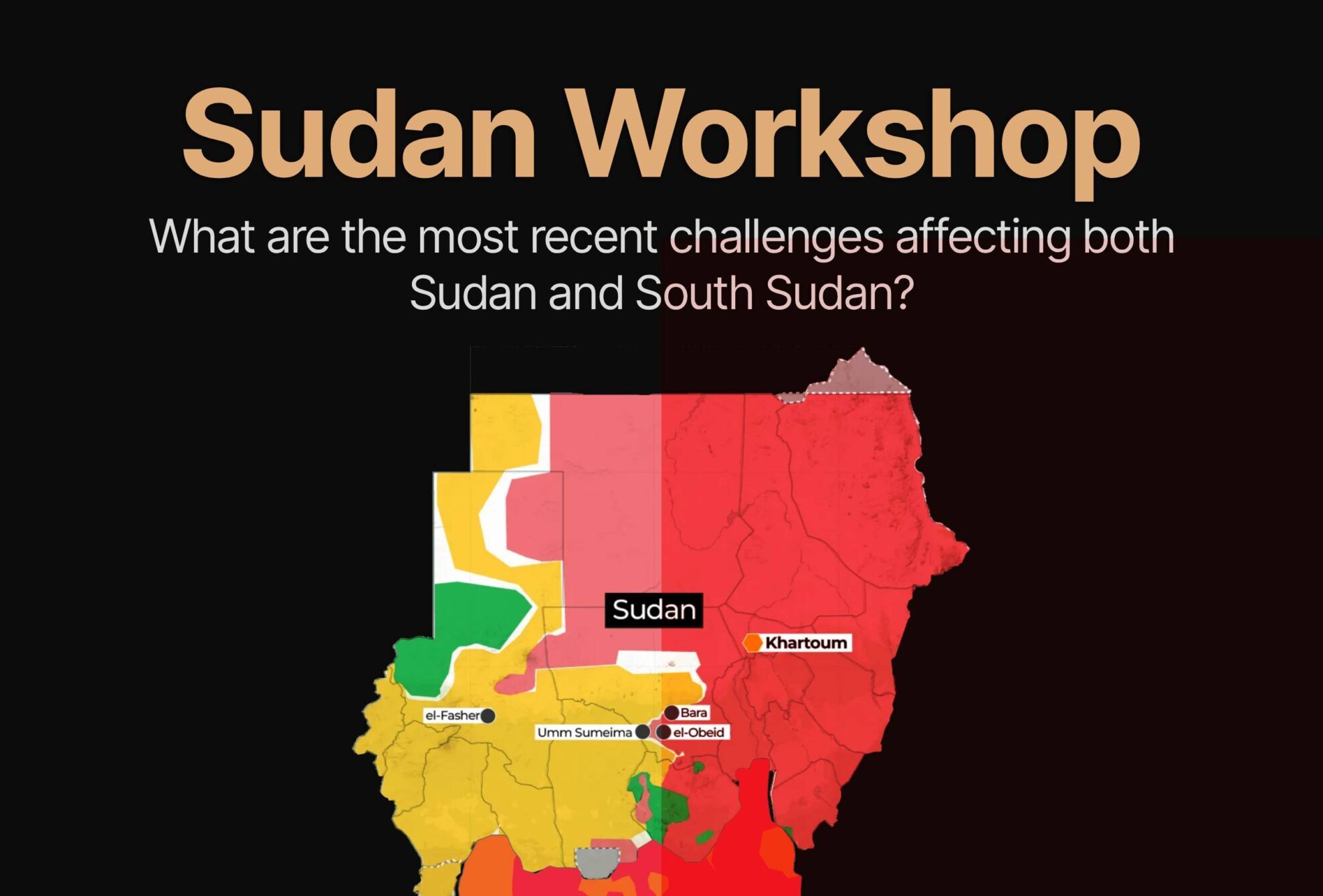
We invite you to attend the upcoming Sudan Workshop, a two-day event dedicated to deep analysis and discussion of the historical, political, and cultural dynamics shaping Sudan and South Sudan.
Keynote Address
The event will open on September 17 at 5:00 PM with a keynote address by Abdullahi Ahmen An-Naim. His talk, titled “The Imperative of Re-Making the World on our own Terms,” will examine the legacy of colonial rule and advocate for indigenous decolonization and decentralized, regional self-determination.
Workshop Session
The second day, September 18, will feature a comprehensive workshop session. A distinguished group of scholars will present their research on a variety of critical topics, including:
- Structural and Policy Analysis: Noaman Mousa will critically analyze Sudan’s political system, the aggravating impacts of the current war, and recommend actionable policy solutions.
- Displacement and Shared Experience: Zachary Mondesire will explore the relationship between the two Sudans, looking at how the ongoing war has turned Khartoum into a site of displacement and Juba into a site of refugee reception.
- Debating State Failure: Jok Madut Kok will discuss how South Sudanese citizens navigate daily life and debate the utility of their independence amidst severe political, economic, and governance challenges.
- Marginalized Voices: Nada Ali will center the narratives of women street vendors, using Black and Feminist Standpoint theory to offer alternative readings of local politics and uprisings.
- Contemplative Arts: Salomon Noah will examine Sudan’s wars and revolutions through the lens of art, focusing on ‘Ali Cherri’s abstract film The Dam and Abiyah al-Rih’s poetry book Prayers of the Hearth.
- The Economics of Conflict: Matthew Benson-Strohmayer will present on “predatory peace,” detailing how peace settlements in the region frequently reorganize systems of extraction and the fiscal foundations of war.
- Racial Capitalism: Bayan Abubakr will historicize the long-term modalities of social and economic control in the Sudans, mapping out the legacies of Ottoman-Egyptian and Anglo-Egyptian rule.