
Podcast: The Cave and the Coalition: Philosophy, Populism, and the MAGA New Right
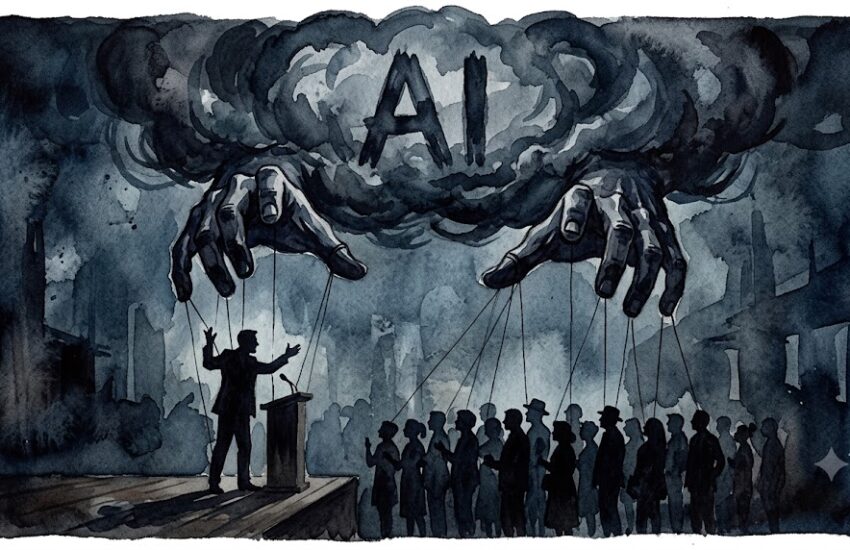
In this episode of International Horizons, RBI’s Acting Director Eli Karetny sits down with political theorist Laura Field to trace the intellectual currents shaping today’s right — from Straussian thought at the Claremont Institute to Catholic integralism, the manosphere, and Trump-era populism. Using Plato’s Allegory of the Cave as a touchstone, they interrogate how philosophical radicalism becomes political strategy, why some thinkers return to the “cave” with prudence while others return with authoritarian blueprints, and what these debates mean for American democracy. Tune in for a lively, theory-steeped conversation that bridges political philosophy and contemporary conservative politics.
Transcript
Eli Karetny
The MAGA movement, held together by Donald Trump and infused with populist rhetoric, contains a coalition of right-wing factions, each with their own visions for a changing American republic—and each with their own critiques of American liberalism: the Catholic integralists, the Claremont “Straussians,” the nationalist conservatives, and the hard-right manosphere. These are the key factions, according to Laura Field’s new book, Furious Minds, that came together under the banner of Trumpian populism. But beyond their leader and their shared antipathy to liberalism, what ideas actually hold these groups together? And can the coalition survive the rifts now evident—divisions that may be aggravated by domestic scandals and foreign conflicts?
Welcome to International Horizons, a podcast of the Ralph Bunche Institute for International Studies that brings scholarly and diplomatic expertise to bear on our understanding of a wide range of international issues.
My name is Eli Karetny. I teach Political Theory and International Relations at Baruch College and have for years been the Deputy Director of the Ralph Bunche Institute at the Graduate Center of the City University of New York. This year, as the Institute’s Interim Director, I have the honor of hosting this podcast.
Here with me today is Laura Field. Laura is a writer, political theorist, and an expert on American far-right populist intellectualism. Her research has been published in The Journal of Politics, The Review of Politics, and Polity. She has also written for The New Republic, Politico, and The New York Times. She received her PhD in Government from the University of Texas at Austin, and has held faculty positions at Rhodes College in Memphis, Georgetown, and American University. She is currently a Scholar-in-Residence at American University and a Senior Advisor for the Illiberalism Studies Program at George Washington University, where she works on The Frontiers of American Reaction, an initiative that explores reactionary politics and culture in the American context.
Laura’s book, Furious Minds: The Making of the MAGA New Right, has received praise from The New York Times, The Atlantic, The New York Review of Books, The New Republic, Jacobin, and many others.
Welcome, Laura. Thanks for joining us on International Horizons.
Thank you for having me, Eli. I—
Eli Karetny
—want to make our way toward your book indirectly. Let’s start in the cave and make our way toward your book. Let’s actually discuss Plato’s cave. I think this can be a good way to explore some of the key themes you address in the book. So please take us through the allegory as told by Plato, as you were taught.
Laura Field
Eli, so the image of the cave in Plato is probably one of the most famous images in all of—it’s probably the most famous image in all of political philosophy. Is that fair to say? Do you agree?
And so it’s this image. It comes at the beginning of Book Seven in Plato’s Republic. After the book is already pretty crazy at this point, right? They’ve just gone through this whole—they’re designing a beautiful city in speech, and they’re talking, they’ve got all kinds of strange social conventions that they’ve invented to create the perfectly just city, including, you know, the unity, you know, the women and men exercising naked together, communism, right? The communal family, and where nobody has a—you know, nuclear family. It’s like everybody’s raised, the children are raised in common, and so on and on. So you’ve got some pretty wild stuff happening that they’re arguing is necessary for perfect justice in the city.
So then—and then, of course, philosophers have to rule as kings. And so you need the most educated people to have total control of the society to make any of this work. And then you get to, at some point, they have to educate these philosophers, right? And so towards the end of the book, that’s what some of these books are about in the later parts of the Republic: about the education of philosophers. And it starts out some of that discussion with this famous Allegory of the Cave, which is—I think it’s—I like to go, when I’ve taught this, I want to, I go through it very slowly with students, right? I just go, like, step by step: like, let’s unpack the basic pieces of the allegory. What? What are we talking about here?
Because it’s so famous that I think it’s very easy to just forget what it’s actually about. But if you look even just at the first paragraph about it—okay, I’m just—because it’s very—there’s a very succinct little bit here. And it says: “Let’s make an image of our nature in its education, and want of education, likening it to a condition in the following kind.” And then they do a description of the cave and all of the details of it, and it’s kind of elaborate, and there’s all this weird stuff there. But I think that that first piece of it—where he says “the image of our nature in its education and want of education”—is just critical, right?
Because this is an image of education and the absence of sort of formation and education. And so it’s kind of, I think ultimately, about what we take for granted in our education, and then what we are lacking, and what we need to sort of learn—what it is we don’t know, and what we’ve taken for granted, and all the assumptions that we are born with and that are part of our sort of conventions and that we’re born into.
So ultimately, that’s what it’s about, right? It’s about the kind of conventions that we’re born into.
Eli Karetny
There’s a part early on that was recently brought to my attention that kind of surprised me, because I didn’t catch it the first few times around, early on in grad school. And it’s this line on 515c in that section where he says—I quote—this is Socrates explaining about how, you know, we’re all born as prisoners watching, you know, shadows on the cave wall. And he talks about what it would be like to be released and to heal from the bonds and the folly of what it’s like to be trapped as prisoners, watching only shadows on the wall. He says—and I quote—“Take a man who is released and suddenly compelled to stand up, to turn his head around, to walk and look up toward the light.”
What surprised me there was that I always had this impression—or I was taught—that it’s philosophical education that allows for, like, the opening of our eyes, the kind of the awakening, you know, and the possibility of being released from the chains. And so that’s kind of like internal work. That’s like the philosopher’s own work.
But here, the thing that startled me was it says, “Take a man who is released and suddenly compelled to stand up.” There’s something there that really struck me, because it stands in contrast to this idea that we hear towards the end of the allegory: that when the escaped prisoner—you know, when the free person, the freed philosopher—who is able to, you know, to move outside of the cave to the light of the sun, and then returns to the cave—we could talk about that in a few minutes. Why he or she would return.
But when he returns, there’s a kind of a warning that Plato lays out, which is, like, you know, don’t expect the other prisoners to be thrilled with the message you come carrying. You know, they’re going to attack you. They’re not going to like the message.
So the two questions wrapped up in this is: one is, like, what is it that releases the prisoner and compels him or her to stand up? Like, what is that force that awakens them? And then, like, why is there such a contrast between that and then the returning philosopher who sets about, you know, presumably freeing others—who is warned, you know, be careful when you try to free others?
Laura Field
Okay, so you’re kind of going right into the deep end, right? And I think that that’s good. But I think, like, if I were here with my students—and presumably there are people who maybe aren’t as familiar with this listening—you gotta— I mean, I think it’s good. Like, we also just have to go through the basics, right?
Which is: the cave. You go down into it. There’s, like, there’s prisoners. You mentioned this, but let me just put it on the table. Okay: there’s prisoners, there’s a fire behind them. There’s prisoners looking at the back of the cave, at the wall, right? And they’re all chained, and they can’t move their heads. And there’s a fire behind, and then there’s apparently, you know, people carrying artifacts right behind them. And then what people are seeing—so it’s quite—it’s not like it’s—it’s very human-created, right? This is—it’s kind of all constructed in the cave. And there’s these creations and artifacts that then cast shadows on the back of the wall, and the prisoners are seeing that.
And of course, that’s the concrete image. But what is that a metaphor for, right? Like, let’s get that on the table. And I mean, it’s like the convention. This is—I think of it as the cave of conventionality, right? We’re sitting there. These are all our inheritances. These are—the students always say, “Oh, it’s our social—it’s our media,” right? It’s the talking heads on TV, that those are the people carrying the artifacts.
But it’s also our religions, right? Our religious books. All of our traditions that are being questioned here in this allegory by Socrates, right? It’s like, it’s very radical. It’s saying these are all things that we’ve been taught are the truth, but they’re really shadows on a wall.
And even if we get to—and the end game is not to get your hands on those artifacts that are being carried around, right? It’s to escape the cave. It’s to get out, to question everything.
So it’s very radical, and I think that that’s just worth sort of putting on the table. You get to go take the Bible—and you don’t just sit there and look at what you know—if it’s one of the religious artifacts being carried around, or Homer in their time, right? You’re not just critiquing Homer. You’re trying to escape that convention. You’re trying to escape everything you’ve ever been taught.
And so this is all bound up in Socrates’ life, right? As the gadfly who questioned everything about the city, was hated for it by many, was celebrated by others, and then put to death by the democracy.
So I mean, I think that’s the kind of rich background here, and that’s kind of what’s being explored in this image. And it’s also just about, again, the conventions we inherit, and questioning all of that.
So I think to get at your questions: I think that underlying this whole image is the sense that this process of escaping—this process of a genuine philosophical education—can be really painful, really unpleasant, can fill people with hate, can lead to nihilism, right? I mean, that’s also a subtext of a lot of what can be happening. I think, I mean, if you read the Phaedo, right, and other—excuse me—Platonic texts, there’s a real danger here with this kind of questioning and critique: that by questioning all these traditions you’ve inherited, you also lose everything that’s sort of holding things together.
So I think that—the compulsion. How does this work? Why would he need to be compelled to turn around? But I mean, that’s a great question, and I think that’s a big part.
There’s this sort of not-violent undercurrent to the image of the cave, but something very sinister, right, which is an awareness of how painful this can be for people. But also, I think you’re right there: like, what is that force of compulsion? I mean, I don’t know. I think it’s the sort of—I think you’d say something like the will to truth, right? That once you’re exposed to this potential—once you’re exposed to this image—and start thinking about the possibility that you’ve basically been hoodwinked your whole life by all of the systems around you and all of the inherited conventions, that there’s something deeply attractive about the idea of figuring that out, right?
It’s almost like it is, like—I think for many people, it’s a real compulsion. And that’s what—you know—you get into The Matrix and all the current versions of this: the Cathedral—there’s all these different ways of describing this, something sort of parallel to this. Nothing, none of that lives up to the real thing in Plato, by the way, I think. But you know, you can see how there’s just something deeply attractive about that, because what we’re talking about is just like contrarian, radical thinking and questioning.
Eli Karetny
That’s a great setup to talk about the Cathedral and Yarvin and that kind of group, but let’s hold off on that for a minute, because I want to kind of dwell in this space for a little longer.
And I think that’s a fantastic way to frame it: that this kind of inner compulsion, that kind of the desire for truth, and the associated radicalism of a kind of, you know, realization that the falsity of the shadows—the kind of the constructed nature of what’s being presented to the prisoners as reality—there’s a discovery that this is not reality at all. And there’s a yearning to escape the cave entirely.
So why then return to the cave? Before we just say one more reaction of the other prisoners to the message you might carry: why even return?
Laura Field
Yeah. I mean, let me just say one more thing, which is like: this is how I was—I think that’s how I got hooked on all of this stuff. Like, my teachers didn’t necessarily just sit down with us and read about the cave, but they did.
One of the reasons why I loved political philosophy—and which began for me with Plato—was that it was so radically questioning liberalism and liberal democracy and just the conventions of what, you know, what I started to see as our—my cave up in Canada, right—the liberal-democratic cave.
And so there’s a very—it’s a pretty radicalizing experience. And it’s very—I mean, it fills you with a sense of grandiosity and a sense that you’ve discovered the truth that nobody sees. And part of it’s because Plato’s so good at describing the specifics of a democratic cave, right? And so that really resonated with me.
And I thought that was fascinating, but it was kind of a brutal experience, too, and it was radicalizing, where you just start thinking everyone around you is an idiot and couldn’t possibly, you know, see the truth as you do. You start questioning your parents. You know, it’s—and it’s—there’s an analog to, I think, what right-wingers think happens to liberals when their children—their conservative kids—when they go to college, right? They get radicalized through all this critical race theory or what critical whatever.
And there is—now, there’s an analog. There’s an analog there too. So I just wanted to put—
Eli Karetny
—can you say a little bit more about that? That’s such an important point. I so appreciate you saying that because, you know, I was surrounded, especially in graduate school, with a kind of mirror radicalism—a kind of leftist radicalism—that it also contains this kind of awakening to the falsity of our surroundings, the kind of the constructed and artificial quality of our kind of democratic rhetoric, the kind of capitalist control and exploitation. And that’s radicalizing in a very kind of analogous way.
What makes those radicalisms so different?
Laura Field
Well, I mean, I think ultimately the conservative version—and maybe this is relating to coming back to the cave, right—the conservative version, if it’s at all healthy, maybe ends up saying: “Okay, well”—and Socrates, at least in Plato, has a whole—you know—there’s a kind of rehabilitation process where you tear it all down, and then you think, “Oh, well, maybe some of this is actually worth preserving,” or “we should at least think about”—Plato’s not that great at this, but Aristotle does it, right?
Like, there’s: we got to preserve some of these good things in politics. Let’s not all just tear it all down. The cave’s not all—you know—the cave, there is a purpose to the cave. There are good things about the cave. We should be exploring the differences between the different caves, and maybe moving incrementally towards a more just cave. I mean, that’s where I would go with it.
I think Straussians—as you know, I’m sort of in the Straussian background here—they’re not very good, I think, at a lot of this. But that’s sort of maybe where the conservative impulse goes.
And then on the left, the impulse is, I think still, it’s just again caught up in a kind of radical tearing-down mode, rather than a sort of appreciative, reconstructive, incremental mode.
That might be more—but it’s hard, right? The incremental stuff is sort of a whole education of its own, and that, I think nobody’s very good at that. So the critical stuff is much more exciting, especially for young people, and much more fun.
And so it’s kind of a matter of psychology and just prudence of teachers, right? I think that that’s what some good Straussians are quite, you know, quite serious about: having prudence with this stuff and being responsible—or at least they used to be. I think these days, I don’t really know what’s going on, but a lot of it’s pretty—like, there’s not a lot of prudence in a lot of places.
Eli Karetny
That’s a really useful framing. I’m thinking here of a liberal thinker like Karl Popper, who’s neither a leftist nor kind of, you know, has this kind of conservative or kind of radical orientation. He has this really interesting critique of not only the cave, but Platonism in general, as kind of leading towards authoritarianism: what he calls Plato’s metaphysical essentialism, the very idea that there is a hidden and higher truth outside of the cave that exposes not only the falsity, the kind of the artificiality, of not only this cave but of all caves.
And that there’s this kind of hidden realm of a higher truth outside the cave—that that view will necessarily lead anyone who re-enters the cave to come carrying a kind of message that is authoritarian by its very nature, coercive. It could be a leftist authoritarianism; it could be a right-wing authoritarianism. But it comes carrying the truth, which is necessarily absolutist from the perspective of the cave dwellers.
Yeah. What about that? That’s a pretty compelling critique.
Laura Field
Yeah, I think it’s—Popper’s critique, which I think I’ve read around. I don’t think I’ve ever sat down and read the actual critique. But I know, you know, you hear about it.
And I think, I mean, that version of it that you just described, I think is very compelling. And it’s something Nietzsche would say something similar, right, about Platonism being—or Christianity being Platonism for the masses.
And there’s something about the kind of totalizing essentialism of Platonic metaphysics—and similarly with monotheistic religion, right? That there’s a kind of—there’s something similar in those things that is deeply authoritarian in its sort of total commitment to something. I think that’s sort of valid in a way.
I think it’s a terrible—I think it’s a very closed-minded and bad reading of Plato because—but I’m sort of a good Straussian here, at least so far as I don’t—I think there’s something esoteric. I’m not necessarily persuaded that Plato’s metaphysics is entirely as stark and sincere as it is meant to be.
I’m not a Neoplatonist. I think that this sort of way in which Plato has been taken up historically is a little bit too divorced from the historical context of what he was trying to do vis-à-vis Homer and the philosophers who came before him—and just sort of in the—if you look at the kind of how Socrates’ life played out and what Plato was trying to do vis-à-vis the kind of political culture of his time, and especially—as I noted with Homer—with Homer and the sort of tragic sensibility that was part of the Greek psychology, I think that it’s just a much more complicated story, and that there’s much more room for a kind of playfulness—playful reading—of Platonic metaphysics.
I’m not saying it’s all a lie, or it’s just some noble lie—the Forms and all of that—but I think there’s— I think there’s a serious way to read it, and I think there’s sort of a postmodern way to read it that’s more playful and allows for, you know, a little less attachment to the capital-T truth of it all. That’s how I read it.
But again, I’m not—there are a lot of Straussians who just think it’s a noble lie. It’s just a— you know—the metaphysic stuff, the getting out of the cave stuff, it’s all just kind of an effort to create a salutary myth.
And I think that’s what—you know—that tips into nihilism in a way that I’m not comfortable with. And I think there’s much more going on about a certain kind of genuine way of reading that, but that—I mean, I would have to go, like, think long and hard about how to even talk about that.
But I think there’s a lot going on there that’s very serious and deep and important, and has to do with, you know, virtue and the soul and all kinds of things—Forms and character—that we, you know, I haven’t thought about for a long time, but I think are serious. So I wouldn’t write it all off.
But I think Popper sucks in his just—his gullibility and his refusal to read the dialogues as dialogue dramatically, right? And in a fuller—with a richer sense of the sensibility, of the kind of deeper sensibility of Plato.
Eli Karetny
So thinking now about how Straussians understand the allegory, and I want to kind of draw our attention to a few pieces of it that we were talking about, but kind of hold them tight.
One is: at the moment of escape, stepping out into the light of the sun, you know—is the truth that is seen all light and love? Or is there a kind of—is there something— is there, like a— is there some element of darkness, or a kind of difficult realizations that then need to kind of process, how to carry those things back? Do we return? Why do we return? And what of the truth is carried back into the cave?
So that holding that thought—and at the same time, this: the decision to help our fellow prisoners. Is this a universal gesture—all prisoners to be freed? Or is there a kind of selection of, you know, which—who is maybe more open to the message that’s being brought back from outside the cave?
So question about who—what’s the message, and who is it appealing to?
Laura Field
I mean, the Straussians—I gotta say that there’s a lot of different kinds of Straussians, right? It’s not a monolith. And I should disclose: I haven’t—I think that if I were a better Straussian, I would have spent a lot more time trying to figure out, so what exactly did Strauss think about this question, right? And what’s this, you know—because he’s not, exactly, not super direct about things, and I am not that kind of Straussian. It’s just not my thing.
So—but I think the Straussians—there are different ways here that they think about the return to the cave. I mean, just the fact that there’s a school of thought where you can find these rich interpretations of the return to the cave is pretty wonderful, right?
But I think what we have to think about is: a lot of the return stuff is connected to Socrates’ second sailing, right, and these ideas about human—the study of the human things—that we know Socrates, if you look at his biography to the extent that we can know it—this is in, like, Aristophanes, and then the Apology—there’s different versions of this story, but there’s something that happened where Socrates was very interested in natural philosophy early in life, along with the Presocratics, right? And all of these thinkers who were asking, you know, pretty radical questions.
But then he’s critiqued—or he comes to realize—that there’s something kind of dangerous here: that in questioning the natural order of things and sort of the gods, that you not only—you’re dealing with dangerous questions politically, but that they might not get you the truths that are most interesting, and that might not be the best way to discover the reality of metaphysics, right? That there might be something better to come from talking to humans and thinking about human things.
Anyway. So Straussians are interested in that. And then the story is, you know, he turns to the human things. He starts doing political philosophy. This gadfly in the city is constantly asking people about virtue and truth and politics and how things are—do they hold together? Is there any way—
So a lot of Straussians, I think, would say: the truth is—some Straussians, right, the more nihilistic ones in my view would say—once you escape the cave, you realize that all human things are mere constructs. And the real truth is about philosophizing, and it’s really natural philosophy that matters. And all of the Platonic corpus is sort of a mask for the deep truth: that you’re going to look at natural philosophy, and that’s where the—questioning everything—and understanding the natural order—is the like—and in looking into the abyss, maybe of meaninglessness, is maybe the sort of dark secret that the philosophers know, that you shouldn’t convey back to the cave, right?
I think there’s some—I mean, my hunch is there’s a lot of that in Straussian—like that’s the deeper secret, the reason for the esotericism, yeah, and that’s the reason you got to protect certain truths, or you got to protect the society from those kinds of discoveries. Socrates learned that the hard way. We’re going to build up a whole apparatus of metaphysics and the Forms to kind of make things a little safer.
And I guess the truth—I mean, these things are pretty complicated. So—but I think that’s maybe a too dismissive way of putting one version of this.
I think another version is that the true truths you discover are just too complicated, or, you know, it’s not something—it’s an experience that can’t be conveyed back into the cave.
And then another version would be: like, you can discover some pretty wholesome good things too about political life that can be a more ameliorative force in political life. So returning to the cave might involve a kind of philanthropy towards human— you know—political beings and humankind more generally, that you could then sort of bring back into the cave and potentially improve some things.
I mean, there are different—so those are some different versions of what it might mean to return into the cave. But it’s all pretty—I mean, it’s all bound up in these complicated questions about what Plato—why did Plato write? What was Socrates really up to? What did he care about? Did he care about the human things? Did he just care about natural philosophy?
And so you can talk for many hours in many seminars with many Straussians about these kinds of questions.
Eli Karetny
So to kind of find a generous reading of—even to kind of group several of these kind of Straussian approaches in—and find the more generous reading of it: it makes sense to me that if certain overly complicated truths, or dark and problematic truths, are discovered outside the cave, when political philosophers re-enter the cave, you need to be careful about the message that’s being brought.
And there’s an importance to moderation and prudence—you know you brought up earlier—and humility about what’s possible in terms of political change. And that philosophers can maintain both a kind of philosophical radicalism, both internally and among other philosophers, and at the same time carry a political message that’s moderate and prudent and very reasonable, and accepting of a kind of humble acceptance of what’s possible, and a willingness to reform existing regimes on the margin, while at the same time recognizing the absolute best possible regime may not be possible at all.
Or the best possible regime—maybe the one that Plato was presenting in speech—there’s actually a kind of irony in Plato and in Socrates, where they didn’t even believe this was possible themselves. They were painting it out to show that it was not possible.
Laura Field
Yeah, I think that—that it was not possible.
Yeah, I think that’s—I mean, I’m quite persuaded by that. And I would add that, you know, there’s escaping the cave and maybe thinking about natural philosophy, or, you know, radically questioning the conventions of the social world. And then I remember as a student, there’s also a possibility that, you know, you get out of the cave, and those answers just aren’t there for you. That there’s no real such thing as the transcendental truth system that can be grasped, because it’s historical, right? And it’s not—and it’s—it’s just not something you can get, and it’s not available to us.
And so I think, tying into your notions of humility, I think that’s how I would read it.
And I think I remember when I was an undergraduate student, I was speaking with my professor, Heidi Studer, probably at a bar, you know, after class one day. Or maybe I was in my graduate—the graduate program there. And I remember saying to her, you know, I’ve been reading Book Seven and Eight of the Republic, or maybe it was Nine. And there’s all this stuff about the Good, right? And when you get the Forms of the Good and the reflection of—I can’t remember the language Plato uses, right? But there’s—you know—it all ends up being—in service of discovering the truth, which is this capital-G Good and the Good.
Because it all becomes—there’s an extra layer of imagery added on later, right? With the ascent to the Forms, right? You get out of the cave, and then there’s also this whole metaphysical thing about the Forms and the sun, right? And the Good—the Form of the Good—and the analogy. There’s the sun. And so it gets pretty complicated metaphysically. And obviously there’s, like, many—a couple millennia now—of reflections on the meaning of these metaphysics.
But I remember asking Heidi: what is that? What? What are we talking about here with the Good and the light? And it’s easy to do a Christian interpretation with the Good is God, right? Or it’s the love and—and she just looked at me. She’s like—you know, it was a very just like deflating thing, and I’ll never forget it. And she was a very—you know—she’s a very funny person this way. And she was just like—she was kind of like, “It might—you know, I don’t know. I think it’s—it might just be a whole lot of, like, fancy—like, I don’t know.”
Like, that’s—I don’t know. I’ve never got it. Like, she just said—
And I thought, oh, that’s where there’s this idea that it’s interesting to me that—
Eli Karetny
—even the Straussians, there’s a kind of postmodernism. There’s a potential kind of recognition of certain kind of post-Nietzschean, you know, either inability to grasp the full truth or the nonexistence of it: that it’s all historically bound and culturally bound.
So as much as he and other—you know—Straussians—he being Strauss himself—were kind of critics of relativism, that somehow one of the secrets is that they are themselves relativists, but that’s a truth that can’t—can’t be told.
Laura Field
Oh, that’s—yeah, yeah. I mean, I think that’s how they sort of see some of these people. I mean, again, not Straussians. I’m pretty sympathetic to that.
I think the thing I think is absurd is that in—slightly absurd—is that in 2025 or 26—I guess we’re in 2026 now—like, in our—the cat’s out of the bag. Not that that’s the truth, but that these are okay things to potentially talk about publicly. You know?
I mean, it’s okay to think there might not be a truth that’s—that’s available to us that we can then impose on the world. It actually might be a very good thing.
And, you know, American pragmatism, I think, speaks to some of this, right? These other traditions in our history—like, these are things—this actually might be a very valuable political instinct to cultivate, and because it is tied to humility and not knowing. And that’s actually pretty important in Plato too.
Eli Karetny
So that’s such a great segue to talking about the kind of the MAGA new right, and the different groups that you talk about, that you write about in the book.
And I want to kind of draw a contrast between the humility of the kind of the Platonic philosophers who come back to the cave with the recognition of the importance of prudence and moderation, and, on the other hand, the radicalism of many of these right-wing thinkers who, you know—who, to kind of strain the metaphor and hold on to the allegory here—they return back to the cave with an absolutist, authoritarian playbook.
So are—you know—maybe speak to some of these different groups. But, you know: are the West Coast Straussians of the Claremont Institute—they just get Strauss wrong, you know, in the way that they’re carrying this kind of authoritarian message? And what is their message?
How might their message be similar to and different from the Catholic integralist message? How is that similar and different from, you know, the manosphere’s kind of Nietzschean message?
So—this is really kind of turning it over to you to talk about the book.
Laura Field
Well, I think that’s useful in terms of that they do come with a fixed mess—they have a fixed understanding of how they think the truths in politics should be expressed.
In the book, I try to map it out in a way that shows some of the diversity here, and the fact that they have different truths that they are holding on to, or different ways of thinking about some of this stuff.
And so—I mean, I think the basic—just to not get too lost in the details—I think the basic— a good way to define what they want to do generally is: they’re seeing themselves sort of in the—as against this—they’re sort of rejecting universalist rights-based liberalism, right, and embracing instead nativist populism of some kind.
And so there’s some part of this. It’s just not very high-minded or highfalutin, right? And so just to be—and there’s also sort of a policy pivot here, within the GOP and the sort of traditions of the Republican Party, that’s just a turn against the old Reagan establishment and neoconservatism.
And so I think it’s worth putting that on the table too: where you’ve got the old version of this is like the Reagan fusionist combination and fusion of liberal economics, social conservatism, and anticommunism, and sort of liberal internationalism. And then they want to replace that.
And like Michael Anton of the Claremont Institute put this very well in 2016: replace that with economic nationalism, secure borders and, like, anti-immigration, and then America First foreign policy, plus the conservative social values—very much like doubling down on that is essential.
And so that—I mean, I think it’s just useful to put that on the table, and the book covers the kind of transformation of the GOP between 2016 and 2024, where all of these guys together have gotten a huge amount of power, and I think are really having a massive impact in DC.
So—but I think your question about how they are—how they’re seeing—can you remind me of your question again? Sorry, Eli—you—
Eli Karetny
This contrast between this kind of humble, moderate Platonists, you know, who come back into the cave with a more kind of humble attitude towards what’s possible when reforming the regime and waking up our fellow citizens who heretofore have been prisoners—versus the message that these different groups are carrying, which is something very different.
Laura Field
Okay. And so when we—when we tie—when we think about that: so that’s sort of the brass tacks, like, what’s happening on the ground. There’s been this radicalization and policy shift among the intellectual leads of the GOP.
But if we want to think about how that connects to kind of the Straussianism, or these different ways of understanding how ideas should work in politics, and the kind of—there’s this sort of moderate incrementalism of a more traditional conservatism and of the Straussians that we just talked about, versus what’s happening here—I mean, you have the different groups, and they all believe that you need to have a basically—to have a healthy society—you need a certain common, sort of transcendental truths that people can hold on to together, right? That that’s sort of the foundation—these old arguments about foundationalism, right? That you need those truths to have a unified culture.
But I think the other—one of the big things happening here is that the right sees—including the West Coast Straussians—they, in their view, things have gone so far afield that the American Constitution has been basically busted by this point, and taken over and revolutionized by the left, that all of that—we’re at a point now where it justifies a total break with anything like the incrementalism or the prudence and humility that we just described.
And so that’s the justification for a very different style of politics. It has much more in common with, like, Machiavellian radicalism and a kind of brutalism—and justifying means—and, you know, Caesarism and destroying the institutions of, you know, of the Cathedral and all of these other ways that they actually talk. That’s all in their minds justified by the overweening left.
And, and—and by, you know, Barack Obama’s demagoguery, I guess. I mean, sometimes it’s that; sometimes it’s very silly. But I think that’s how they—that’s how they understand themselves. And there’s some truth to it too.
I mean, if we’re going to go back to the cave allegory, they’re going to say that the progressive left has imposed its own tyrannical cave, and to such a degree that we can’t escape. And so these counterrevolutionary methods are warranted, including Trumpism and everything that we’re seeing happening.
And so that’s how I think they would justify it. But the different factions have different ways of describing this. So there is variation within the MAGA new right, but I think deep—on the deeper plane—that’s what they think is going on.
Eli Karetny
Can you draw out some of those differences? Like, what are the fissures? I mean, you know what’s holding them together is nativism, racism, xenophobia, misogyny—you write about an important theme in the book.
So there’s a kind of anti-liberalism that brings these things together, that holds them together, but there are these important fissures, right? Like, what is the Yarvin faction and the Catholics—what— you know—there’s deep differences there, right?
Laura Field
Yeah, very different.
I mean, I think you probably know more about this than I do in terms of—not the fissures, but I can get to that. But there’s also this—I think—for the Claremont thing, just to put one more thing on the table: I think a lot of those guys on the West Coast Straussian world, they think that they’re preserving the possibility of philosophy.
I think because there’s—the—I know you’ve thought a lot about, like, the Antichrist stuff with Thiel and the Katechon, right? And resisting the kind of ultimate settlement into dogmatic forms.
And so I think a lot of the guys at Claremont think that the threat of tyranny and universal liberal order and all of that is so grave that this turmoil that’s invited by Trump is—I think a lot of them have persuaded themselves that through their Trumpism and through this kind of chaos, they have—they are also preserving the possibility of philosophy, which requires tumult and to not have settled—a settled sort of uber-cave.
That’s my hunch about some of what’s going on too. I don’t think I could sort of speak freely—I don’t think there’s many people I could sort of tell that to, or, like, who would understand it. But I think—and I haven’t even done, like, I don’t know exactly where I would point to—but I’m pretty sure that’s what’s going on with a lot of these guys, with some of the extreme Straussians.
But there—that’s also, like, very weird. It’s not in my book, but I thought I’d mention that to you.
Eli Karetny
Important idea. My sense, though—so I think that’s true. But I think when they—that some of them hide behind that, this idea that the tumult and the chaos and the kind of the competition and struggle is about preserving the possibility of philosophy, I think philosophy then becomes this kind of label—or mislabel—for something else: for what Schmitt called the political.
That what they’re really most concerned with is preserving the political version of the political battle, the struggle. And it’s a kind of philosophical politics, because it’s also politics with ideas and making of meaning and things like that.
But it’s not what—where we started. It’s not Plato’s desire for truth. It’s not that philosophy. No, it’s something else.
Laura Field
No. And I have a lot of sympathy for this—that I—for the kind of existential philosophy, I guess, or like that kind of political activity that you would—that the Schmittian—not Schmittian politics, but I think that I’m okay with, you know, a version of philosophy that says it’s not just contemplating the Forms, right? That it’s a politically engaged creation of politics, maybe.
So I—but I think that these guys—where I think they go wrong—is that it’s—I think it’s delusional to think that—and this is maybe the realist in me, or the—maybe it’s—maybe it’s a mystical hang-up that I have—I don’t think it’s possible for the world to settle into a dogmatic form that is tyrannical. I think that’s delusional.
I don’t think there’s any evidence historically that that’s a real possibility. I don’t think Nietzsche believed that the last man was a real threat. I mean, I could give you textual evidence for that someday, but I don’t have it at my fingertips. Like, I just think that that is a misunderstanding of reality.
I mean, we’re here on this planet. It’s gonna—it’s gonna end someday, right? The star is gonna burn up. There’s no—human nature’s—it’s too complicated. It’s too messy. Politics is brutal and ugly all the time.
So if you can preserve little moments of liberal settlement and slight moments of order and peace, then you hold on to that tight. That is not a—so that’s what I mean. That’s where I go with that stuff.
I think it’s entirely delusional that these people think they need to play, you know, 10D chess to try to orchestrate the conditions for philosophy. That’s insane. Philosophy will exist, right? It’s not threatened by, like, international agreements between Germany and America.
That’s how I think about it. That’s—I think this is something that we maybe—we can have future conversations off camera about this one. And I waver on this, but I spent a lot of time inside of Strauss’s On Tyranny, where he’s engaged in a philosophical debate with Alexandre Kojève, and part of it is about what it means to be a philosopher and where modernity is heading.
And Strauss is holding on to this kind of view that we need to preserve the possibilities of philosophy in the face of this—of the prospect, if it’s possible or not—just the very idea that some have, that we’re moving towards a universal and homogeneous state.
That the philosophers will become, if Kojève has his way, essentially administer—administrators of a final truth. You become kind of a bureaucratic, global structure, and philosophers become the kind of administrators of meaning and truth.
And there’s a kind of Marxist version of this: the Marxian philosophers become the kind of implementers of a final truth. But in a post-Marxist world, there’s other versions of this.
And you know, our institute was long run by a former UN official turned academic, Thomas Weiss, who wrote many, many books on the importance of global governance and the kind of UN reform moving towards a kind of regulatory framework, where, in a very kind of, you know, what Fukuyama called the end of history, that it’s right around the corner.
And there’s a kind of structural component of this. And what Tom didn’t write about, but you know, lots of liberal thinkers do, like Habermas and others—liberal philosophers—that there’s a kind of philosophical dimension to this.
So we got the hardware and the software kind of settling into place. And thinkers—in your conversation with Fukuyama recently on his podcast, he said his final book, which is, I think coming—gonna be published soon. I think it’s titled In the Realm of the Last Man.
Laura Field
So—so you think—I just, I don’t see—I don’t see it.
But I mean, maybe this is just like, I’m not being very, very deep or thoughtful. But I think a lot of that stuff is—I like a lot of that stuff because I partly because I’m not worried about it becoming permanent.
I don’t. I think things are too fluid and complex and hard to control: that in nature, on Earth, between human beings. I just don’t think it’s—I think it’s a little delusional to think that things can be hardened and settled, maybe for—obviously it’s possible for time, for periods. And maybe with technology being what it is, that kind of enforcement and total power is possible. I guess it’s—
But I think that—I guess I get very impatient with these young Straussian guys who sit around talking about these things, and Peter Thiel thinking he can control the future of this. I just think—I mean, who are you? What are you doing anyway?
Maybe we need—I don’t even know if you want to include all of this. I have very little patience for it. I just think it’s highly delusional.
Eli Karetny
So even if it’s not possible, this is as kind of as a final, kind of concluding, you know, back-and-forth: even if it’s not possible, it seems to be a kind of a theme that divides thinkers and actors on the left and right.
And I know academics, both in political theory and in the kind of International Relations world in and around kind of human rights activism in and around the UN, and also theorists who see themselves kind of working towards that future, even if it’s not possible—that that’s a kind of guiding vision for them.
Yeah, right, yeah.
And on the other hand, you have, you know, the most extreme cases, Thiel, which sees this as the emergence of the Antichrist. And he—and maybe right-wing thinkers who harness their thumos—maybe we could talk a little bit about that—to oppose that, to reject it, to rebel against it.
So even if you’re not worried that this is actually a realistic possibility, is the ideal significant enough that it’s like—it’s the thing we’re battling over now? It’s not—
Laura Field
—about the Antichrist. As it’s described, or like some sort of little liberal order of a peace settlement of some kind is how I think of it.
If that were possible, that does not preclude philosophy. People can still philosophize. They can engage in culture. They can create small communities of, like, incredible diversity. If we were ever to be so lucky to have peacetime like that, all kinds of creative energy could be expressed.
There could be—there would still be massive tensions between different communities. Hopefully it would just be peaceful and relatively peaceful.
I think—I think that alone is delusional to hope for. I mean, I don’t see—but I think if we were so lucky, it hardly precludes the possibility of philosophy.
You have to—you have to believe that philosophy must be violent to be real. And I think that’s nuts and small-minded and so—and Schmittian in the worst sense, you know? I just think it’s—I think it’s idiotic, and I have no patience for it.
And I think a lot of these structures and these debates that Thiel and others are engaged in are built on a pile of delusion, right, about—about, you know, these aspirations which—so that’s—that’s my honest view of it.
I could be wrong, right? And it’s certainly fun to think about. But that’s why I’m so impatient with this.
I think if we were so lucky to live in some time of peace—which we have been quite lucky, at least here, right, for many of us, for a long time—then that would be an opportunity for people to flourish in new ways and to do new positive things.
And none of it’s going to impose—even the worst—I mean, yes, the worst liberal settlement could involve a kind of philosophical imposition of something. I guess that’s possible. But I don’t see it. I don’t think that’s part of the plan of Habermas, right?
So, you know—I just think—there’s so much more to be said about this. Like, it’s a hugely complicated thing. But I think that it needs to be pushed back against. I mean, this Thiel stuff. I think anyway—you and I could talk for hours.
I’ve totally derailed a lot of what you wanted to cover, I’m sure.
Eli Karetny
No, this has been great. I so appreciate you coming on the podcast. I thank you for your time, your insights. This has been great. Good place.
Laura Field
Well, thank you, Eli. I appreciate you having me on.
And we didn’t get too much about the book, but I think these themes keep coming in in the book, right? Because there is a kind of philosophical underpinning to a lot of what’s happening on the right today, and it’s very captivating, and it’s very exciting for a lot of people.
And I think it’s very hard for sort of normie people to have access to that, or to see that that’s going on.
And so I was hoping to convey some of that in the book.
Thank you so much, Laura.
Thank you. Bye.