
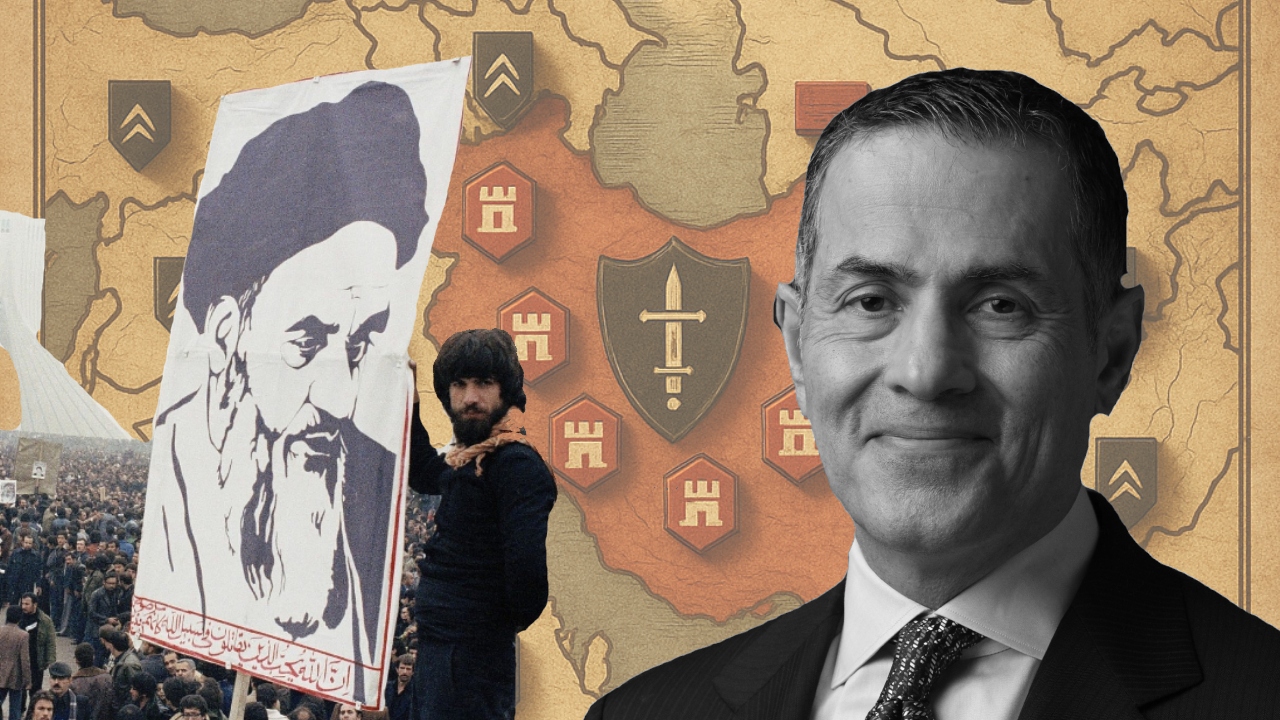
What We Get Wrong About Iran, with Vali Nasr
In this episode of International Horizons, RBI director John Torpey talks with Vali Nasr, Majid Khadduri Professor of International Affairs and Middle East Studies and former dean at Johns Hopkins University’s School of Advanced International Studies, about Iran’s dangerous crossroads after its latest clash with Israel and the United States. Nasr argues that Western narratives about Iran as a reckless theocracy miss the calculated grand strategy behind its actions — a strategy rooted in centuries of imperial ambition, deep-seated insecurity, and anti-American resentment. He explains why the Islamic Republic has survived despite public disillusionment and why hopes of regime change are naïve. Nasr warns that Iran’s nuclear ambitions are now more entrenched than ever, as ordinary Iranians begin to see the bomb as their only shield against annihilation. With the U.S. unwilling to invade but also disinclined to negotiate in good faith, Nasr lays out the stark choice Washington faces: a nuclear Iran or another disastrous Middle East war.
Nasr recently published Iran’s Grand Strategy: A Political History (Princeton University Press), and is also the author of The Dispensable Nation: American Foreign Policy in Retreat (Penguin 2014), and The Shia Revival: How Conflicts within Islam Will Shape the Future (W.W. Norton, 2016 [2006]).
Below a slightly edited transcript of the interview:
John Torpey 00:00
Israel recently attacked Iran’s nuclear weapons facilities and was soon joined in that effort by the United States. Iran retaliated with missile attacks on Israel. The involvement of the US sparked fears that the war might widen to the entire region and last a long time. Yet the conflict subsided so far, relatively quickly, if with much disagreement about what had been actually achieved by Israel and the United States. American President Donald Trump proclaimed that the 30,000 pound bunker buster munitions dropped on Iranian targets resulted in “total obliteration” of Iran’s nuclear sites, but there remains much uncertainty about how long it might take Iran to build a nuclear weapon after the attacks on its facilities. What’s the broader context of the conflict?
Welcome to International Horizons, a podcast of the Ralph Bunche Institute for International Studies that brings scholarly and diplomatic expertise to bear on our understanding of a wide range of international issues. My name is John Torpey, and I’m director of the Ralph Bunche Institute at the Graduate Center of the City University of New York.
We’re fortunate to have with us today. Vali Nasr who is Majid Khadduri Professor of International Affairs and Middle East Studies and former dean at Johns Hopkins School of International Studies. He’s the author of the recent book, Iran’s Grand Strategy: A Political History just published by Princeton University Press, as well as author of a number of other books, including the The Dispensable Nation: American Foreign Policy in Retreat and the The Shia Revival: How Conflicts Within Islam Will Shape the Future. His writings have also appeared in leading publications such as the New York Times, The Washington Post, and Foreign Affairs. Thanks so much for joining us today, Vali Nasr.
Vali Nasr 02:06
Thank you for having me. It’s great to be with you.
John Torpey 02:08
Great to have you. Thanks very much. So your latest book, as I’ve already mentioned, is a history of Iran’s, what you call Iran’s grand grand strategy, and covers the period, primarily from the Iranian revolution in 1979 to the present. But I’d like to ask you to start by going back somewhat further and telling our listeners what they should know about the long history of Persia as it was once known as a state and as a civilization. Persia had its start many centuries ago. But how does that history affect Iran today?
Vali Nasr 02:44
Well, I mean, as the title of the book suggests, I chose the idea of grand strategy largely to suggest that there is strategic thinking going on in Iran about national security, about foreign policy, about the place of the country in the world. And it’s not just all theocracy and religion, the way in which it is viewed outside. Now, you could disagree with the country’s grand strategy, as we do now with Russia’s, but that doesn’t mean that there’s not strategic calculation on the other side. Now strategic calculation, in many ways, first of all, itself, has a history. In other words, countries do have experiences, things work, things don’t work. There are threats, there are successes, and that shapes the way their strategy unfolds, and that’s true of Iran, since the revolution till today. But there are also certain fundamentals about history, older history, and certain geopolitical realities. So Iran, the way we know it is, really took shape in 1501 when the Safavid dynasty then took over Iran, changed this religion to Shiism, which itself was a strategic act to distinguish it from the Ottoman Turks to the West, who were Sunnis, and perhaps that saved Iran. And largely the geography of Iran today is the geography of the Safavid era. They did lose territory like the Caucasus and Central Asia and Bahrain over the years. So that history is important in a number of ways, because even back then, it was clear that Iran is at the heart of the Middle East, but it’s alone in the Middle East. So it’s Northwest Russia. It’s surrounded by non-Persian speaking Sunnis, whereas Iran is Persian speaking, or at least its identity is Persian, and its religious identity is by and large, Shia. So it is distinguished from Arabs and Turks, and then also from largely Sunni region Muslims around it. So this is, this is a fact about Iran which is very important in the psychology of the country. So, yes, Iranians have imperialist ambitions. See themselves as a great power, or to ensure. And civilizations and empires, but at the same time, it’s there are deep anxieties of born of this geopolitical reality, and that’s still at play in Iran today.
John Torpey 05:14
I absolutely agree, and really appreciate the explication. And you know, it gets me into another question I’d wanted to ask you, which has to do with, you know, the religious splits and the ethnic splits, if that’s the right word. You know, Shiism is obviously an important branch of Islam, while there are other variants, especially Sunnis, and then ethnically, I suppose we can say ethno nationally, there are Arabs, Turks, Indians and Indonesians and many more. I mean, can you this, since this is kind of the subtitle of your book, the Shia revival, can you talk a little bit about how Islam binds and divides Muslims in Iran and the region.
Vali Nasr 05:58
So these divisions in Islam are not that different. In Christianity, for instance, you have a divide between the Eastern Church orthodoxy and Catholicism, and then between the Catholics and the Protestants. And there are periods in European history where wars and geopolitics took the language of these confessional religious differences. And even down to our contemporary period, you could have looked at Northern Ireland in the 1970s 60s, it was about whether you’re Protestant or you’re Catholic, and that decided your politics. And there was a civil war in Ireland around that issue. So in the Muslim world, you have these big divisions which are around Theology and Religious law. But then, you know, they become, if you would, politicized, because they become identity of people. So so religious division, sectarian division, can become a form of identity politics, and that’s happened in Iraq after the US invasion, which is what I wrote the book the Shia revival, because our understanding was that everything in Iraq is about democracy versus dictatorship, not understanding that our winners and losers based on identity, which is there are all Arab but there are Arab Shias and then there are Arab Sunnis. And that’s no different than having Irish Catholics and Irish Protestants, and that doesn’t mean that they see their political fortunes aligned around being Irish at all times. Now there are also Middle East is replete with ethnic divisions. Obviously, the biggest groups are Arabs, and then you have Turks, and then you have Persians, and then you have also smaller communities, like the Kurds, for instance. And the states in the Middle East are not, none of them are really perfectly matched with a particular ethnic group. Some states, like Arab countries, are but then the ethnicity is larger than one country. If you have Arabs in Jordan. You have Arabs in Saudi Arabia, Arabs in Egypt. But then that has its own problem when the ethnicity is larger than your own country, and you could be subject to issues that are not born of your own territory. And there are countries like Turkey, Iran and Iraq where you have more than one ethnicity in the country. I mean, we Turks have a large Kurdish minority, which for many, many years has been an issue. Iraq has a Kurdish minority, which is now concentrated in the Kurdish Regional area in northern Iraq. Syria has a Kurdish minority, and Iran has a Kurdish minority. Iran also has Arab Baluch and a very large Azeri, which is a Turkic minority, even though the identity the country is is Persian, and its territory has been bound but this has been a fact. Now historically, the Iranians are very anxious about this ethnic makeup, because particularly in the 19th century, they had an experience with colonialism and imperialism, where they sense that the colonial powers wanted to divide and rule and even separate ethnic parts of Iran and and so this is, this also is an element of the way Iran thinks about its position in the region, the way it thinks about its security. Again, we know we only thinking about Iran in terms of an as an aggressive theocracy driven by religion, and that, to me, is too simplistic and outdated, that that you know, there are many varieties of dynamics at play. And one is actually this, the way in which the Iranians look at the unity and territorial integrity of their country, at the ethnic issue, etc,
John Torpey 09:54
So, I mean, this gets me to some extent. And into the next question I wanted to ask you, which has to do with the characteristics of the revolution, as I mentioned, the new book, basically is, you know, covering the period from the revolution forward with some of the background that we’ve been discussing. But you know, your account reminds me, reminds us that the opposition to the Shah, which preceded the revolution, was divided between secular, leftist space in the universities and the clerical forces that ultimately won out after the Shah was overthrown. And it’s to me, it’s a sort of unexpected Alliance from a Western perspective. So could you tell us how the two forces worked together to overthrow the Shah and how things then fell apart?
Vali Nasr 10:48
Well, yes, you’re absolutely right. I mean, it’s also important to note that Iran’s revolution happened first of all, very quickly compared to other revolutions, like if you’d compare the two Chinese Russian Revolution, they took decades to mature and reach their goals, particularly the Chinese Revolution. The Iranian Revolution literally unfolded over a period of two years, from 1977 to 1979 and it was highly urban, based, particularly in the capital city, between the middle class and the lower middle class of the city was actually not a revolution of the poor or the peasants. It was largely a middle class, lower middle class revolution. And the leftist and liberal forces that secular Democrats, which are pretty small, and then the Marxist, Leninist, were particularly entrenched and strong among the middle class, the modern Middle Class, secular middle class and religious elements were particularly strong among the Lower, lower middle classes, the sort of the lump and proletariat, if you would have and the lump and proletariat of of Marxist jargon. And they they decided they did share certain things. They both shared an animus to the monarchy. They and they both also had subscribed to the kind of anti imperialism that was in vogue in the 1960s and 70s in the United States, in Berkeley, in Europe, etc, each in its own way. So they also had this anti Americanism. Anti Americanism did not come from the religious side. It also came from the leftist side, or who are equally anti American in the language of the Vietnam era and the language of China, Soviet Union, Marxism, Leninism of the time. And they made a tactical Alliance, if you would each expecting that once the Shah was overthrown, that then they would settle things afterwards. And in fact, Khomeini, who was the leader of the religious faction, had a saying that just wait for the Shah to go. You know, we don’t need to discuss anything else. Just focus on the shotgun. Everything else can be discussed. And he marketed this extremely successfully, because, particularly the secular middle classes didn’t ask too many questions about the day after and then when the revolution settled, there was a massive two year battle internally, some of which unfolded during the hostage crisis, and therefore the rest of the world was not paying attention to it, in which the leftist forces were largely eradicated in Iraq and the revolution became very distinctly dominated by the religious faction. But one thing which is important to the sort of context of my book that that remained is that both of them, as they were competing, competed with one another about who was more anti American and anti imperialist, and this became sort of entrenched in the mindset of of the revolution. So I mean one, one thing to take away is that we often think that the animus of the revolution towards America has some religious cultural basis to it. Some of that is true. But I think the larger issue is that both the religious and the leftist, and particularly the religious view view was that the gift of this revolution to Iran is that is for the first time in its long history, providing it with genuine independence. And only Islam can provide genuine independence, and only an Islamic revolution can provide genuine independence. But who are you getting your independence from? And the answer is the United States. So this was, this was the mindset that basically became entrenched very quickly after the revolution, right?
John Torpey 14:47
But this, I’m going to jump ahead to a question that I was going to ask later, since you’ve been, you know, emphasizing this issue of anti Americanism. I mean, I’ve always had this image that Iranians are kind of the most pro. American people. I mean, yes, there’s anti Americanism. That’s certainly part of the politics. It was part of the revolution, certainly. But at the same time, there seems to me to have been historically also, you know, a certain fondness for affinity to, you know, Southern California has a diaspora of some significance. I mean, how should I? Am I just misguided in my understanding of that situation?
Vali Nasr 15:24
No. I mean, first of all, people, people, even at the human level, can be complicated and hold multiple views in their mind. At the same time that we really love America, we really love American life, but we also believe America has done Iran ill, like for like, for instance, it helped in the imagination of the revolutionaries, at least in their reading of the history, that the United States is responsible for a coup in 1953 that brought the Shah back to power, and then the United States is responsible for all the excesses of the Shah’s authoritarianism. It was possible in the 1970s to have students who were going to Berkeley, who were enjoying California, actually ended up staying in California, and much like their classmates in STS, which actually Iranian students, were very active in formation of it in the 60s and 70s be highly anti American and critical of the Vietnam War, and basically view the United States as an arrogant imperialist power. So these two things could be in their mind. I mean, when we say Iranians are pro American or love American life, it doesn’t mean that they necessarily are sort of robotically subscribe to American foreign policy, but at the juncture of the revolution. And we have to also note that the revolution succeeded because large numbers of Iranians bought into its arguments anti Americanism, not anti Americanism culturally, or being anti Iranian people, but opposition to American foreign policy, and what American foreign policy in Iran had done and could do became sort of ubiquitously accepted and and it’s decades later that gradually you have Iranians getting fed up with the Islamic Republic, that they that you have this anomaly, that the rest of the Middle East has secular governments and anti American populations. Let’s say at the juncture of 911 and Iran is the opposite. It has a religious government but a much more pro American population. But that doesn’t happen in 79 that’s really by year 2000 that you begin to see this shift,
John Torpey 17:42
Right. So, the book sort of portrays an arc, it seems to me, with regard to Iranians feelings about the revolution and their you know, enthusiasm, relative enthusiasm for it. I mean, first, there’s this long, dreadful war with Iraq, which kills many, many people. And, you know, eventually, over time, they begun begin to be weary of clerical government. It seems to me, in a way, that to me, you know, recalled what happened in the Soviet Union as sort of, or in the Soviet bloc, I should say, you know, when people might have had more enthusiasm, when, when the economy was delivering, but over time, you know, lost their enthusiasm for it. So, So increasingly, over time, the the nuclear question came to be, you know, a central matter of Iranian foreign policy. And of course, that’s what has been at stake in this recent conflict again, and I wonder if you could talk about, you know, the sort of interplay of domestic life and, you know, popular opinion and foreign policy, as you describe it in the book.
Vali Nasr 18:58
So it’s a very important point. I mean, we have to also be mindful that people don’t make foreign policy. It’s the political class and governments do. That’s true of the United States as well. I mean, we can look at Washington, then they say there’s certain assumptions and mindset and certain rubric of analysis that dominates the establishment, quote, unquote, and you sitting at home, or somebody sitting in in Texas or Oklahoma, etc, don’t basically have a saying this. Sometimes, maybe they don’t care. But a government like the United States has been also ultimately very successful, often, of convincing its population of its foreign policy unless the cost becomes very high, which is true of the Vietnam War, and also was true of after war, and we now see it in the attitude of the Maga movement towards engagements outside something like that is true of Iran as well. In other words, I mean, first of all, there are many reasons. That the Iranians would be unhappy with their government today, from religious strictures to authoritarianism to bad economy to mismanagement, et cetera, et cetera. But there are a couple of other issues to keep in mind that the Iranian population has changed over the past 40 years. Now, overwhelming majority were born after the revolution, or that they grew up after the revolution, which means that, yes, they’ve heard the rhetoric of the state about the revolution, but they don’t have any experience with Iran before the revolution, and in fact, the younger people were actually born by and large in the 1990s onwards. So majority of Iranians don’t even remember the Iran Iraq war. For that matter, this 12 day war was their first experience with something similar happening to Iran. That’s important, because the mindset is a bit different. Secondly, increasingly, Iranians have come to question the wisdom of the revolution, just staying with the anti Americanism of the earlier years and not changing course. And then the cost of this has become more and more, and they think they are paying the cost in the form of isolation and economic hardship. And so, I mean, my book, I try to focus on this angle, and I state that, you know, there, you know, there are other ways in which to analyze Iran from a social, sociology level, economics, domestic politics, but I’m mostly focused on the fact that the Iran that we see today is, by and large, the product of a particular foreign policy, a particular national security mindset that we’re at war with America. America wants to compromise our independence. We have to assert our independence by continuously confronting America and and even try to push it out of the Middle East, and we’re going to accept any cost that comes from that, and we’re not going to change course. And so more and more Iranians are basically no longer on board and and so in a way, I think that the Islamic Republic has unfolded, particularly in the past two decades on the back of its national security policy, on the back of this grand strategy that I described. That’s the real big dynamic in Iran. I mean, at this moment we’re talking Iran ended up in a war, in a crisis, not because of domestic issues or purely economic issues, but over, as you said, nuclear policy over its support of Hezbollah, its support of Hamas, its antagonism to Israel. So it all so it all goes back to so important this national security mindset at the top in Iran is in taking the country to where it is today. And so you have to understand that. And my point is that there’s no point in trying to read too much into the ideology of the revolution or Islam. If you want to understand why this dynamic has happened, you have to get into the mind of the Supreme Leader in Iran and see how does he see nationalism, national security threat and and what is his agenda, if you would, going forward.
John Torpey 23:25
So what do you think is the outcome of the recent exchange of, you know, fire? I mean, as I said at the beginning, you know, it’s a little bit unclear. There’s uncertainties. You know, everybody has an interest in hiding what you know, has happened to some extent. I mean, how do you think the recent exchange of weapons, you know, has affected the prospects of the of the regime?
Vali Nasr 23:54
Well, I mean, in terms of prospects of the regime were too close to the event. I mean, it’s very clear that it didn’t collapse, which is what something the Israelis had hoped for, because the kind of assassinations and decapitation that they carried through the war suggests that it was not just about hitting nuclear sites. It’s about essentially creating a situation in which there might have been regime collapse. So that didn’t happen. Now whether the regime will begin to teeter or change or become more open, more closed, collapse, I think this will, this will. This is not something is going to happen in the time frame that we’re in. It might happen over the next two years, three years, etc, as the as we get out of the fog of the war and the impact of the war begins to really show itself. But one thing is clear that that the war did not was not decisive enough in of itself. So if you were to say the objective of the war was to destroy Iran’s nuclear program and force the regime collapse, neither of these happened. Yeah, so yes, Iran’s nuclear program was severely damaged. But how damaged is open to question, and nobody can give a firm answer. President Trump wants to claim that he was obliterated because he basically doesn’t want to go back to war. And then you have, perhaps, critiques within the American establishment who leaked these intelligent reports to contradict it, and then you have the director of the International Atomic Energy Agency who says Iran could resume enrichment within a number of months. It’s not very clear what was destroyed. How was it destroyed? What can be rebuilt? What is What did Iran manage to save and not say so, in a way, the war itself didn’t finish this question, and it changed the parameters, but, but didn’t finish it, and the regime didn’t fall either. So, right? So in a way, the the war did not, did not settle anything, which means that we’re still in pretty much the same standoff we were before the war,
John Torpey 26:00
Right. And how would you say it affected Iranian public opinion? Did it say Iran is vulnerable and it’s weaker than it should have been, and it’s under attack? And, you know, that’s not a situation we want to be in. So we should change, you know, change rulers, or does it, you know, bolster Iranian national sentiment?
Vali Nasr 26:24
I think there’s a combination of all of these, but in a much more subtle way. I mean, people thought that it was going to be black and white, that you’re either support the war and want the regime to fall, or you’re 100% pro regime and don’t support the war, but, but I think majority of Iranians showed a much more sort of a sophisticated set of emotions. In other words, those who are opposed to the Islamic Republic remain opposed, and now maybe they also are questioning, how could you let this happen and that you’re responsible for bringing us to war. But at the same time, they there is no question that they are, they are deeply disturbed with their country being violated, particularly in this manner. And they are some, some, even pro regime. People are wanting accountability from the rulers about, why were you so penetrable. Why was this possible? What happened to your defenses? All of these questions are there. But I also think that the Iranians realized that they are not spectators to a war. I mean, these ideas that exile leaders or Israel et cetera, were saying that the war has nothing to do with you. We’re actually helping you. Were killing these guys, just go in the streets and and protest. I mean, first of all, they didn’t feel like basically being stooges of an invading force. I mean, just because you hate your government doesn’t mean that you’re willing to do a do an invaders bidding. That’s That’s not the sort of automatic But secondly, they realized that actually, the war doesn’t go around them. It goes right through them. Not only were a lot of civilians killed and civilian targets hit in Iran, but for instance, the most important thing is when President Trump and the Israeli Defense Minister said that they should evacuate Tehran, right aside from whether that’s actually even possible to evacuate a city of 10, 12 million, they immediately realize, why are they asking us to evacuate? I mean, and I’m talking about an average person who say why they want to destroy my city. They want to turn it into Gaza. We just saw what happened there. This sounds a lot like Israeli declarations to Palestinians or Lebanese that you need to evacuate because we’re going to level this is that what they want to do. And then, even if I’m going to evacuate, how long do I evacuate? When do I get back? What’s going to happen to my business? Who’s going to feed my fee? So there was a realization that, you know, they’re not going to be immune to the costs of war, and so the immediate response was, was to resist the war. And also, perhaps some of them thought that, yes, you know, we don’t like this regime, but right now, these are the only line of defense we have against a foreign invasion. We can’t create a military out of thin air, out of the out of out of sky, so you have to work with what you have. But these sentiments can change. I mean, you know, I think the shock of of what happened to Iran and Iranians is so severe that it’s going to take some time for it to settle and and then we’ll see. How does it play out in Iranian politics? What does it do, even to the regime itself? And some of what, what I’m telling you is also you can hear it from establishment people in Iran or establishment voices who are basically saying the same sets of. Things that they are demanding change. They’re demanding accountability. They want to know who’s who’s going to accept responsibility for what happened. There are questions about the wisdom of a policy that has brought Iran to this point as well.
John Torpey 30:17
And there are questions about policy in the case of the United States, right? I mean, there was a, there was an agreement in place in 2015 that, you know, a number of sides had agreed would manage this issue. And it’s pretty clear that, you know, the United States and other leading powers are not enthusiastic about the idea of Iran having a nuclear weapon, so somehow that’s going to be have to be addressed.
Vali Nasr 30:46
That’s absolutely true. No, no, that’s absolutely true. In other words, even if, even for those who are encouraging Iran to go back to the table and negotiate, etc, whether they’re liberal or members of the regime, they have to contend with this issue. Can you trust the United States? Not only because it walked away from a deal that was already signed and Iran had implemented, but also because they were in the middle of the negotiations when is Israel attacked, which couldn’t have happened without America knowing about it and perhaps giving it a green light. And then the Americans themselves joined in to bomb what they were negotiating over. So those are big problems going forward, but but also, it underlines an argument that I show in the book that’s been unfolding in the past three, four decades, is that the Iran’s leadership are convinced that the United States is not interested in anything short of destroying the Islamic Republic. So in the back of their mind, they say there is no, I mean, we did sign a deal with the US. They walked away from it, and then put maximum pressure sanctions on us to crush, crush our regime that we were negotiating with them, and then they supported an attack on us. So they will tell their population, can we really go talk to them at all? And then I have to say there is also now a stronger sentiment, even among some anti regime secular people, that Iran should just go get a nuclear bomb, not that it can, et cetera. But I’m saying the sentiment at the popular level has become more complicated, because the argument is that, okay, we are where we are. This is this is our lives. This is our rulers. But we really don’t want to go through what we went through the past 12 days again, and we don’t have the air defense systems, Hezbollah, Syria, et cetera, are gone. And so the only thing that can prevent Israel and the US to bomb Iran at will is going to be nuclear weapons. So that argument of deterrence, even at the popular level, has has has changed since before the war.
John Torpey 33:00
Okay, we’re sort of running out of time, so I want to, I don’t want to put you on the spot, but since I can imagine that occasionally, you might get phone calls from policy makers, you know, asking for your expertise. You know, what would you advise an American president, not necessarily the one who’s in office. But just, you know, what would you say? What’s the best way to resolve this? You know, given the forces that you’ve just described? Well,
Vali Nasr 33:28
I mean, particularly the one who’s in the office has to deal with this. So, so ultimately, we have to, we have to be, we have to also look at that realistically. I mean, the options are very simple, John, you either let Iran go nuclear, or you have to go to war with Iran the way we did Iraq. It’s a country of 92 million and orders of magnitude in terms of geography, size, complexity, capability different from Iraq, which is very clear that neither President Trump nor his base want to do that, and the only third alternative is to negotiate an end to the nuclear deal. So there’s not, there’s no fourth, fifth, sixth option. So you know, if you don’t want to invade Iran and you don’t want them to basically march towards a nuclear program, you have to talk to them this idea of that there could be a different regime in Iran. Regime Change is hope. It’s not policy unless you’re willing to go to Tehran and change the regime yourself, which is what we did in Iraq or in in Afghanistan, which clearly the President doesn’t want to do. So his options are not that many. It’s either war in nuclear Iran, or you, or you go back in a serious manner to the table and hope that you can arrive at some kind of an acceptable situation.
John Torpey 34:51
Well, let us hope this is resolved in some mutually agreeable and, you know, humane fashion sooner rather than later. So thank you very much. I want to thank Vali Nasr for joining us today from Johns Hopkins University School of Advanced International Studies and sharing his thoughts about Iran and its foreign policy in recent years. Look for international horizons on the new books network and remember to subscribe and rate International Horizons on Spotify and Apple podcasts. I want to thank Juan Acevedo for his technical assistance, as well as to acknowledge Duncan McKay for sharing his song International Horizons as the theme music for the show. This is John Torpey saying, thanks for joining us, and thanks again to Vali Nasr and we look forward to having you with us for the next episode of International Horizons.
Vali Nasr 35:45
Thank you. Thanks very much.