Inside Jobs: How Great Powers Meddle in Other Countries’ Elections
From Argentina’s recent vote under the shadow of a threatened $20 billion U.S. aid package to Russia’s covert operations in the 2016 U.S. election, foreign meddling at the ballot box is more common and more dangerous than many citizens realize. In this episode of International Horizons, RBI interim director, Eli Karetny speaks with Dov Levin, Associate Professor of International Relations at the University of Hong Kong and author of Meddling in the Ballot Box (Oxford University Press). Drawing on a unique global dataset, Levin explains how often great powers intervene in elections, why most operations are “inside jobs” coordinated with local elites, and why overt interventions frequently work better than covert ones. The conversation explores dirty tricks, founding elections, democratic backsliding, and how new voting technologies could reopen the door to old-fashioned ballot manipulation.
Below is a slightly edited transcript of this interview.
Transcript
Eli Karetny
In October of this year, Javier Milei won a decisive electoral victory in Argentina’s legislative elections and secured a mandate to move forward with his proposed austerity measures. As indicated in the much-discussed New York Times article, the election was not just a referendum on Milei’s policies. Hanging over the election was essentially a threat made by U.S. President Donald Trump, who said he would deny the $20 billion economic aid package promised to Argentina if Milei’s party did not win the elections.
While this was not the first time an American president tried to influence another country’s election, it was the first time that such a large financial incentive was used to sway the outcome of a foreign vote. Just how unique and worrisome is this example of election interference? How does such overt interference differ from the covert influence operations that Russia, for example, is infamous for? Are we now in an era where foreign powers seek to influence election outcomes in entirely new ways?
Welcome to International Horizons, a podcast of the Ralph Bunche Institute for International Studies that brings scholarly and diplomatic expertise to bear on our understanding of a wide range of international issues. My name is Eli Karetny. I teach Political Theory and International Relations at Baruch College, and have for years been a deputy director of the Ralph Bunche Institute at the Graduate Center of the City University of New York. With our director John Torpey on leave this year, I have the privilege of serving as the Institute’s interim director, which means I have the honor of hosting this podcast.
Here with me today to discuss foreign election interference is Dov Levin, Associate Professor of International Relations at the Department of Politics and Public Administration at the University of Hong Kong. His research focuses on partisan electoral interventions and on strategic public diplomacy. His book, Meddling in the Ballot Box: The Causes and Effects of Partisan Electoral Interventions, published by Oxford University Press, won the American Political Science Association’s Robert Jervis and Paul Schroeder Best Book Award for 2021. Welcome, Dov. Thanks for joining us on International Horizons.
Dov Levin
Thank you very much for this invitation and for this warm endorsement of my book.
Eli Karetny
Let’s start with the election in Argentina. Your research was referenced in the New York Times article about Trump’s efforts to openly sway Argentina’s election. How do Trump’s actions differ from previous efforts by American presidents who also employed what you call the “vote with us, or else” tactic?
Dov Levin
Well, I mean, there were two key things that made this intervention unusual. The first was the identity of who exactly was aided by Trump, and the second one was its overall size in material terms.
So, just to make first something very clear in this regard: unlike some claims in the media, the intervention message used by Trump in this election was not unusual. The use of explicit threats or promises before an election in order to swing an election, as he did in this Argentinian case, is one of the more common methods of election interference. That is used in more than 30% of all cases of such meddling since the end of the Cold War, for example. Actually, it’s even more commonly used for this purpose in the post–Cold War era than the tools infamously used by Russia in the 2016 U.S. elections. And likewise, some pre-election supply of foreign aid of some kind is not unusual.
So one thing that was unusual was the overall size and potential material cost to the United States. The explicit pre-election promise of Scott Bessent to defend the currency peg of the Argentine peso by the U.S. Treasury—to the tune of nearly $20 billion—and the immediate direct purchase of Argentine pesos worth around $1.5 billion by the United States were unusually large in the cost the United States could potentially pay if something went wrong, for example, the currency peg broke and the Argentine currency collapsed. There are only a handful of special cases since World War II in which the United States was willing to bear such large potential or actual material costs in order to intervene in foreign elections. The two closest in size to this one, in material terms, were the American intervention in Italy in 1948, which cost the U.S. government, in today’s money, something like $2.9 billion, and the American intervention in the 1996 Russian elections through the IMF of around $15 billion in loans, in today’s money, for which the United States was on the hook for about $5–6 billion of them, as well as other foreign aid to it.
My best guess why it was so large is that basically Argentina’s problem—its peso peg—was so bad and so urgent that the Trump administration was simply forced to provide material aid in advance, before the midterms, because mere pre-election promises or threats would not be enough to significantly aid Milei in these midterm elections.
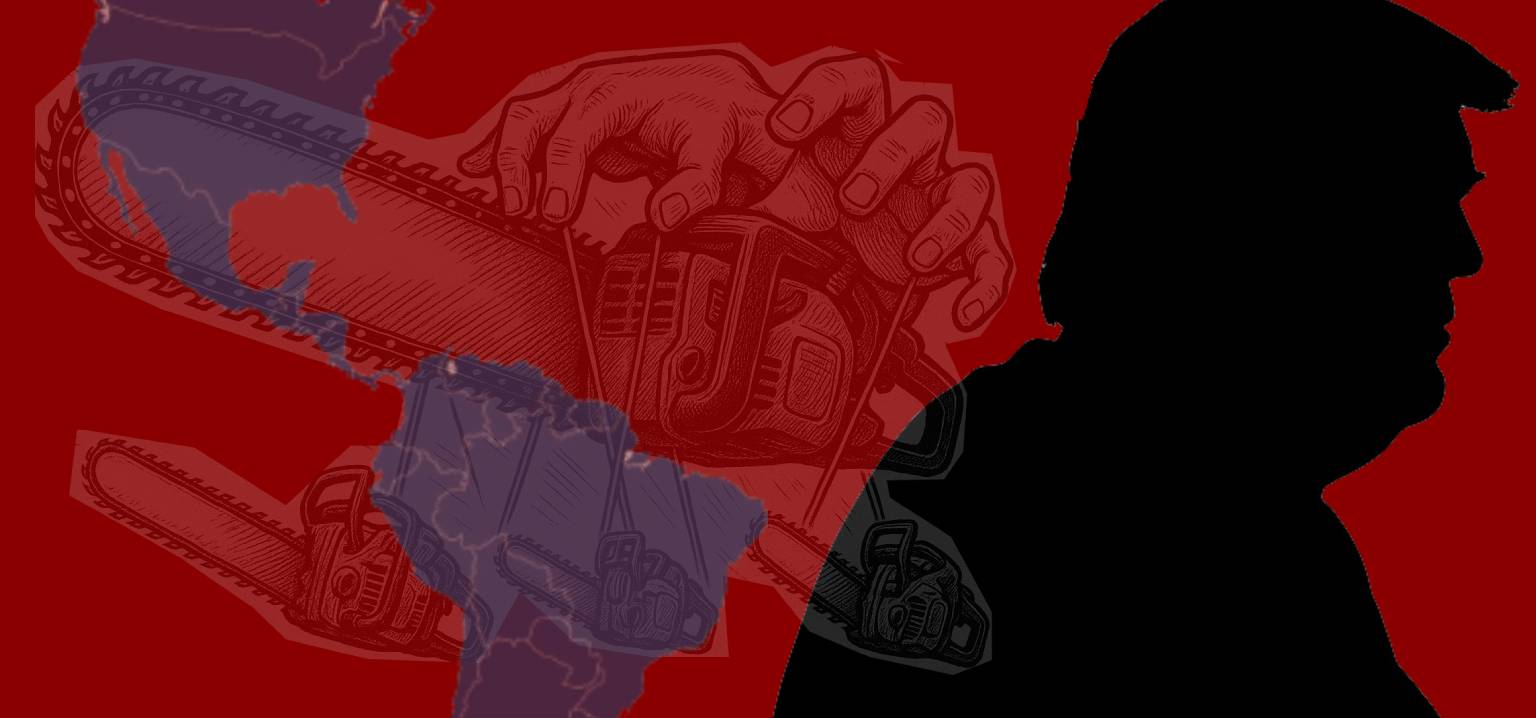
The other thing that was unusual was who exactly was aided—in other words, Milei and his party. The United States, when it intervenes in foreign elections, usually does not support candidates or parties who are so ideologically extreme as Milei is—in other words, a guy who openly describes himself as a libertarian or an anarcho-capitalist out to dramatically shrink the state, and so forth. My best guess is that basically Trump saw Milei as an ideological bedfellow—you know, remember Dogecoin and Elon Musk with his chainsaw—so he was nevertheless open to backing him.
Eli Karetny
Thank you, Dov. As you say, this is nothing new. You mentioned the example of Clinton enabling the large U.S.-backed IMF loan package in support of Boris Yeltsin. Other examples that you give in your book are Obama using foreign aid to pressure Lebanese voters not to support Hezbollah in 2009, and Trump supporting Boris Johnson in 2019, as well as Trump supporting the right-wing candidate in the Polish presidential election. In fact—and I found this especially interesting—you say that this problem has been around for as long as we’ve had elections in the modern world, that Alexander Hamilton even discussed this as one of the reasons for the Electoral College. Can you talk a little bit about that?
Dov Levin
I mean, basically, foreign interference in elections is as old as the existence of elections. In other words, even in the pre-modern era, before there were national-level elections—just elections for a particular post, say the Pope, or the king by a group of noblemen—there were foreign powers who saw it as an important thing to intervene in.
We know, for example, that multiple papal elections were intervened in by various major European powers because of the importance of the papacy. One reason why we have, these days, such an elaborate scheme for electing the popes—the cardinals being each one in their separate rooms, the white smoke coming out of the chimney, that they cannot meet and consult each other, and so forth—was actually part of a scheme by one of the popes to prevent meddling by foreign powers: literally lock the electors in a building to prevent foreign powers from meddling in the elections and determining who would be the next pope.
Likewise, in countries that had election for monarch—like Poland, and at some points in time also in what later became Romania, and some other parts of Eastern Europe—the king was selected by a group of senior noblemen. There were multiple interventions of these kinds by foreign powers in such elections for monarchs. Multiple Polish elections were the targets of Russian intervention, as well as by other countries, to the point that the term “Polish elections” became a term for massive foreign interference and a dysfunctional political society.
When the Founding Fathers of the United States were thinking about creating the new United States, they were readers of history and were aware of these issues. We know from multiple letters that they were deeply worried about foreign powers meddling in future U.S. elections. We have Jefferson predicting that the elections of the U.S. president would be the focus of meddling from around the world, as well as Alexander Hamilton and others being worried and thinking about various ways to prevent it.
Hamilton, in Federalist 69, basically claims that the reason why the United States has the Electoral College is as a way to prevent foreign meddling. The thinking was that because the original Electoral College meant people would elect electors, who would then decide on their own, independently, who would be the president, and they were, in today’s terms, unpledged electors—each one in their own state, deciding who they would choose—then sending their decisions to Philadelphia, the then capital of the United States, and later to Washington, D.C. That would be a way to prevent foreign powers from meddling in the elections and trying to have what Hamilton called “a creature of their own” as president. As was discovered even in the lifetime of the Founders, the Electoral College was not good even in that respect, and they were already intervening in the mid-1790s to elect George Washington’s successor.
Eli Karetny
So two forms of election interference you discuss are covert and overt. I’d like to talk a little bit about that. Two cases you explore are, one, the American intervention in the 2013 Kenyan elections, and the Russian intervention in the 2016 U.S. elections. What makes these representative of overt versus covert interference?
Dov Levin
Each one describes one of the most common methods used for this purpose, either covert or overt. The American intervention in the Kenyan election in 2013 was a pre-election threat by the then Assistant Secretary of State Johnnie Carson, before the election, threatening serious consequences if Uhuru Kenyatta would win—because he was, at the time, under an ICC warrant for the violence that happened a few years earlier in Kenya. That was a classic way in which the United States intervenes overtly.
The one in 2016 famously involved spreading fake news and propaganda, as well as hacks and leaks of information. That is a common example of the covert method. So each one is a good example because it describes a major way such meddling is done.
As for differences: in terms of effectiveness, I find that overt interventions are usually more effective than covert interventions when it comes to helping the desired side win an election. In a statistical analysis I conducted on a dataset of such meddling, overt interventions increase the intervener’s preferred side’s vote share by about 3% more than covert interventions do.
One reason is that there’s a limit to how many resources can be provided in secret without the high risk of exposure, which can cause an election-destroying backlash. When you intervene overtly, you can provide more resources on average, and more resources usually increase the chances of success. Another reason is that overt interventions can try to affect voter behavior directly—speaking to the voters above the politicians’ heads—whereas covert interventions can only affect voters indirectly.
Some methods can be done both ways, but many techniques can only be done effectively either overtly or covertly. Pre-election threats or promises have no chance of working if most of the public doesn’t know about them. Conversely, if you try to spread fake news openly, local authorities will block your media organs and quickly debunk your claims, or the local public will ignore them.
Eli Karetny
You mentioned several different forms of electoral interference. Besides promises of financial support or threats to withhold such support, you’ve also spoken and written about the provision of campaign funds to a preferred candidate or party, as well as other tactics, including “dirty tricks.” What are the most common tactics foreign powers use, and what are some examples of these dirty tricks?
Dov Levin
You noted correctly some of them. There’s a large variety of such methods. I categorize them into five major categories, except that method of threats or promises.
One is campaign funding, which can be given in three ways: directly (cash or a padded contract with a firm affiliated with that party), in-kind material aid (office equipment, newsprint, vehicles, subsidizing campaign activities), or indirectly (funding “independent” organizations that act like de facto super PACs).
Another is campaigning assistance: increasing the capabilities or effectiveness of the assisted side’s campaign by training locals in advanced campaigning, party organization, get-out-the-vote techniques; designing campaign materials; sending campaign experts; polling analysis, and so forth.
Another is giving and taking aid: sudden provision or increase of foreign aid, loans, loan guarantees, or preferred trading conditions right before the elections; or withdrawing aid.
Another is other concessions: costly, non-material benefits the electorate cares about—evacuating a military base, supporting a contentious territorial claim, releasing POWs or war criminals, signing or advancing an alliance treaty.
As for dirty tricks: acts designed to directly harm one or more candidates or parties competing against the preferred side. One type is dissemination of fake news about rivals or spreading real information that puts them in a bad light—like in 2016. Another type is political map reshaping: encouraging the breakup of a rival coalition or bribing spoiler candidates to stay in the race in single-round presidential or first-past-the-post systems. A third type is physical sabotage: damaging or destroying rivals’ offices or campaign materials; spying on rival campaign plans; disrupting their fundraising by threatening donors. A fourth type is assistance in voter fraud: e.g., in the 1968 Guyanese election, where the CIA secretly helped the incumbent Forbes Burnham register tens of thousands of fake overseas voters—anecdotes include “voters” that were horses.
Eli Karetny
Thanks for that. Dov, you write in your book that partisan electoral interventions are usually “inside jobs.” What do you mean by this?
Dov Levin
I mean close cooperation—what has been called “collusion”—between the intervener and the side it is trying to assist. That includes what methods are used, how they are deployed, what to avoid, and so forth. This can come from the assisted side agreeing to get such an intervention when asked, or sometimes sending a message to the foreign power asking for help.
It’s key because electoral intervention basically means running or helping someone’s campaign. To succeed, the foreign intervener needs high-quality information that domestic candidates have: country-specific electoral data, preferences of important voter groups, effective messages, and so on. Foreign powers usually have very limited knowledge of another country’s domestic politics. The only way to get this hard-to-find information is by gaining the cooperation of people who have it from years of first-hand experience—namely, the politician or party being aided.
Accordingly, if a would-be intervener fails to gain cooperation, its chances of success are so low that it usually avoids intervening in that manner. In a few cases cooperation might be with senior campaign members, with the candidate left in the dark; but in most cases, for obvious reasons, the candidate knows and plays a key part.
Eli Karetny
Thinking about the calculations on the part of the foreign power intervening, you write that great powers will typically not intervene unless they fear that their interests are endangered by an opposing party or candidate with very different policy preferences. Can you say more about these calculations? In what situations are they more likely or less likely to intervene? And what’s the danger of “blowback”? What do you mean by that?
Dov Levin
Great powers know that if they intervene and the side they’re intervening against finds out, it can make that side very angry—turning a not-friendly side into an outright enemy. Likewise, in many cases great powers can simply negotiate away differences. The U.S., for example, has a lot of resources and can negotiate with an unfriendly winner—offer more aid in exchange for keeping a base, and so on.
They are willing to intervene when they feel they are dealing with a very inflexible side whose preferences are very different and unlikely to be negotiated away—either due to ideology (very anti-American, anti-Soviet/Russian) or because their electorate would punish them for concessions.
“Blowback” can come from alienating the opposing candidate you tried to defeat, or from a nationalist backlash if you intervene publicly in a very nationalist public, which can harm the very side you want to help.
Eli Karetny
Considering that the significance of the outcome is part of the calculation, it surprised me to learn from your research that there’s a distinction between ordinary elections and founding elections—in which case, in founding elections, foreign powers are less likely to interfere because the results can be ineffective or even counterproductive. Can you elaborate on this distinction?
Dov Levin
“Founding elections” are the first competitive elections ever in that country, or after a significant period (say, 10 years or more) of full authoritarian rule. They are more likely to backfire and hurt the preferred side—by about 6.7% on average—because none of the sides knows much about winning elections. Everyone is “riding the bicycle for the first time.” The foreign power ends up giving the wrong help because the local partner asks for the wrong things, and the intervener obliges, unintentionally making things worse.
Eli Karetny
I want to step back and look at the big picture. Your research indicates that between the Americans and the Soviets/Russians there were foreign interventions in one out of every eight national-level elections. Originally, I believe your research indicated one out of nine, and you recently updated the dataset, which now reflects that one out of every eight national elections between 1946 and 2014 saw some form of election interference. Why is this form of meddling so worrisome?
Dov Levin
A small correction: it’s 1946 to 2014 that’s one out of eight.
It’s worrisome because such interventions can have a lot of negative effects. They can determine who wins by 3–6% on average, meaning the foreign power—rather than the electorate—often decides the leader, harming sovereignty and a core democratic principle.
In subsequent research, I find it frequently increases the chance of democratic erosion or even democratic breakdown—especially when done covertly. Leaders good at keeping secrets are not model democrats, and secret methods (like bags of money) induce corruption. I did that statistical analysis in 2015, long before the events of the last decade.
It also increases domestic terrorism when it succeeds. If exposed, it fuels extremist beliefs that leaders are “puppets” of a foreign power, making some more receptive to terrorist propaganda.
There’s also evidence that it causes policy shifts—more cooperation with the intervener when successful. Many of these effects are negative, so there’s a lot of reason to be concerned.
Eli Karetny
What can we expect in the coming years? The Cold War era was a period of intense ideological rivalry; the post–Cold War era had democratic triumphalism. Hearing that one out of eight elections were influenced sounds relatively limited. Will that number increase, and what role might technology play?
Dov Levin
I’d separate this into two parts. Will we have increases in general? That depends on geopolitics. In eras of high geopolitical tensions, you see much more interference. One of the most interventionist eras by the U.S. was the 1950s. If we see very high tensions in the next decade or two, you would see a lot more.
As for technology: most developments won’t affect the frequency of meddling, with one special exception. AI may make creating fake news easier, but the bottleneck is knowing which fake news changes votes—not the ability to create it. New tech won’t solve that.
The exception is the growing use of voting machines or online voting. That can reopen the door to direct manipulation of vote tallies via hacking—something that became infeasible in the mass-electorate era but could become feasible again. Machines are supposed to be offline, but in practice there are internet touchpoints (e.g., program updates). Malware could change counts directly, and it would be hard to detect given polling inaccuracies. Fortunately, many democracies are moving toward paper trails or back to paper ballots. If there’s a way technology could make meddling more common, it’s that path.
Eli Karetny
Back to the present as a final question. In the recent elections in Honduras, it looks like Trump’s preferred candidate is not going to win. Are there lessons to draw from this case? Was Trump’s interference different? He’s alleging voter fraud and threatening there will be “hell to pay.” Are there other cases where interference failed and led to post-election retribution?
Dov Levin
Certainly there have been cases of retaliation when the assisted side did not succeed. Sometimes the intervener negotiates and there are no further consequences; sometimes they escalate.
For example, in Chile in 1970, after the United States failed to prevent Salvador Allende from being elected president, Richard Nixon became very angry, brought the head of the CIA to his office, and told him to remove Allende “by any means necessary,” even to “make the Chilean economy scream.” That led to multiple attempts to overthrow Allende, the assassination of General Schneider, and the funding of mass protests—destabilizing Chile in a way that probably led eventually to the overthrow three years later.
It can also be simply following through on punishment—if you promised to take away aid if voters didn’t choose your preferred side, then you take away aid.
In Honduras, it’s not yet clear what will happen. It was a bit of a surprise that Trump even cared. It seems someone told him the incumbent leader was very left-wing, and that led him to intervene. It’s possible the person elected can find a way to appease Trump and prevent punishment, given I’m not sure Trump has deep feelings in this case. Perhaps some economic concessions could persuade him not to enact punishment. But it’s certainly possible there will be severe punishment—taking away foreign aid, and so forth—and we know of some cases in history where it became much worse.
Eli Karetny
A horrifying prospect—what’s happening now in South America, that we may be seeing Trump, despite being the anti–regime change president, taking actions both in Venezuela and potentially in Honduras as well. Thank you, Dov Levin. This has been a fascinating talk. Considering how important this issue is and also how limited academic work has actually been done on this, I’m sure we’ll be hearing a lot more from you in the coming years. Thank you so much.
Dov Levin
Thank you very much for inviting me.